

A finished basement is arguably the best location for a gym home. It’s temperature stable, out of the way, already enclosed, and nobody upstairs has to look at your plate tree. The catch is that basements come with three specific problems: low ceilings, moisture, and noise traveling upward. Solve those and you have a training space better than most commercial gyms.
Measure Your Ceiling Before Anything Else
Ceiling height determines what you can and can’t do down there, and it’s the one constraint you cannot design around. Standard finished basements run 7 to 8 feet, which is workable but tight.
Here’s what different heights actually allow:
| Ceiling Height | What Works | What Doesn’t |
|---|---|---|
| Under 7 ft | Bench work, cables, cardio, dumbbells | Overhead press standing, pull-ups, tall racks |
| 7 to 7.5 ft | Most racks, seated overhead work | Standing press for taller lifters, jump rope |
| 7.5 to 8 ft | Full racks, pull-ups for most people | Box jumps, high-arc movements |
| 8 ft and above | Nearly everything | Very little |
Measure to the lowest obstruction, not the ceiling itself. Ductwork, beams, and light fixtures eat several inches and always sit exactly where you wanted your rack. Also check your stairwell width before ordering anything large, since basements have swallowed many delivery attempts.
Handle Moisture Before You Move Equipment In
Basements hold humidity, and humidity destroys steel. This is the single most important step and the one people skip because it isn’t fun.
Run a dehumidifier and target below 50 percent relative humidity year round. Connect it to a floor drain if you have one, since emptying a tank daily gets old by week two. Check for signs of past water intrusion along the base of walls before committing to a layout, and keep equipment a few inches off exterior walls where condensation forms.
Even with good humidity control, ongoing care matters. Our guide on how to prevent rust on gym home equipment in humid climates covers protective coatings and wipe-down routines that apply directly to basement setups. Seasonal swings affect basements too, and our guide on maintaining a gym home through seasonal changes covers the temperature-driven issues that show up in any non-climate-controlled space.
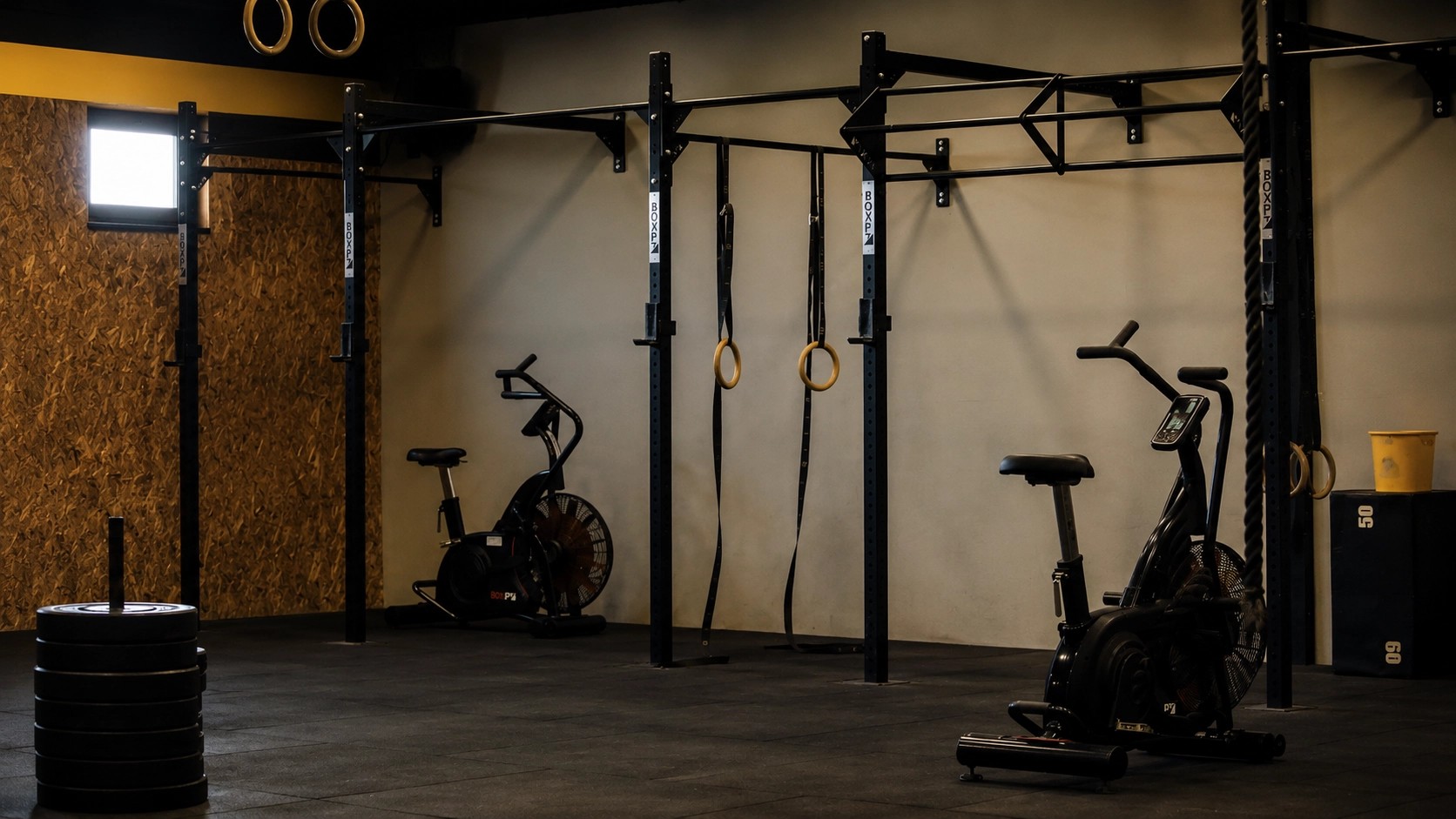
Zone the Space for Strength and Cardio
Basements are often long and narrow, which actually suits a two-zone layout well. Put strength equipment at one end and cardio at the other.
Anchor the strength zone against the most solid wall, ideally one with accessible studs for storage mounting. Leave at least three feet of clearance on each side of a rack for loading plates and bailing out safely. The cardio zone needs less clearance but benefits from being near a window if you have one, or at minimum near the brightest light.
Rowing machines are excellent for basements since they store vertically and produce less structural noise than a treadmill. Our roundup of the best lightweight rowing machines under 200 dollars covers models light enough to move and stand upright between sessions, which keeps the floor clear.
Control Noise Traveling Upstairs
Basement ceilings are the floor of the room above, which means every dropped dumbbell announces itself at dinner. Rubber matting is the fix, and thickness matters more than coverage area.
Use three-quarter inch horse stall mats under any area where weight touches the ground. For heavy deadlifting, stack a second layer or build a simple lifting platform. Cardio machines benefit from dedicated equipment mats that decouple vibration from the concrete slab.
If your basement ceiling is unfinished, adding insulation between joists cuts sound transmission significantly for under 200 dollars. Position equipment away from the area directly beneath bedrooms if early morning training is part of the plan.
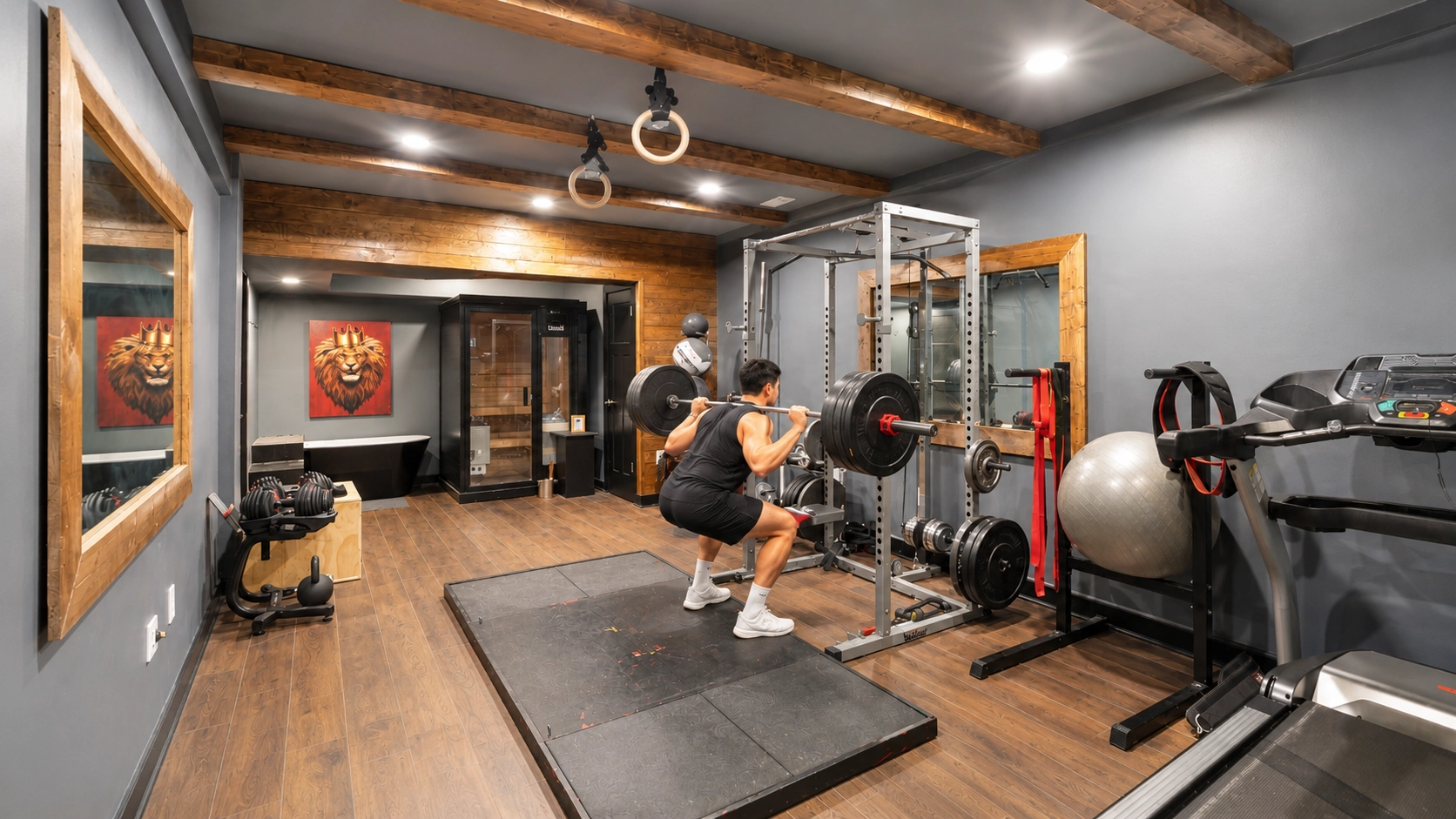
Make a Basement Feel Like a Real Gym
Basements are naturally dim and can feel like a cave, which quietly kills training frequency. Lighting is the highest-impact fix. Replace whatever came with the house with bright LED shop lights, aiming for 5000K color temperature for an energizing feel.
Mirrors do double duty by bouncing light and making the space feel larger. Vertical storage keeps a low-ceilinged room from feeling cluttered, and our guide on vertical storage solutions on a budget covers cheap options that get gear off the floor.
For more affordable upgrades, our guide on DIY gym home design ideas on a budget covers flooring and lighting projects. For aesthetic direction, browse modern gym home design trends for 2026 and our full gym designs category.
Plan your training frequency around what the space supports. Most people see solid results training three to five days per week, and a well-designed basement makes hitting that consistently far easier than driving anywhere.
Sort out humidity, mats, and lighting first, then arrange equipment around your ceiling height. Get those four things right and a finished basement turns into the kind of gym home you’ll actually walk downstairs to use.








Write Your Review
No reviews yet. Be the first to share your experience!