


Your Body Mass Index (BMI) is a quick screening number that compares your weight to your height. It won’t tell you your body fat percentage or muscle mass, but it’s a fast, free way to see whether your weight falls in a range associated with lower health risks. Use the calculator below to get your BMI, your healthy weight range, and a personalized suggestion for what to do next.
BMI Calculator
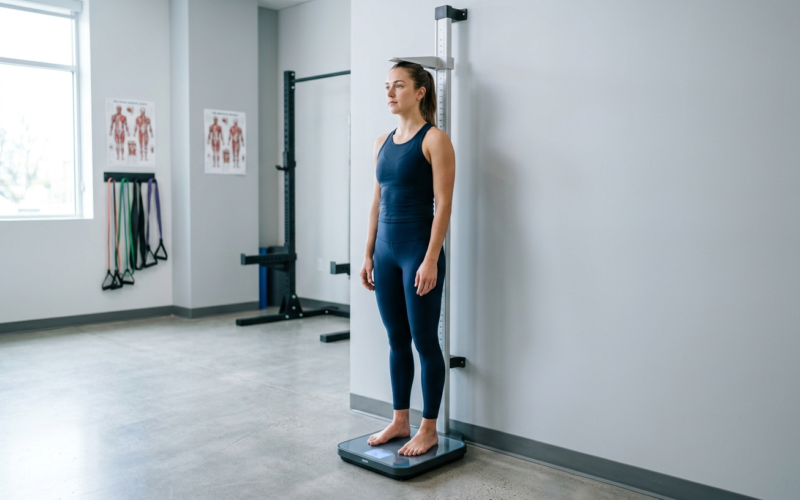
BMI Categories at a Glance
These are the standard adult BMI categories used by health organizations worldwide, broken down into finer levels so you can see exactly where your result falls. Your result above is measured against this same scale.
| BMI Range | Category | Health Risk |
|---|---|---|
| Below 16.0 | Underweight (Severe) | High risk of nutritional deficiency and weakened immune function |
| 16.0 – 18.4 | Underweight (Mild) | Increased risk of low energy reserves and reduced bone density |
| 18.5 – 21.6 | Normal (Lower Range) | Lowest risk associated with body weight |
| 21.7 – 24.9 | Normal (Upper Range) | Low risk, still within the healthy range |
| 25.0 – 27.4 | Overweight (Mild) | Moderately increased risk of heart disease and type 2 diabetes |
| 27.5 – 29.9 | Overweight (Higher) | Higher risk of elevated blood pressure and joint strain |
| 30.0 – 34.9 | Obese (Class I) | High risk of heart disease, type 2 diabetes, and joint problems |
| 35.0 and above | Obese (Class II+) | Very high risk of serious health complications |
Disclaimer: BMI is a general screening tool, not a diagnosis. It doesn’t account for muscle mass, bone density, or body composition. Talk to a healthcare provider for a full picture of your health.









Write Your Review
No reviews yet. Be the first to share your experience!