

Gym homes have come a long way from the dusty corner of the basement with a rusty dumbbell and a decade-old yoga mat. In 2026, home fitness spaces are looking sharper, smarter, and more intentional than ever, blending performance with aesthetics. Whether you have a full room to convert or just a corner to claim, these design trends will help you build a space that actually makes you want to work out.
Multi-Functional Compact Layouts
Space is precious, and 2026 designs prove that bigger isn’t always better. Homeowners are embracing compact, multi-functional layouts that squeeze serious training capability into modest footprints. Wall-mounted racks that fold flat, stackable weight storage, and vertical dumbbell towers are replacing bulky equipment sprawl. The idea is simple: your gym should disappear when it’s not in use and transform into a focused training zone when you need it.
Corner setups with floor-to-ceiling rigs are especially popular in garages and spare bedrooms. For those working with tight square footage, choosing efficient gear is critical, and options like the ones featured in the 10 best power racks for small spaces of 2026 for your gym home can help you maximize every inch without compromising on strength training capability.
Biophilic and Wellness-Inspired Aesthetics
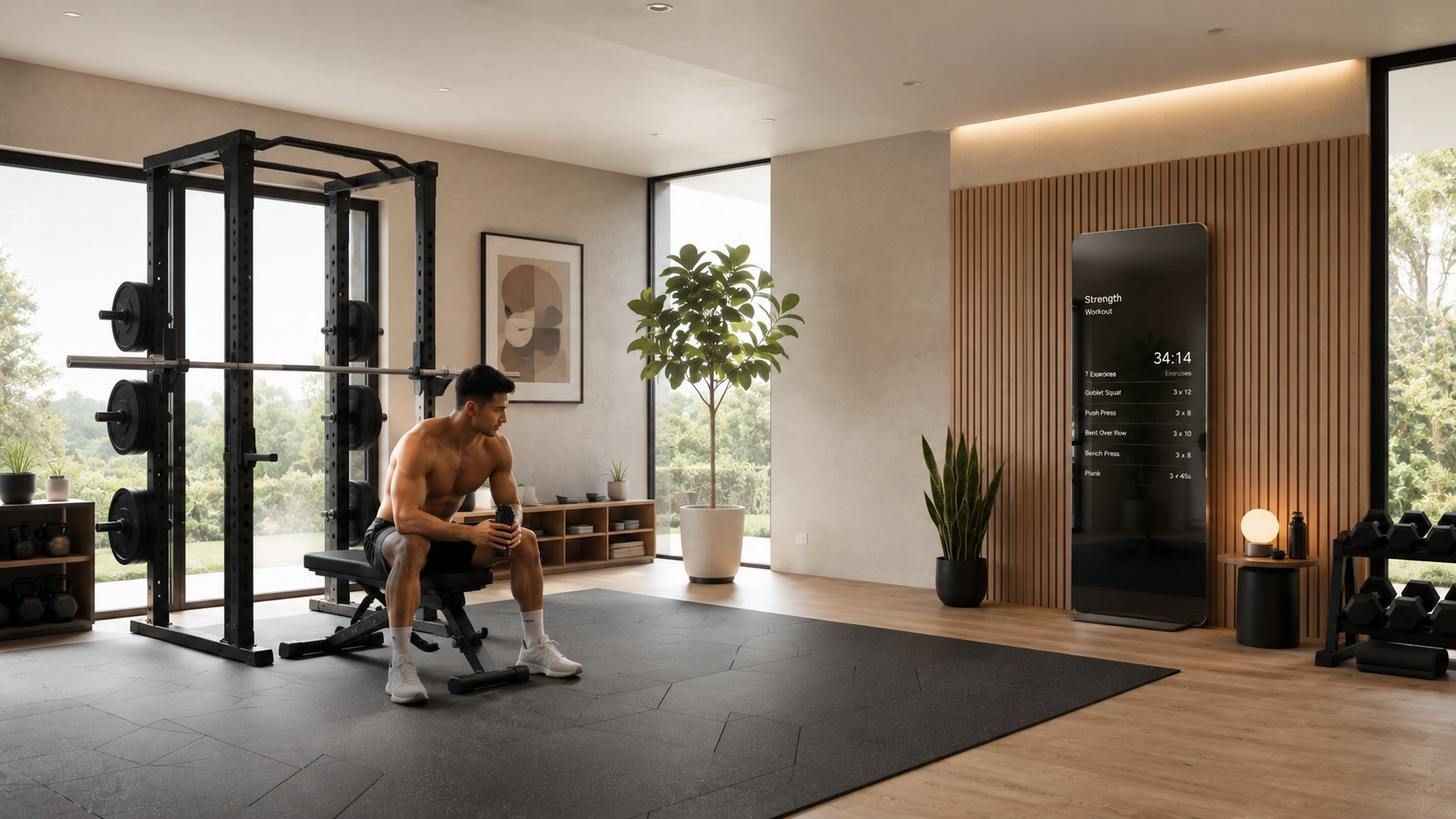
Cold, industrial gym vibes are on the way out. In their place, biophilic design is taking over, bringing nature indoors to create calmer, more restorative training spaces. Think warm wood accents, live plants, natural stone textures, and plenty of natural light. Research on workout environments continues to show that surroundings influence motivation and mood, and homeowners are catching on.
Green walls, herb gardens near the window, and even small water features are showing up in higher-end setups. On a practical level, rubber flooring in earth tones is replacing the flat black gym mats of years past. Muted greens, warm browns, and soft grays make the space feel like a wellness retreat rather than a punishment chamber. Your knees and your Instagram feed will both thank you.
Smart Technology Integration
Connected equipment is no longer a novelty; it’s standard. Smart mirrors, AI-powered coaching platforms, and app-integrated machines are transforming how people train at home. In 2026, expect to see more equipment with built-in sensors that track reps, monitor form, and adjust resistance automatically. Voice-controlled lighting, sound systems that follow your workout intensity, and climate control that adapts to your heart rate are becoming standard in premium gym homes.
For those who split their time between working and moving, hybrid setups are gaining traction. Under-desk cardio equipment lets you clock steps during Zoom calls or emails, and models featured in the 10 best under desk elliptical machine of 2026 for your gym home fit neatly into home offices without dominating the room. It’s the ultimate way to sneak fitness into a busy schedule without pretending you’ll drive to the gym after work.
Recovery Zones and Wellness Corners
Training hard is only half the equation, and 2026 gym designs finally acknowledge that. Dedicated recovery zones are becoming a defining feature of well-planned gym homes. These spaces include foam rollers, percussion massagers, stretching mats, and sometimes even infrared saunas or cold plunge tubs for those going all-in on recovery.
A small corner with soft lighting, a comfortable mat, and mobility tools can make post-workout recovery feel intentional rather than an afterthought. Some setups include meditation nooks with weighted blankets or floor cushions for cooldown breathing exercises. If you want to train smarter and get the most out of every session, understanding your strength baseline helps, and tools like our 1RM calculator to estimate your one-rep max for any lift let you plan progression without guesswork.
Data-Driven Programming Spaces
Gym homes in 2026 are becoming labs for personalized training. Homeowners are dedicating wall space to whiteboards, digital displays, or tablet mounts for tracking programs and progress. Some setups even include mirrors with built-in workout guidance, letting you follow structured programs based on evidence-based training principles.
Effective programming matters more than fancy gear. Research on loading recommendations for muscle strength, hypertrophy, and local endurance continues to inform how serious lifters structure their sessions, and having that information visible in your training space keeps you honest. A simple chalkboard with your weekly targets can be more effective than any 5000-dollar smart mirror. Data-driven doesn’t have to mean tech-heavy: it just means training with purpose.
Sustainable Materials and Eco-Conscious Design
Sustainability is no longer a niche concern. In 2026, more gym home designers are choosing recycled rubber flooring, bamboo shelving, and equipment from manufacturers with transparent supply chains. Refurbished commercial-grade equipment is having a moment, offering serious durability at lower environmental cost.
Energy-efficient lighting, LED displays, and equipment that doesn’t rely on constant electricity are showing up in eco-conscious builds. Even small choices like buying used dumbbells or reclaimed wood for storage racks add up. A gym that’s built to last decades beats one that ends up in a landfill after five years.
Whatever direction you take, the best gym home design is one that fits your space, your goals, and your daily life. Trends are helpful for inspiration, but function should always lead. Build a space you actually want to spend time in, and the workouts will follow naturally.







Write Your Review
No reviews yet. Be the first to share your experience!