

Floor space is the most expensive thing in a gym home, and most people waste it storing equipment horizontally. Every plate leaning against a wall, every dumbbell parked on the ground, and every bench sitting in the middle of the room is square footage you could be training in. Vertical storage fixes that for surprisingly little money, and it’s the single highest-return upgrade a budget setup can get.
Why Vertical Storage Changes Everything
A typical small gym home has 80 to 150 square feet. Once you subtract a rack, a bench, and scattered weights, usable training space shrinks fast. Moving storage upward can reclaim 20 to 40 percent of your floor area without selling a single piece of equipment.
There’s a practical safety benefit too. Weights on the floor are tripping hazards, and dropped plates chip when they land on other plates. Getting everything up and off the ground protects both your gear and your toes. It also makes the room look organized, which sounds cosmetic until you notice how much more often you train in a space that doesn’t feel like a storage unit.
Budget Vertical Storage Options Ranked by Cost
You don’t need custom cabinetry. These options cover almost every storage need in a small setup:
| Solution | Typical Cost | Best For |
|---|---|---|
| Wall hooks and heavy-duty screws | $10 to $20 | Bands, jump ropes, straps, mats |
| Pegboard panel | $25 to $40 | Small accessories, tools, belts |
| DIY 2×4 plate tree | $25 to $35 | Weight plates, bumpers |
| Wall-mounted barbell holder | $30 to $60 | Barbells stored vertically |
| Freestanding vertical plate tree | $70 to $130 | Full plate collections |
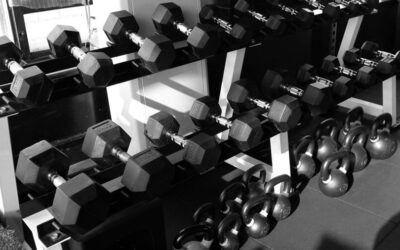
| Wall-mounted dumbbell shelf | $60 to $120 | Fixed dumbbell sets |
Start with the cheapest solutions for the equipment you handle most often. Accessories are the easiest win since they’re light, awkward to store, and cost almost nothing to hang.
Store Barbells and Plates Upright
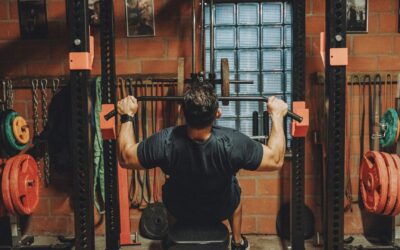
Barbells take up roughly seven feet of floor space lying down and about six inches standing up. A wall-mounted vertical holder costs less than 60 dollars and holds two to three bars. If you’re drilling into studs, this is a 20-minute project.
Store bars knurling-up to keep the sleeves off the floor and away from moisture. If you’re still building your collection, our review of the best Olympic barbells under 200 dollars covers bars that hold up well in home setups without the premium price.
Plates belong on a tree or wall pegs, sorted by weight. Sorting matters more than it sounds: loading a bar takes half as long when you’re not digging through a pile. A DIY tree built from 2x4s and threaded pipe handles a full plate set for around 30 dollars in materials.
Handle Benches, Rowers, and Bulky Gear
The awkward pieces are benches and cardio machines. Folding and lightweight equipment is worth prioritizing specifically because it can be stored vertically against a wall between sessions.
Compact benches stand upright in a corner and take up less than two square feet stored. Our roundup of the best adjustable weight benches under 200 dollars covers models light enough to move and stand on end without a second person helping.
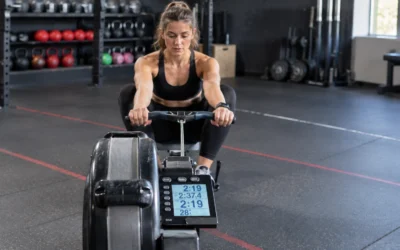
Rowing machines are the classic space problem, but lighter models solve it. Our list of the best lightweight rowing machines under 200 dollars features units that store vertically or fold flat, which makes a rower viable even in a room that also serves another purpose.
For bulkier equipment that can’t be moved, build storage around it rather than fighting it. Wall space above and beside a rack is usually completely unused.
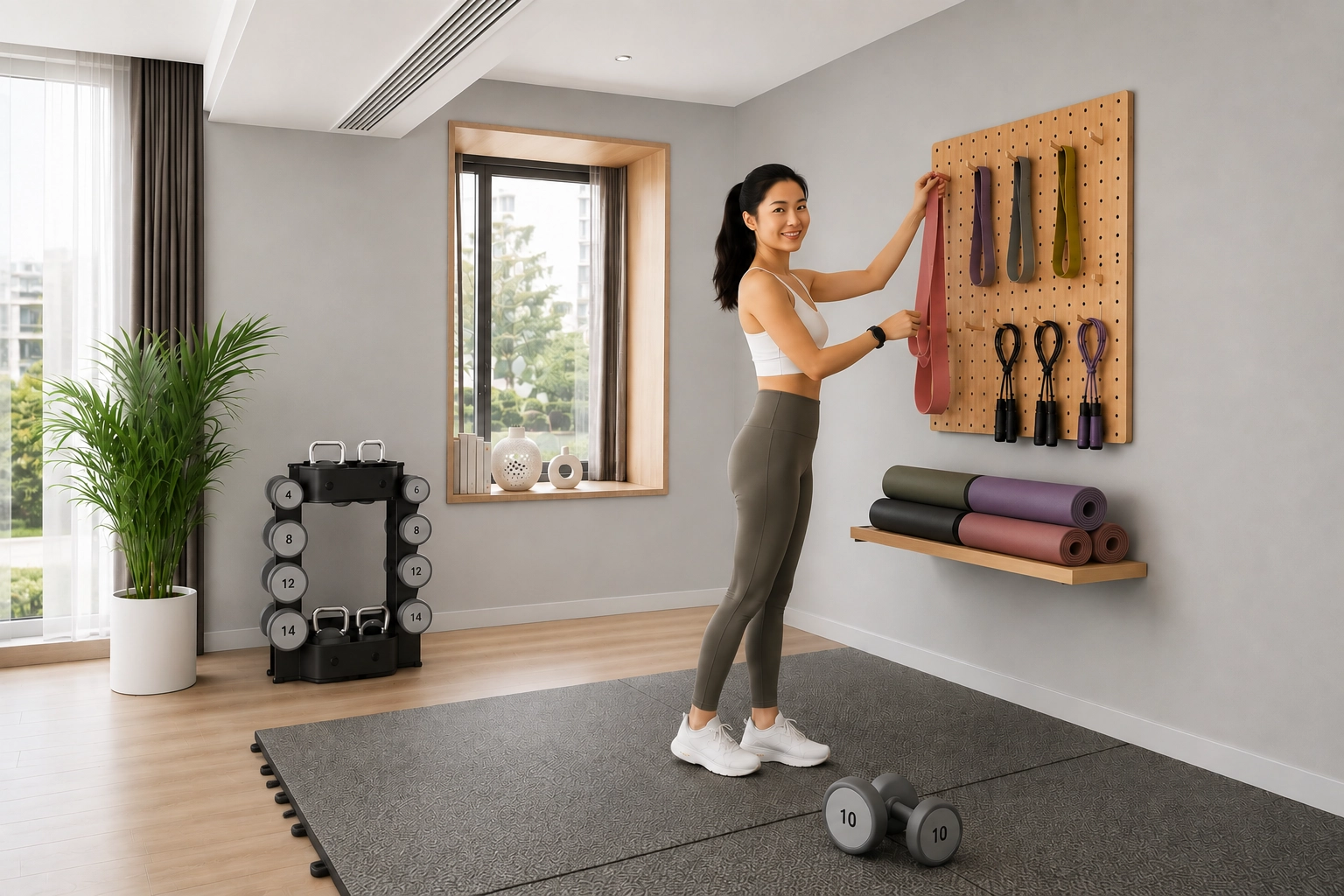
Plan the Wall Layout Before You Drill
Mark everything with painter’s tape first. Stand where you’d train and check that nothing is at head height in a swing path or overhead press arc. This costs five minutes and prevents the specific injury of pressing a barbell into a shelf.
Group storage by frequency. Daily-use items go at chest height, weekly items higher or lower, and rarely-used gear in the least convenient spots. Always mount into studs, not drywall anchors, for anything holding real weight. A plate rack pulling out of drywall is an expensive lesson.
For more cheap upgrades that pair well with storage, our guide on DIY gym home design ideas on a budget covers flooring, lighting, and mirror tricks. If you want the space to look deliberate rather than improvised, browse modern gym home design trends for 2026 and our full gym designs category.
Keep Storage Working Long Term
Mounted storage needs occasional attention. Check that wall-mounted holders are still tight every few months, since repeated loading works screws loose over time. Wipe down stored equipment before it goes up, because sweat left on a plate that sits untouched for weeks becomes rust.
Our gym home equipment maintenance schedule includes hardware checks that cover mounted storage alongside your machines. If your training space doubles as an office, our guide on how to combine workspace and workout equipment shows how vertical storage keeps both zones usable, and our buying guides category covers gear selection for tight spaces.
Vertical storage is the cheapest way to make a small gym home feel twice as big. Spend 100 dollars on hooks, a tree, and a barbell holder, and you’ll gain more usable training space than most people get from moving to a bigger room.



Write Your Review
No reviews yet. Be the first to share your experience!