

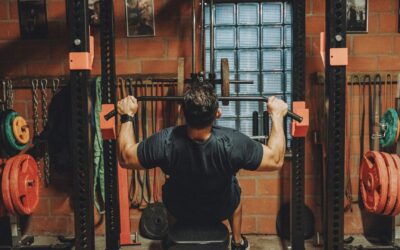
A Smith machine bar that catches mid-rep is almost never a broken machine. It is nearly always one of four things: chalk buildup in the bearings, an out-of-level frame, uneven plate loading, or the wrong lubricant applied confidently. All four take under 30 minutes to diagnose. Here is how to work through them in order.
Start With the Guide Rods
Run a dry cloth down the full length of each rod. If it comes back gray or gritty, you found the problem. Chalk dust, skin cells, and old grease combine into an abrasive paste that binds against nylon bushings or ball bearings.
Clean the rods with isopropyl alcohol on a lint-free cloth, working top to bottom, then let them dry completely. Do not use household degreaser, which can strip the chrome plating on cheaper rods. Once dry, apply a thin coat of silicone spray or dry PTFE lubricant. Grease is the wrong choice here because it attracts exactly the chalk dust that caused the problem, a pattern also covered in the guide on preventing squeaky noises on gym home equipment.
Check Whether the Frame Is Level
Put a 24 inch level on the base at both the front and side. A frame off by more than 1/8 inch across its width will bind the carriage, because the two guide rods are no longer parallel to the bar’s travel path.
Garage floors slope toward the door by design, typically 1/8 inch per foot for drainage. Over a 70 inch base that is nearly an inch of drop. Shim the low side with rubber pads or metal shims until both axes read level, then re-torque the base bolts. This single fix resolves more sticking complaints than lubrication does.
Diagnose by Where It Sticks
| Symptom | Likely Cause | Fix |
|---|---|---|
| Sticks at bottom only | Frame not level | Shim and re-torque |
| Sticks throughout | Dirty rods | Clean and re-lube |
| Sticks one side | Uneven plate load | Match plates per side |
| Grinding noise | Worn bushings | Replace bushings |
| Sticks under load only | Loose hardware | Torque all bolts |
Work down that list before assuming anything is worn out. Bushing replacement is a $20 part on most machines, but it is rarely the actual issue.
Uneven Loading Is More Common Than You Think
Two 25 pound plates on one sleeve and one 45 pound plate on the other looks close enough. It is a 5 pound imbalance that torques the carriage against the rods, and the binding shows up as a catch on the side carrying more weight.
Match plate configurations exactly, not just total weight. Also check your collars. A plate that slides 2 inches outward mid-set shifts the load center and produces the same effect. Heavier builds like these Smith machines for heavy lifters tolerate small imbalances better because of thicker frame steel, but nothing tolerates it indefinitely.
Cable and Multi-Station Units Have More to Check
Machines with attached cable systems add failure points the base frame does not have. A frayed cable or a seized pulley creates drag that feels exactly like a sticking bar, and people spend an hour cleaning rods that were never the problem.
Spin every pulley by hand. Any that resists or grinds needs attention. On a Smith machine with a cable crossover system under 4000 dollars you may have eight or more pulleys to check, and units like these all-in-one Smith machines under 5000 dollars or a Smith machine with a lat pulldown under 1000 dollars route cables near the guide rods, where a misaligned cable can rub the carriage directly.
A Little Resistance Is Supposed to Be There
Here is the part nobody mentions. Smith machines are not meant to glide like a well-oiled drawer. Linear bearings on a good frame have a small amount of consistent resistance, and chasing perfect frictionless travel leads people to over-lubricate until the rods are slick, dusty, and worse than before.
The real measure is consistency, not smoothness. If the bar feels the same at every point in its travel, your machine is fine even if it is not effortless. Nylon bushings on entry-level units in the $500 to $900 range simply feel heavier than sealed bearings, which is a design difference rather than a fault, as this guide on choosing a Smith machine without overspending explains.
Clean the rods monthly, level the frame once, and match your plates every session. Wipe down the pads and grips too, since sweat residue migrates onto the rods faster than you would expect, and this guide on deep cleaning gym equipment covers doing that without damaging upholstery.


Write Your Review
No reviews yet. Be the first to share your experience!