

A living room gym has one requirement the garage never does: it has to look like it belongs. Nobody wants a black steel rack dominating the room where they watch TV and host guests. The good news is that visual bulk and physical footprint are different problems, and the tricks that solve one often solve the other. A gym home can share a living room without either function feeling like an intruder.
Understand What Actually Looks Bulky
Equipment reads as bulky for reasons that have little to do with size. A tall black rack in the middle of a wall dominates a room. The same rack tucked into a corner, painted a lighter color, with open sightlines around it, largely disappears.
Three factors drive visual weight: color, sightlines, and floor contact. Dark matte finishes absorb light and look heavier than lighter or reflective ones. Solid panels look heavier than open frames. Anything sitting flat on the floor across a wide base reads as furniture-sized, while equipment on slim legs or wall-mounted reads as lighter.
Work with those three and a surprising amount of equipment becomes livable in a shared space.
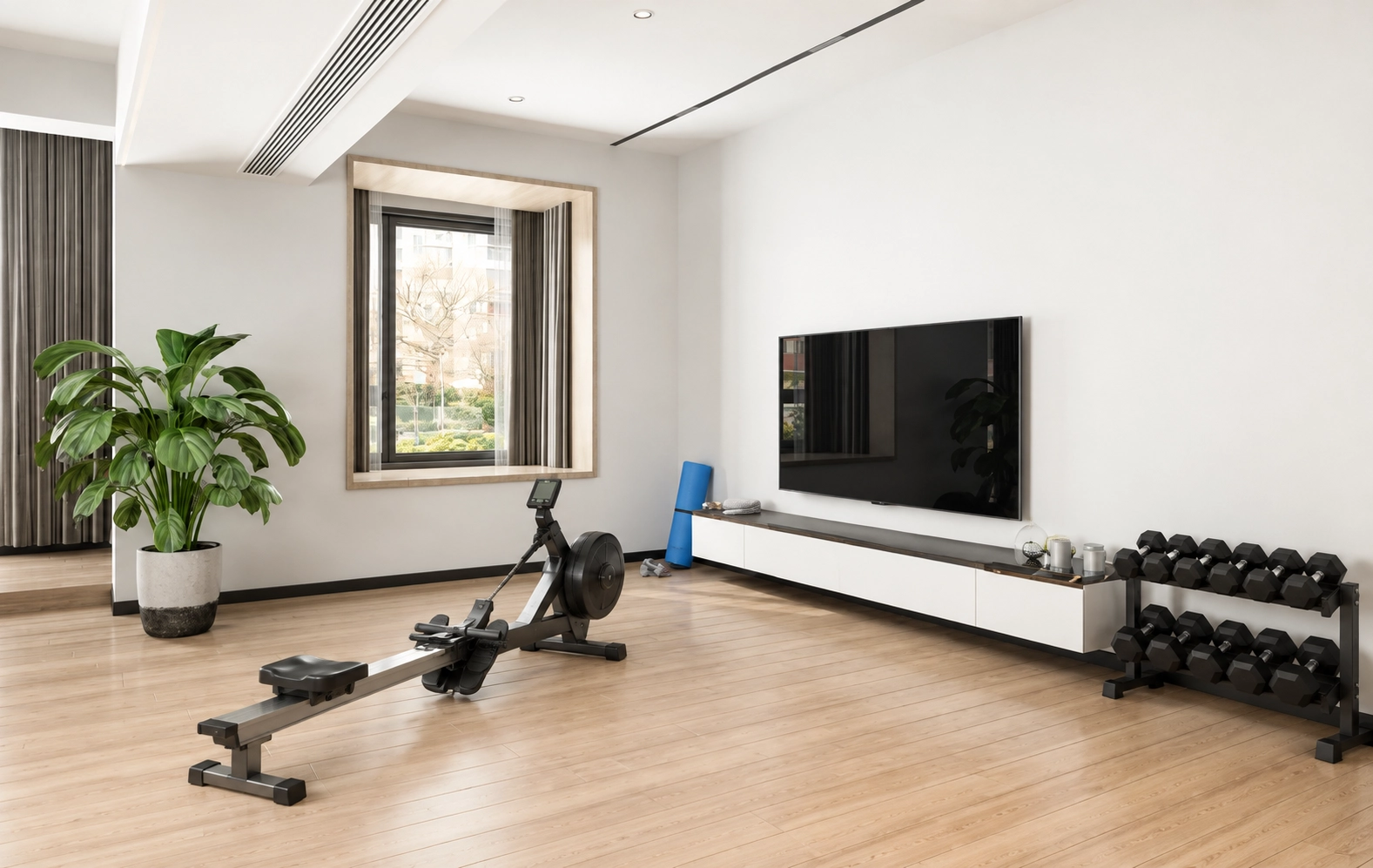
Choose Equipment With a Small Visual Footprint
Some machines simply hide better than others. Rowing machines are the standout since they store upright against a wall in about two square feet and look more like a piece of furniture than gym equipment when folded. Our roundup of the best folding rowing machines covers models that fold and stand cleanly rather than requiring a wrestling match.
Exercise bikes are the other strong option, particularly compact uprights that read as a chair-sized object rather than a machine. Our guide on how to choose an exercise bike for small spaces covers the measurements to check first, and our roundup of the best exercise bikes for small spaces from 300 to 400 dollars covers models with minimal visual presence.
For strength work, compact racks with narrow footprints and open frames sit in a corner far more gracefully than full cages. Our list of the best power racks for small spaces covers designs that don’t dominate a room.
Hide Weights in Plain Sight
Loose weights scattered on a floor are what actually makes a living room look like a gym. Contained, organized weights look intentional.
- Closed storage benches: An ottoman or storage bench holds dumbbells and doubles as seating.
- Basket storage: Woven baskets hide kettlebells, bands, and mats while fitting most decor.
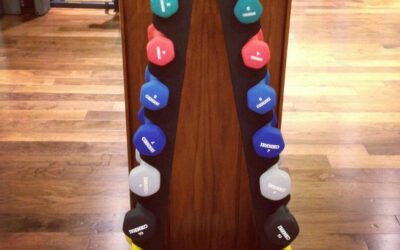
- Vertical plate trees: A tall narrow tree in a corner reads as a sculpture more than a rack.
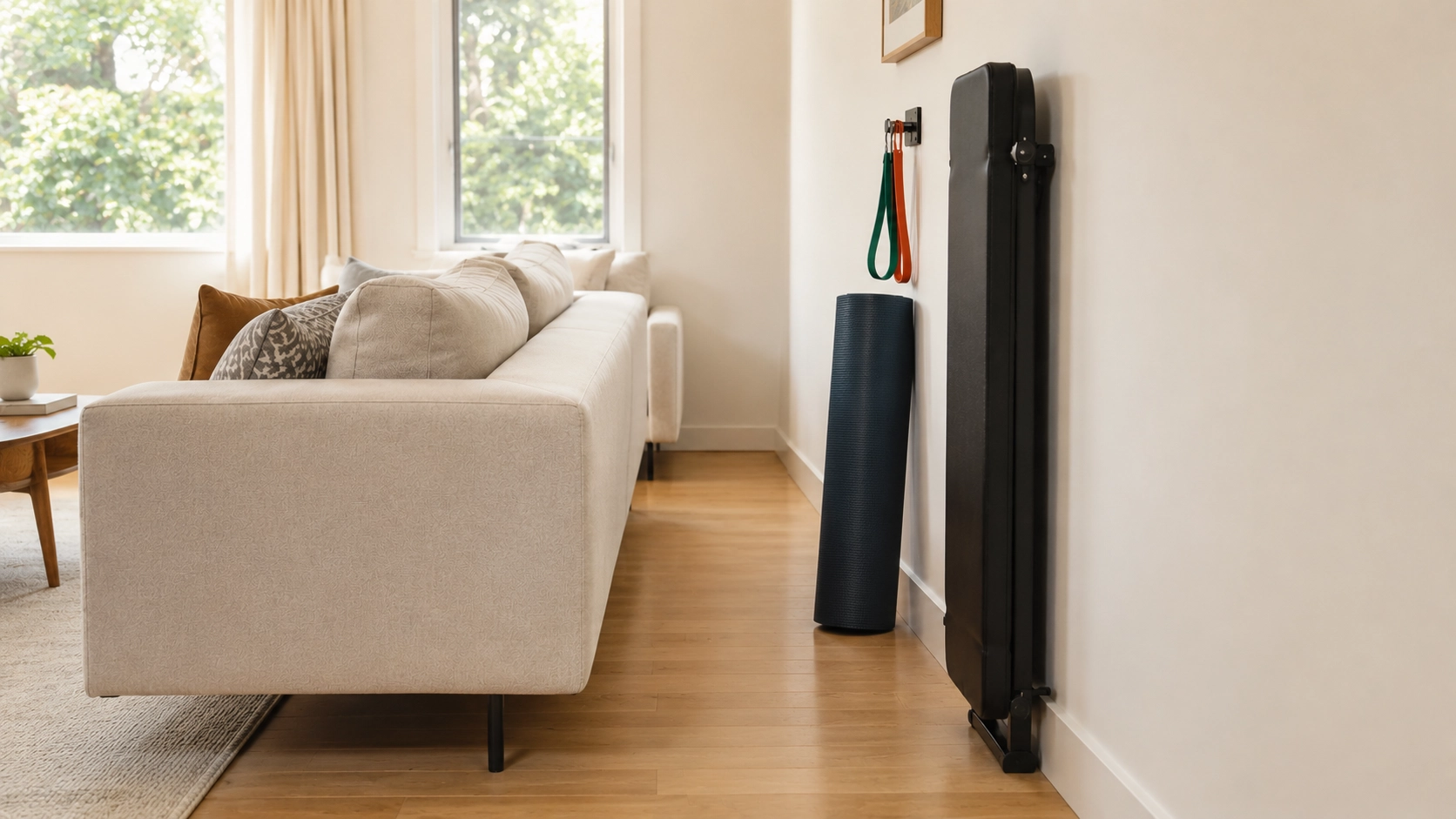
- Behind-the-sofa gaps: The space behind a floating sofa fits mats, bands, and a folded bench.
- Media unit shelving: Hex dumbbells on a low shelf look deliberate when spaced evenly.
Getting equipment off the floor is the highest-impact move, and our guide on vertical storage solutions on a budget covers wall-mounted options that suit shared rooms.
Let One Machine Do Everything
The cleanest living room setups usually contain one piece of equipment rather than five. A single well-chosen machine avoids the cluttered look that comes from a rack, a bench, a bike, and a plate tree competing for attention.
Smart trainers are the strongest option here since they replace an entire equipment collection with one unit. Digital resistance means no plates, no bar, and no storage problem, and many are designed to look more like consumer electronics than gym equipment. Our roundup of the best smart Smith machines from 3000 to 4000 dollars from Speediance covers units built for exactly this scenario.
It’s a real budget jump, but compare it against buying a rack, bar, plates, bench, and cardio machine separately, and the math is closer than it looks. It also solves the aesthetic problem in one purchase.
Match the Equipment to Your Decor
The final step is making equipment look chosen rather than tolerated. Match finishes to what’s already in the room. Wood-accented equipment suits warm interiors. White or light gray frames disappear against light walls far better than black.
Retro-styled gear works unusually well in living rooms since vintage aesthetics read as decor rather than fitness equipment, and our guide on vintage and retro gym home design ideas covers that direction. For a cleaner contemporary look, browse modern gym home design trends for 2026.
Small touches help: a rug under the training area defines the zone without walls, a plant beside a bike softens the machine outline, and a mirror serves both fitness and decor purposes. For more compact equipment across categories, browse our space-saving collection.
Pick one or two machines, store the weights inside something with a lid, and choose finishes that match what’s already in the room. Do that and most guests won’t register that they’re sitting in a gym home at all.







Write Your Review
No reviews yet. Be the first to share your experience!