

A power rack is one of the most versatile and essential pieces of equipment for a serious gym home. Whether you are training for strength, building muscle, or just want a solid foundation for compound lifts, choosing the right power rack can make or break your fitness setup. The good news is that with a clear understanding of what to look for, you can find a rack that fits your space, budget, and goals.
What is a Power Rack and Why You Need One
A power rack, also called a squat rack or cage, is a metal frame structure that safely holds a barbell at adjustable heights. It typically features vertical uprights, horizontal safety bars, and J-cups that cradle the weight so you can load, unload, and perform heavy lifts with confidence. Unlike Smith machines or other guided equipment, power racks allow for free-range movement, which means your stabilizer muscles work harder and you build functional strength. Research shows that compound movements like squats and bench presses performed in a power rack deliver both physical and mental benefits, making a quality rack a worthwhile investment for any gym home.
Size and Space Considerations
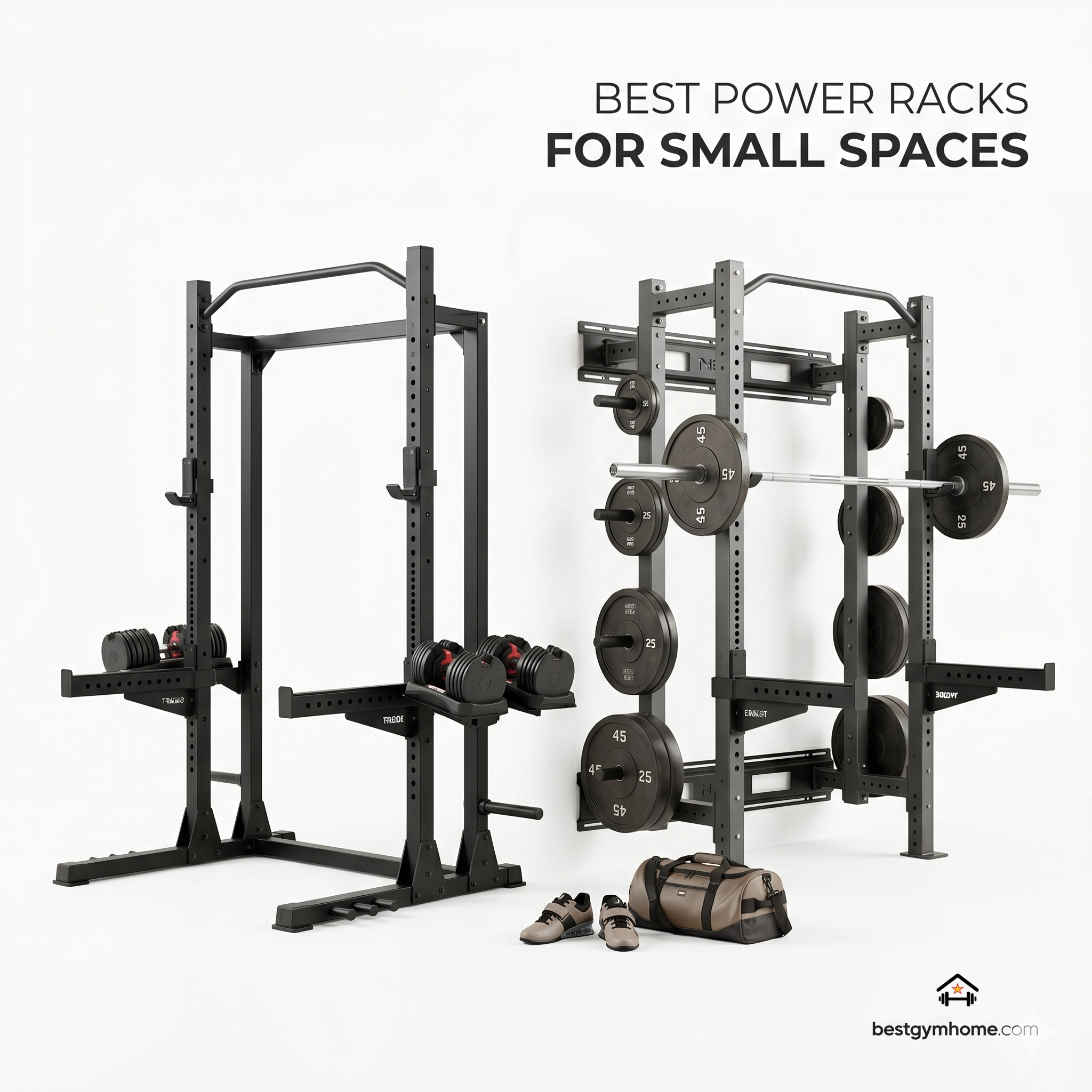
Before you fall in love with any specific model, measure your space honestly. Power racks come in full-height versions (around 90 inches tall) and smaller half-racks or folding models. If your garage or basement has low ceilings, a half-rack or folding design might be your only option. Consider not just the footprint of the rack itself, but also the space you need to move weight plates, set up a barbell, and step back after a lift. A rack that leaves only inches of clearance on all sides will feel cramped and unsafe. If floor space is tight, check out our guide to the 10 best power racks for small spaces of 2026 to find compact models that don’t sacrifice functionality.
Key Features to Evaluate
Not all racks are built the same. Look for models with adjustable safety bars that sit just below where you’d bail out on a squat or bench press. These catch the weight if you fail, preventing injury and giving you confidence to push harder. J-cups should have rubber padding and secure firmly so the bar doesn’t shift during lifts. Check the distance between uprights: wider spacing accommodates wider grip bench presses and accommodates box attachments better.
Attachment compatibility matters if you plan to grow your setup. Some racks work with a standard 11-inch hole spacing, while others are proprietary. If you think you’ll add dip attachments, plate storage pins, or cable machines later, verify that your chosen rack has a robust ecosystem of add-ons. Read reviews and check manufacturer spec sheets to see what’s available. Visit our power rack category on site to compare models and their attachment options side by side.
Weight Capacity and Build Quality
A power rack should handle well beyond your current max lifts. Most quality racks are rated for 500 to 1000+ pounds of static load capacity, but this varies by model. Check if the rating is per side or total, and whether it accounts for dynamic movement or just static holds. Thicker steel and reinforced welds indicate durability, but weight doesn’t tell the whole story. A well-engineered lightweight rack can outperform a heavier but poorly constructed one.
Examine the materials closely. 11-gauge steel or thicker is standard for uprights. Look for welds that are consistent and smooth, not sloppy or uneven. If you’re looking at used equipment, inspect for cracks, rust, or bending, which signal past misuse. Quality doesn’t always mean premium pricing; many mid-range racks offer excellent build for the cost and will last decades with basic care.
Budget Tiers and Value
Power racks range from under 500 dollars for no-frills models to 3000 dollars or more for premium commercial gear. Most gym home enthusiasts find excellent value between 800 and 1500 dollars. In that range, you get solid steel, good safety features, and decent attachment compatibility without paying for bells and whistles you don’t need. Budget racks often have narrower spacing, fewer hole options, and lighter gauge steel, which works fine if your lifts are moderate.
If your goal is to build strength and understand your fitness baseline, use our BMI calculator and set realistic training targets. This helps you choose a rack with appropriate capacity without over-buying. Premium racks justify their cost through better ergonomics, quieter operation, and more attachment options, which matters if you plan to keep your setup for years and add equipment gradually.
Safety and Stability
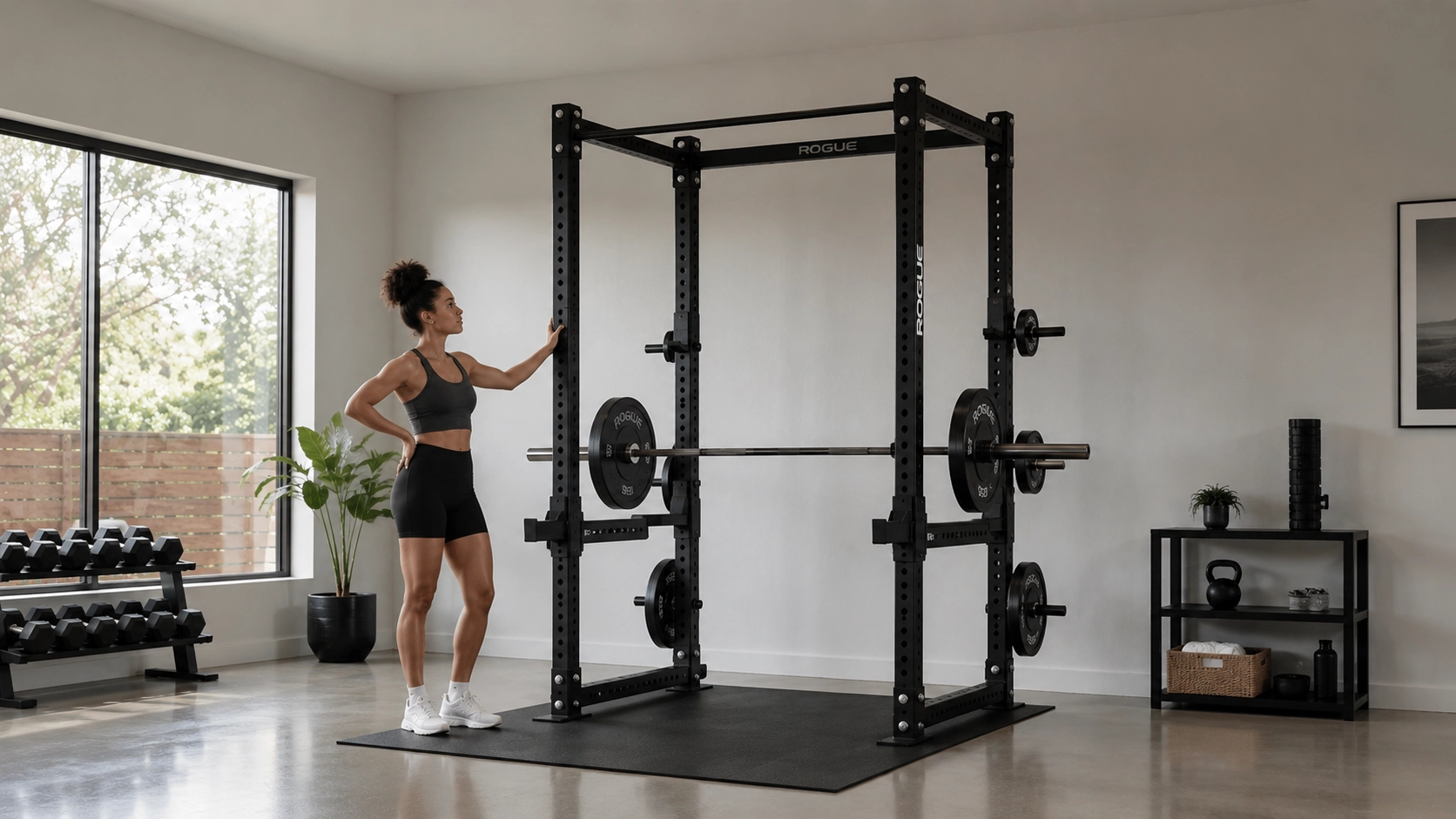
Safety should never be an afterthought. Ensure the rack sits flat and stable on your floor without rocking. Uneven concrete or wood flooring can cause wobbling, so use shims or leveling feet if needed. Check the stability by pressing hard on the uprights before you load any weight. The base should feel rock solid.
Check that safety pins slot smoothly and hold firmly at various heights. Poor-fitting pins that bind or drop too easily defeat their purpose. Make sure J-cups grip the barbell securely without marring it. A loose barbell in mid-lift is a safety hazard and a quick way to destroy your bar and your confidence. Watch user videos on YouTube and read reviews to see how others’ racks perform over time.
Making Your Decision
Start by defining your non-negotiables: your space limits, your budget, and your primary lift goals. Next, visit manufacturer websites, read independent reviews, and if possible, try equipment in person at a local gym or fitness store. Ask other lifters in online communities what they use and why they like it. Your perfect rack exists somewhere between the dream model you can’t afford and the bare-bones option that leaves you frustrated. Choose something built solid, sized right for your space, and priced fairly. Once it’s in your gym home, that power rack will serve you well for years of hard training.






Write Your Review
No reviews yet. Be the first to share your experience!