
Folding treadmills solve a real problem: a treadmill is the largest cardio machine most people own, and the one they use least frequently per square foot. Folding one away between sessions reclaims a chunk of a room. The complication is that “folding” describes everything from a deck that tilts up 80 degrees to a walking pad that slides under a sofa, and those are very different machines for very different people.
Understand the Three Folding Types
Knowing which category you’re shopping in narrows the field faster than any spec comparison.
| Type | Folded Size | Top Speed | Best For |
|---|---|---|---|
| Walking pad | Slides under furniture, 5 in tall | 4 to 6 mph | Walking, desk use, apartments |
| Vertical-fold treadmill | Deck upright, still 3 ft footprint | 10 to 12 mph | Running, serious training |
| Fully folding compact | Folds flat or wheels away | 8 to 10 mph | Jogging, mixed use |
The important thing to notice is that a vertical-fold treadmill does not disappear. It stands up and takes less floor space, but it’s still a large object in the room. Only walking pads genuinely vanish.
If you mainly walk and need the machine gone between uses, our roundup of the best portable walking pads from KingSmith WalkingPad covers models that slide under a bed or sofa. For running, our list of the best folding treadmills covers full-size machines with proper fold mechanisms.
Measure Both Dimensions, Not Just One
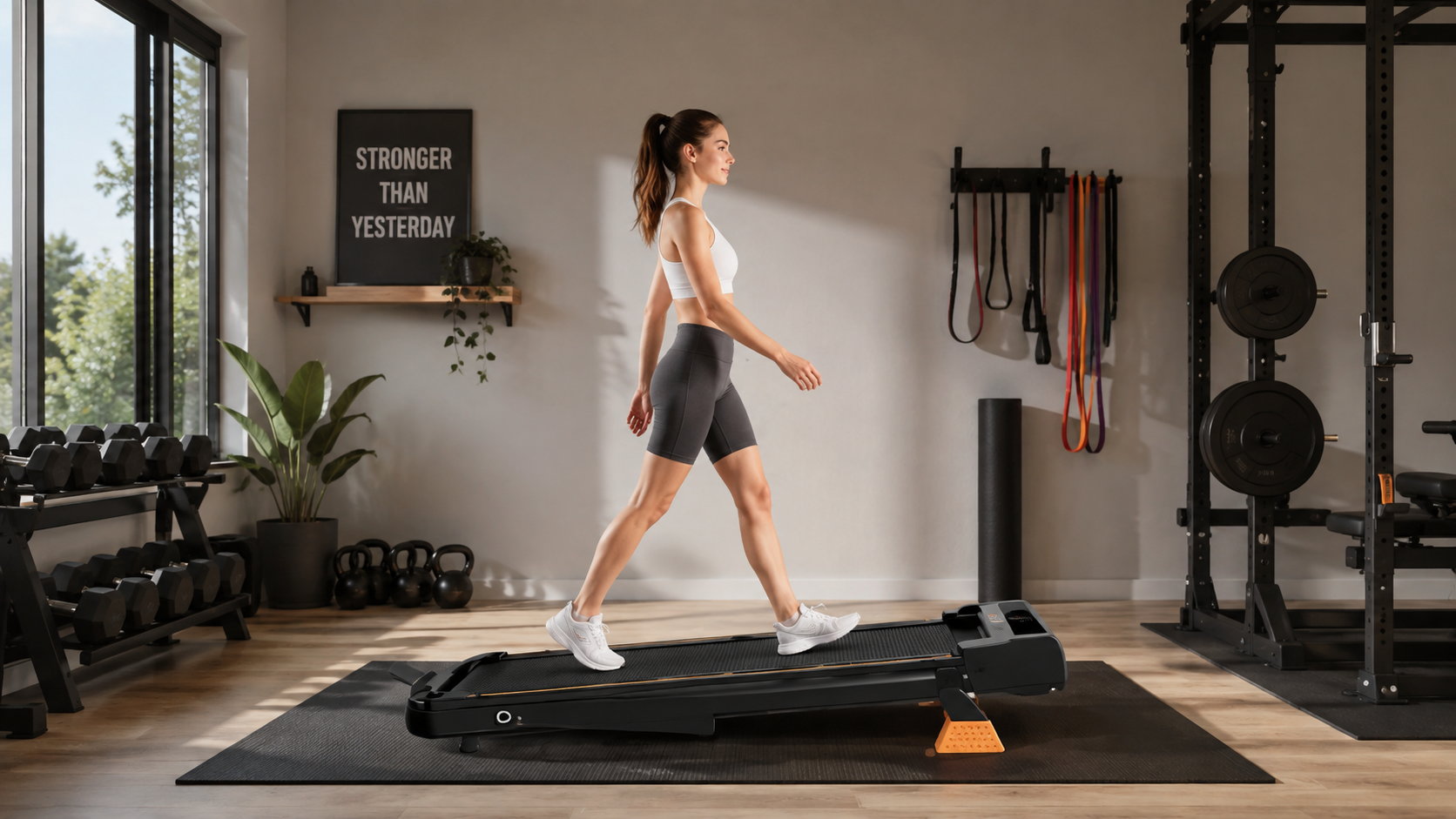
The mistake almost everyone makes is checking the folded dimensions and forgetting the unfolded ones. You need space for both states, plus clearance to actually run.
Leave at least three feet of open space behind the treadmill. This is a safety requirement, not a comfort preference, since a stumble sends you backward off the belt. Check ceiling height too if you’re considering a vertical-fold model, because a deck standing upright can reach six feet or more.
Then measure the storage destination. A walking pad that fits under a bed frame with two inches of clearance is fine. One that needs two inches more than you have is a very expensive floor decoration.
Don’t Compromise on Deck and Motor
This is where budget folding treadmills disappoint. Folding mechanisms add weight and complexity, so manufacturers often cut the deck and motor to hit a price point.
Belt length matters most. Runners need 55 to 60 inches to avoid shortening their stride, while walkers manage fine at 45 to 50. If you’re taller than 5’10” and plan to run, a short deck will make the machine unusable no matter how neatly it folds.
Motor rating tells you what the machine tolerates long term. Look for 2.5 continuous horsepower or higher for running, 2.0 for jogging, and 1.5 for walking. A motor running at its limit every session will not last.
Weight capacity is also a proxy for frame quality. A machine rated for 300 pounds is built more solidly than one rated for 220, regardless of your own weight. Our roundup of the best high-performance NordicTrack treadmill machines covers models where folding doesn’t come at the cost of deck size or motor strength.
Check the Fold Mechanism Itself
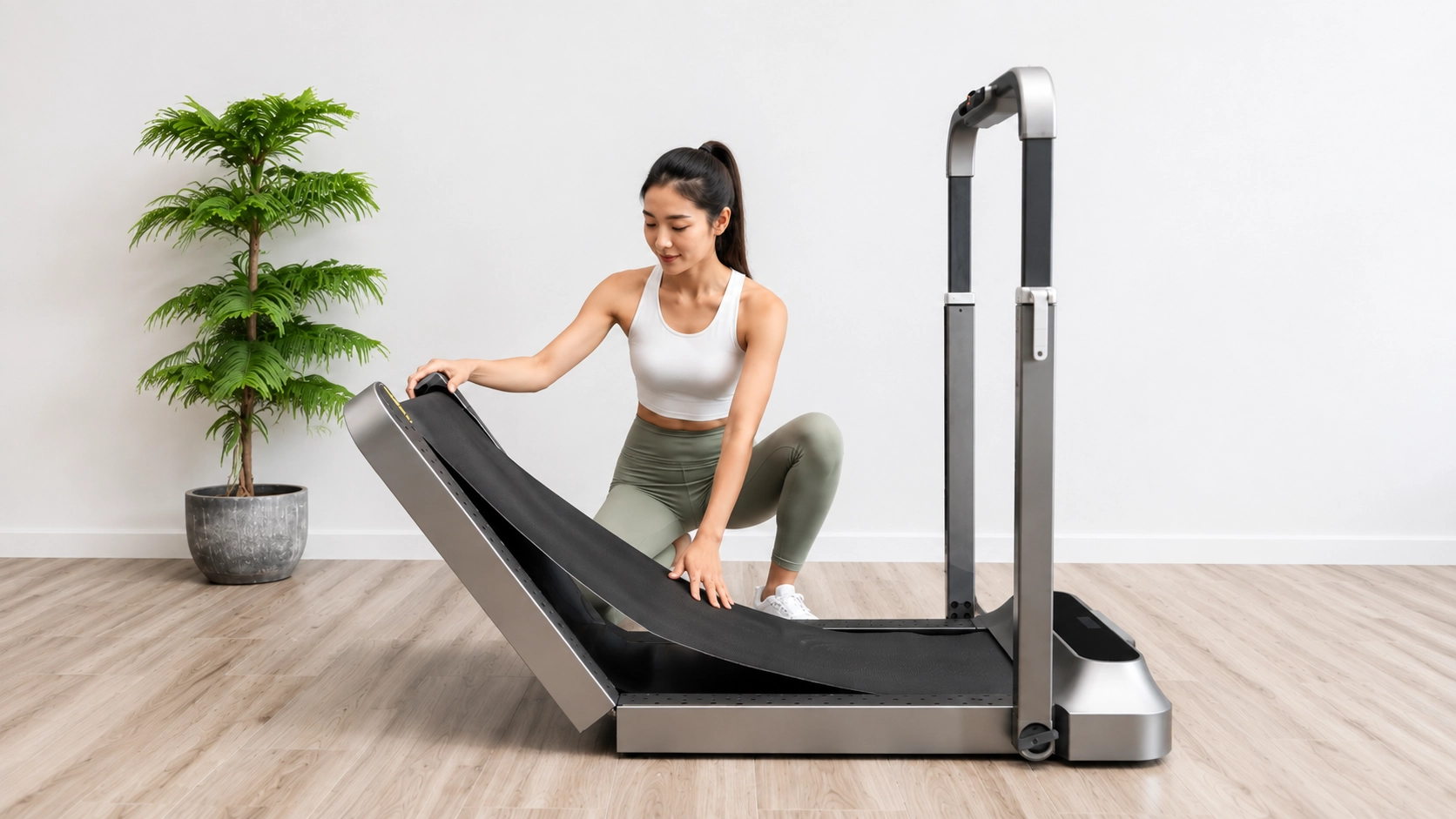
A fold you dread using is a fold you stop using. The mechanism deserves as much attention as the specs.
- Hydraulic assist: Lets the deck lower slowly instead of dropping. Nearly essential on heavier machines.
- One-handed operation: If it takes two people or a tool, it will stay unfolded permanently.
- Transport wheels: Check they’re on the right end and roll on your flooring type.
- Locking latch: A folded deck that can release on its own is a hazard, especially with kids or pets.
- Fold weight: Some folded machines still weigh 150 pounds. Confirm you can move it alone.
If possible, try folding one in person before buying. The listing photo never shows how much effort the mechanism actually takes.
Match the Machine to Your Room
Where the treadmill lives shapes which type makes sense. In a shared living space, visual bulk matters as much as footprint, and our guide on living room gym design ideas that don’t look bulky covers keeping equipment visually light.
If your gym home shares a room with a desk, a walking pad under a standing desk is the strongest use case for folding cardio, and our guide on combining workspace and workout equipment covers those layouts.
It’s also worth confirming a treadmill is the right machine at all. Our guide on treadmill vs elliptical compares both on impact, footprint, and noise. For a broader look at models across price points, browse our full treadmills category.
Plan around realistic session lengths too. Most treadmill workouts land in the 20 to 45 minute range depending on intensity and goals, which means the machine is folded away far more hours than it’s running.
Decide first whether you walk or run, since that single answer eliminates two of the three categories. Then measure both the open footprint and the storage spot before you look at a single price.


Write Your Review
No reviews yet. Be the first to share your experience!