

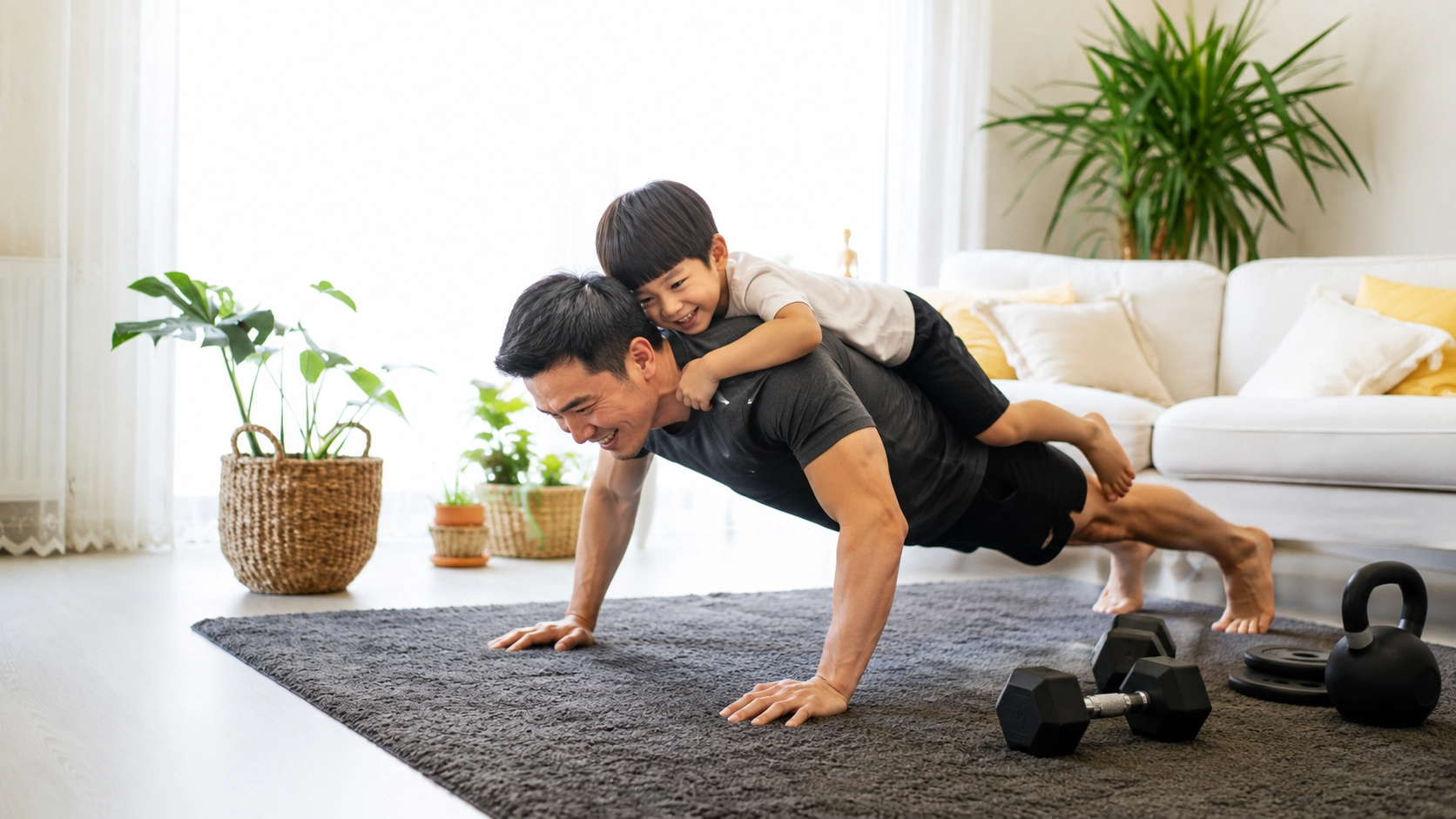
A gym home in a house with kids has a design constraint most training spaces don’t: it has to be safe when nobody is supervising it. Children are drawn to equipment precisely because it looks like playground apparatus, and a weight plate leaning against a wall is a crush injury waiting for a curious four-year-old. The good news is that a family-safe setup isn’t a compromised one. Most of the changes make the space better for adults too.
Secure Everything That Can Fall
This is the non-negotiable starting point. Tip-over incidents involving furniture and heavy objects send thousands of children to emergency rooms every year, and gym equipment is heavier than most furniture.
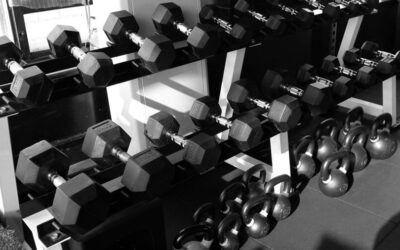
Anchor every tall piece to wall studs using furniture straps or the manufacturer’s anchor kit. Racks, plate trees, dumbbell racks, and standing benches all qualify. If it’s taller than a toddler and heavier than one, strap it.
Never lean plates, bars, or benches against a wall. A 45-pound plate that slides sideways is genuinely dangerous, and it will eventually slide. Store plates horizontally on a tree or flat on the floor, and lay barbells on the ground or in a secured holder rather than standing them upright.
Wall-mounted equipment sidesteps the problem entirely since there’s nothing freestanding to topple. Our roundup of the best wall-mounted power racks from 200 to 500 dollars covers folding rack designs that mount to studs and swing flat against the wall when not in use.
Control Access Without Locking the Room
Total lockout rarely works long term, since a room the family can’t enter tends to become a room nobody uses. Layered access control works better.
- Remove treadmill safety keys: Take the key out and store it high after every session. A treadmill without its key cannot start.
- Unplug cardio machines: Two seconds of effort, eliminates all powered movement.
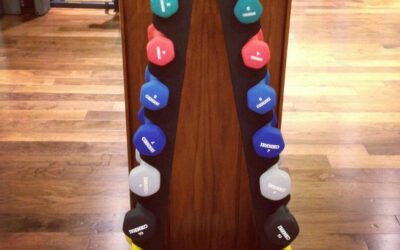
- Store small weights in closed containers: Dumbbells under 20 pounds are the ones kids can lift and drop.
- Use a door gate rather than a lock: Keeps toddlers out while letting older kids and adults in.
- Set a visible rule: A simple sign works better than assuming everyone remembers.
Cable machines and Smith machines deserve extra attention since children can climb into them. If yours has a weight stack, use the pin lock if it has one, or store the stack at its heaviest setting so it cannot be moved by small hands.
Choose Equipment That Suits Multiple Bodies
Family setups serve people of very different sizes, and equipment that only fits one adult limits the room’s usefulness.
Adjustable benches handle wildly different body sizes, and the ability to change angles means the same bench works for a teenager doing light presses and an adult training heavy. Our roundup of the best adjustable weight benches under 200 dollars covers models with wide adjustment ranges.
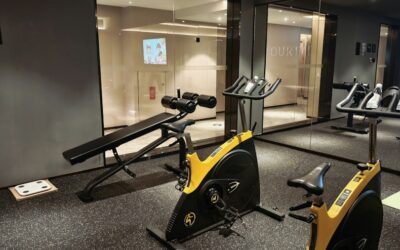
Bikes are the most family-friendly cardio option since seat height adjusts easily and there’s no moving belt. Compact uprights suit teens and adults, and our list of the best exercise bikes for small spaces from 300 to 400 dollars covers models that fit a shared room.
If grandparents are part of the household, recumbent bikes serve them best while remaining usable for everyone else. Our roundup of the best recumbent exercise bikes for seniors between 500 and 600 dollars covers step-through designs, and our guide on senior-friendly gym home design covers layout adjustments that help older family members.
Design the Floor and Layout for Traffic
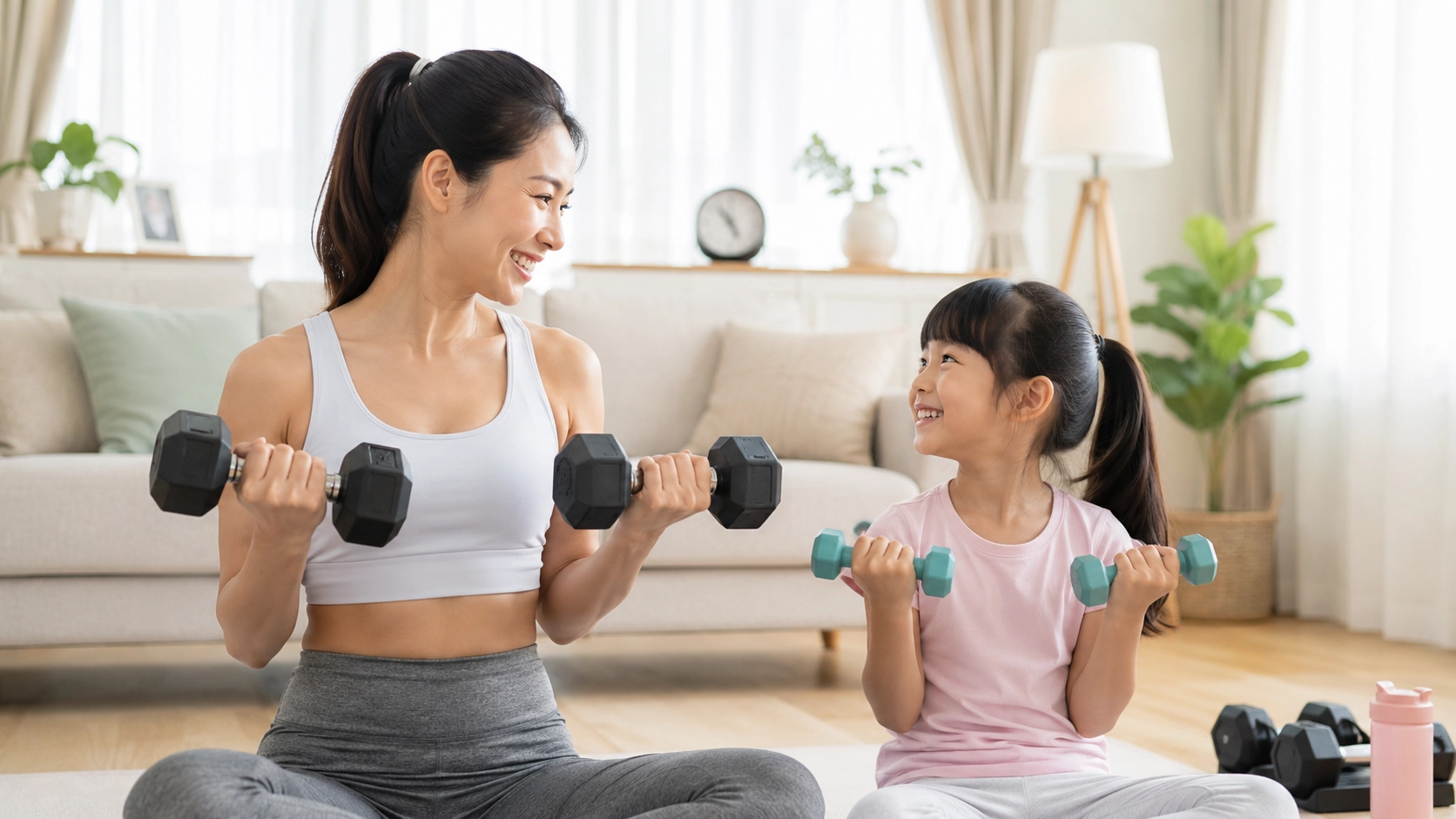
Flooring does double duty in family spaces. Rubber matting protects floors from dropped weights and cushions falls from kids who will absolutely run through the room at some point.
Use firm, low-pile rubber rather than thick foam tiles. Foam feels safer but it’s unstable underfoot for adults lifting, and kids can pull the interlocking pieces apart. Cover the whole training area rather than patches, since mat edges are tripping hazards.
Keep walking paths clear and wide, at least three feet. Set up equipment against walls rather than in the middle of the room, which leaves open floor for bodyweight work, stretching, and kids doing whatever kids do.
Rounded-corner equipment and padded rack uprights reduce injury from the collisions that will happen. Pool noodles cut lengthwise and zip-tied to rack posts cost almost nothing and work well. Our guide on DIY gym home design ideas on a budget covers other cheap upgrades in the same spirit.
Make It a Room the Family Uses
A space kids are welcome in, under supervision, is a space they learn to respect. Total exclusion often backfires by making equipment more interesting.
Set aside floor space for kid-appropriate movement: a mat for tumbling, light resistance bands, or space to do jumping jacks alongside a parent. Portable walking pads work well here since they’re low to the ground, slow, and easy to store completely out of reach afterward. Our roundup of the best portable walking pads from KingSmith WalkingPad covers models that slide under a bed between uses.
If the room doubles as a home office or playroom, zoning matters more than in a dedicated gym. Our guide on combining workspace and workout equipment covers layouts that keep separate functions from bleeding into each other.
Strap everything tall, remove the treadmill key, store plates flat, and keep the floor clear. Four habits, and the room stops being something you worry about when you hear footsteps upstairs.


Write Your Review
No reviews yet. Be the first to share your experience!