
Designing a gym home for someone over 65 isn’t about buying gentler equipment. It’s about removing the things that cause falls, making everything easy to get on and off, and putting the space somewhere it will actually get used. Get those right and a home setup is safer than most commercial gyms, where the equipment is spaced for crowds and nobody is watching the floor.
Start With Fall Prevention, Not Equipment
Falls are the primary safety concern in any senior training space, and most of the risk sits in the room rather than the machines.
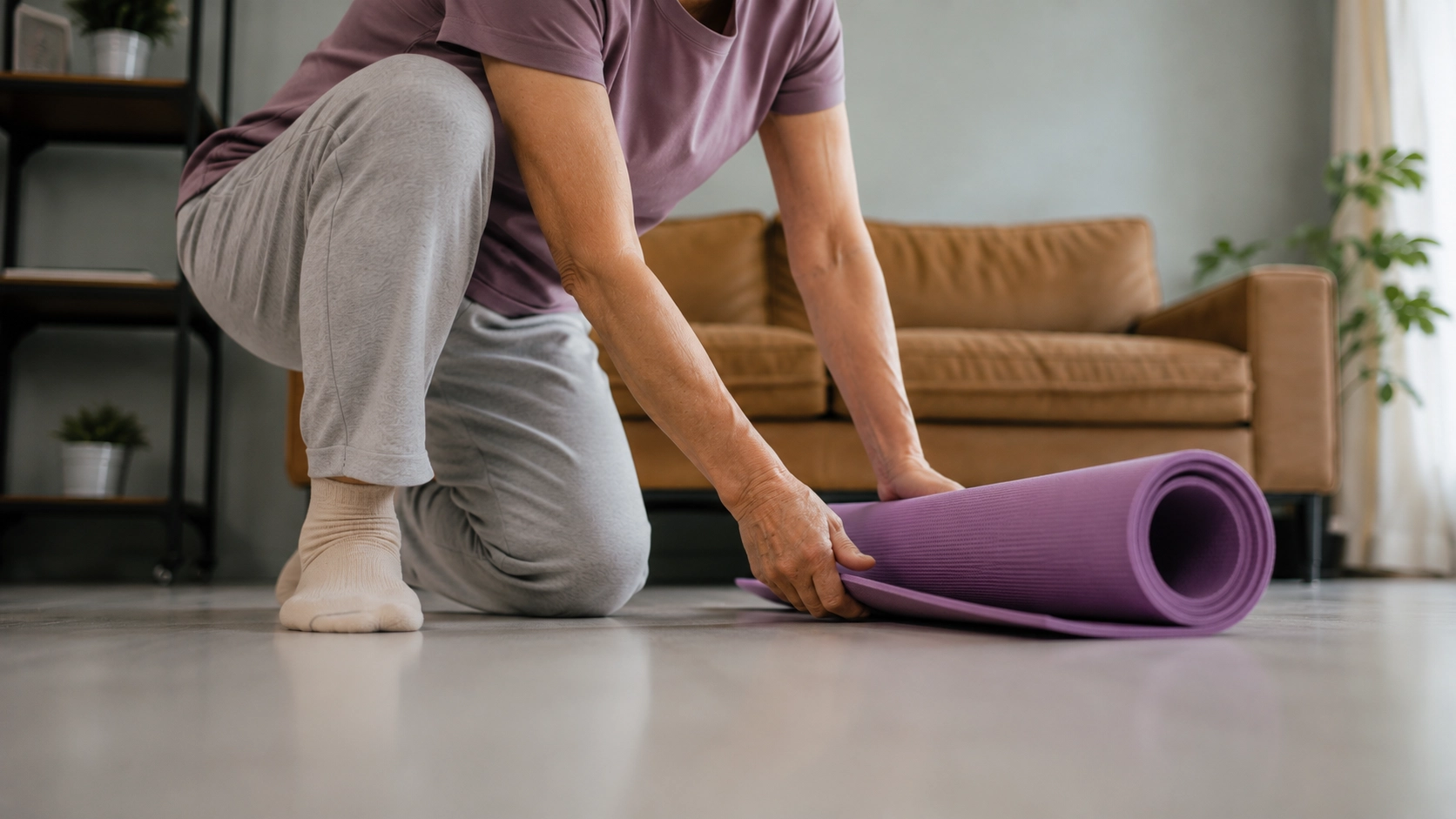
Flooring should be firm and non-slip. Thick foam tiles feel safe but they’re actually unstable underfoot, which makes balance work harder. Low-pile rubber matting gives grip without the sink. Eliminate every transition, threshold, and loose mat edge, since those cause more falls than any machine.
Lighting matters more than people expect. Aging eyes need roughly twice the light of younger ones, so bright, even overhead lighting with no dark corners is essential. Add a second light source at floor level if the room has any shadowed areas.
Keep a clear walking path at least three feet wide between all equipment, and install a sturdy handrail or place a stable chair within reach of every station.
Choose Equipment You Sit Down Into
Step-through access is the single most useful design feature. Machines that require stepping over a frame, climbing up, or balancing during mounting introduce risk before the workout even starts.
Recumbent bikes are the strongest starting point. The seat sits low, the back is supported, and there’s nothing to climb over. Our roundup of the best recumbent exercise bikes for seniors between 500 and 600 dollars covers models with wide step-through frames and proper lumbar support.
Upright bikes work too, provided they have real back support rather than a token pad. Our list of the best exercise bikes with back support covers options that keep the spine supported through longer sessions.
For anyone using a wheelchair or with significant mobility limitations, purpose-built equipment exists and works well. Our roundup of the best exercise bikes for handicap and disabled users covers accessible designs.
Prioritize Support and Stability Features
When comparing machines, these features matter far more than resistance range or console technology.
- Extended handrails: Long side rails give continuous support, not just a grab point at the front.
- Low step-up height: Under 6 inches for treadmill decks, ideally lower.
- Slow minimum speed: A treadmill that starts at 0.5 mph is usable. One that starts at 2 mph is not.
- Wide, stable base: Any wobble under load is disqualifying.
- Large, readable displays: High contrast, big numbers, physical buttons over touchscreens.
- Accessible emergency stop: Reachable without looking down or letting go of a rail.
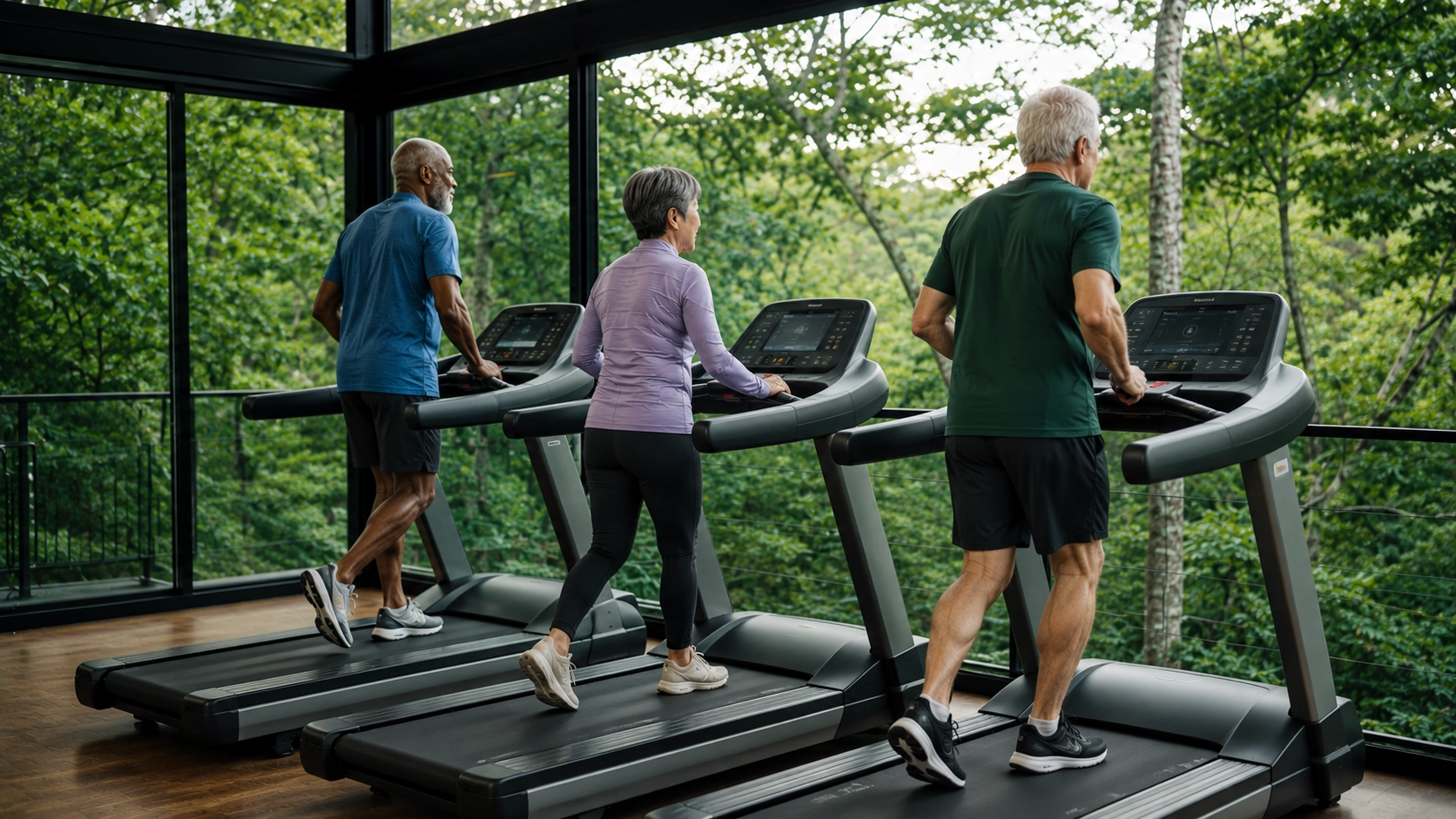
Treadmills need particular scrutiny since they combine a moving surface with balance demand. Our review of the best treadmills for seniors with long handles covers models with full-length support rails and genuinely slow starting speeds.
Build in Low-Impact Cardio Options
Joint-friendly cardio is the backbone of senior training, and having two or three options prevents the boredom that ends routines.
Rowing delivers full-body work while seated, though seat comfort determines whether it gets used more than twice. Our roundup of the best rowing machines with ergonomic seats covers models with contoured seats that don’t punish longer sessions.
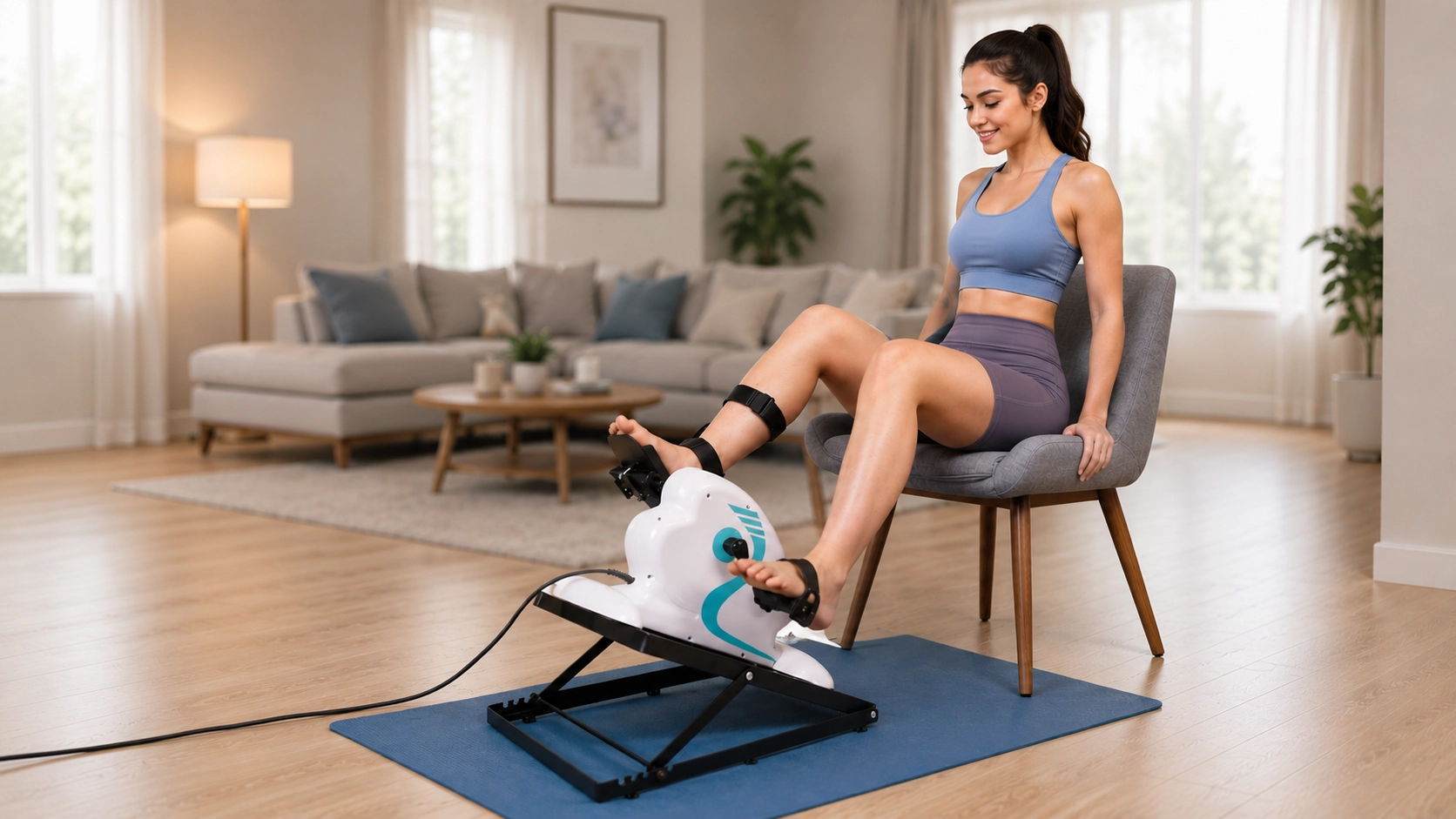
Under-desk equipment deserves a place in any senior setup. It allows movement while seated in a familiar chair, which suits days when a full session feels like too much, and it fits beside a favorite armchair rather than in a separate room. Our review of the best under-desk elliptical machines covers compact options.
Place the Space Where It Will Be Used
A basement gym that requires navigating stairs defeats the purpose. Put senior equipment on the main floor, ideally in a room that’s already part of daily routine.
Near a window is better than a spare bedroom, and a corner of a living room beats a dedicated room nobody enters. Keep a phone within reach at all times, and if training happens alone, set up a check-in routine with family.
Temperature control matters more with age since older adults regulate heat less efficiently. Avoid unheated garages and stuffy attic rooms entirely.
Support Training With Nutrition
Exercise adaptation in older adults depends heavily on adequate protein and stable blood sugar. The National Institute on Aging recommends meal planning built around nutrient-dense foods rather than calorie restriction, since appetite and absorption both decline with age.
Carbohydrate quality matters for energy and blood sugar stability, which affects both workout quality and fall risk. Understanding net carbs helps distinguish between carbohydrates that spike blood sugar and those that don’t. Our net carbs calculator makes that math straightforward for daily meal planning.
Design the room first, then choose the machines. Firm flooring, bright light, clear paths, and equipment you sit down into will do more for safety than any feature on a spec sheet.

Write Your Review
No reviews yet. Be the first to share your experience!