

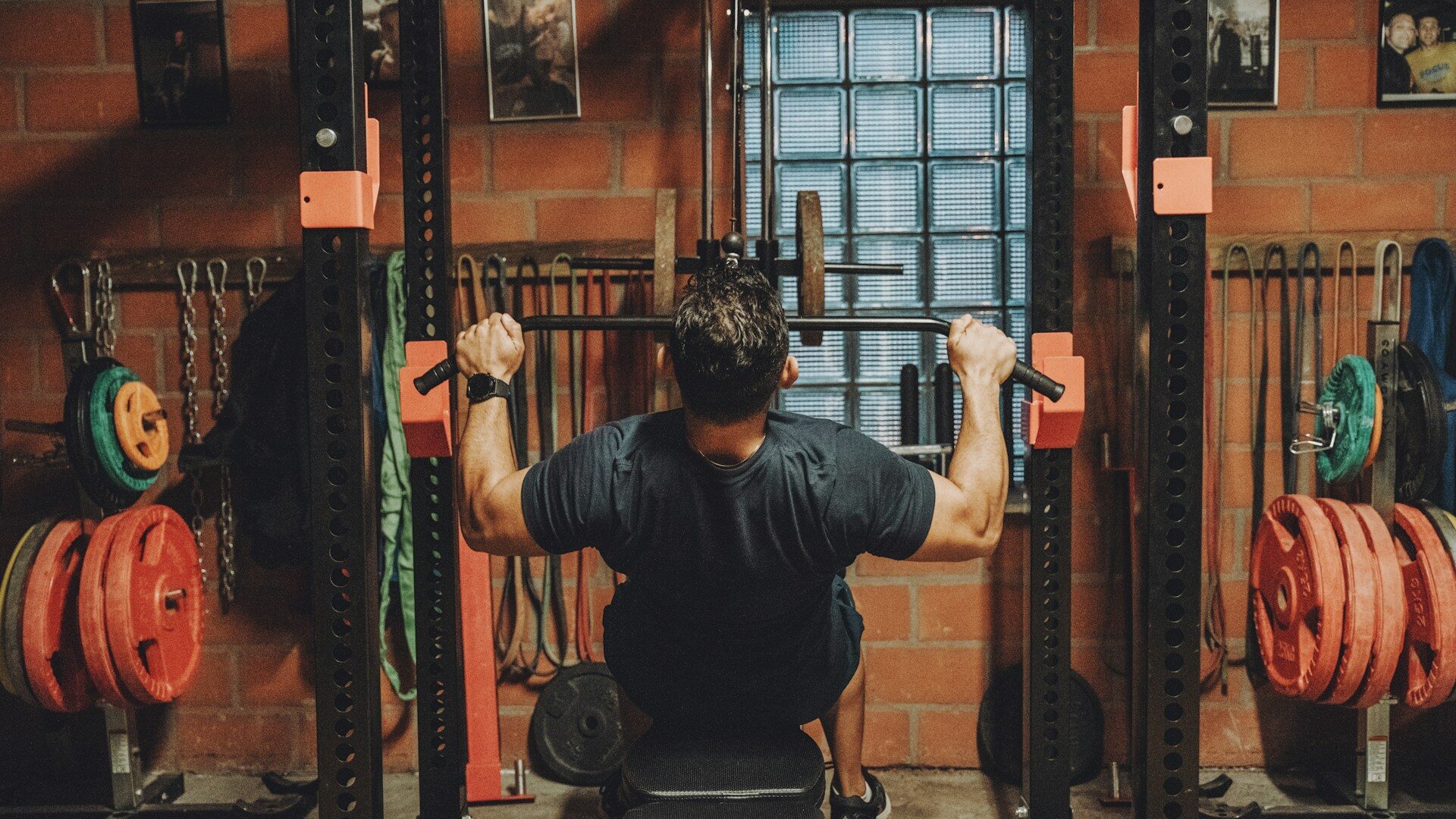
A power rack and a weight bench are the backbone of most strength setups, and they are also the two pieces that eat the most floor. In a spare bedroom or a one-car garage, placing them badly can leave you squeezing past steel every time you walk in. Placed well, the same two pieces share one zone and the rest of the room stays open.
The goal is simple: make the rack and bench work as one station instead of two separate islands.
Treat the Rack and Bench as One Footprint
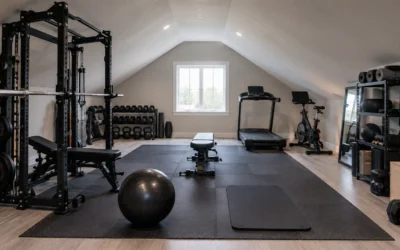
Most people place the rack first, then find a random corner for the bench. That creates two traffic zones. A better approach is to design one rectangle that holds both: the rack against a wall, and the bench sliding in and out of the rack along its length.
When you bench press inside the rack, the bench lives in the same space the barbell already uses. When you squat, it rolls or slides out and parks right beside the uprights. Before you commit to a spot, read our guide on planning space for a power rack, since the bar length usually matters more than the rack itself.
Clearance Numbers That Keep the Room Usable
Small rooms feel cramped when you have to turn sideways to pass equipment. These working clearances are a solid starting point for a combined station.
| Zone | Suggested Clearance | Why It Matters |
|---|---|---|
| Each end of a 7-foot barbell | About 1.5 to 2 feet | Room to load plates without hitting walls |
| Behind the rack | About 1 foot, or flush if wall-mounted | Access to bolts and band pegs |
| In front of the rack | About 3 to 4 feet | Space to walk out a squat or pull the bench out |
| Bench parking spot | Bench length plus 1 foot | Keeps it out of the walkway when not in use |
Measure ceiling height too. Overhead presses and pull-ups need more headroom than most people expect.
Where to Park the Bench Between Sets
The bench only needs to be in the rack for pressing work. The rest of the time, give it a home that does not block anything:
- Beside the rack: parallel to one upright, so it can slide in without lifting.
- Upright against the wall: many flat and folding benches can stand on end, which frees nearly all of their floor space.
- Under a wall shelf: a low shelf above the parked bench keeps small gear off the floor.
Our tips on storing a weight bench when not in use cover more options, including folding models.
Use the Rack as Storage
A rack is more than a squat station. Plate storage horns, J-hook spots and band pegs turn the uprights into a vertical shelf, which keeps loose plates from spreading across the floor. Hanging accessories on the rack also means everything you need for a session sits within one step.
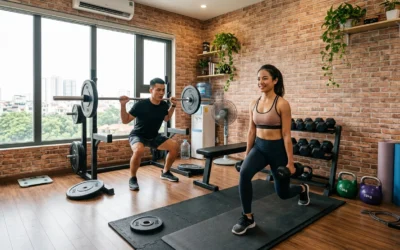
For dumbbells and kettlebells, a narrow vertical rack placed next to the bench parking spot finishes the zone. See our storage ideas for dumbbells and kettlebells for layouts that stay off the floor.
Visual Tricks That Make the Room Feel Bigger
Layout is half the battle. The other half is how the room looks once the gear is in place:
- Keep the station on the wall opposite the door, so the first thing you see is open floor.
- Use one flooring color across the whole room instead of a patchwork of mats.
- Choose a rack color that matches the wall to reduce visual bulk.
- Add a mirror on the wall beside the rack to reflect light and double the sense of depth.
Final Thoughts
A small strength room works best when the rack and bench are planned as a single station. Put the rack on a wall, give the bench a parking spot beside it, and store plates vertically. You end up with one compact work zone and a room that still feels like a room.
If you are still choosing equipment, browse our power racks and weight benches to find pieces that fit your space.
FAQs
Can a bench and rack fit in a spare bedroom?
Yes, in most standard bedrooms. A half rack or compact power rack with a bench that parks beside it usually fits with room left to move, as long as you plan for the full barbell length.
Should the bench stay inside the rack?
Only while you press. Leaving it inside blocks squats and walkouts, so slide it out and park it beside an upright between pressing days.
Is a wall-mounted rack better for small rooms?
It can be, if your wall structure supports it. Folding wall-mounted racks free nearly all of their floor space when closed, but they need secure mounting into studs or masonry.





Write Your Review
No reviews yet. Be the first to share your experience!