

The good news about a gym home is that the only person’s sweat on the equipment is yours. The bad news is that your own bacteria are perfectly capable of causing skin infections, and vinyl bench pads are an excellent place for them to settle in. A proper deep clean every month takes about 30 minutes and keeps your equipment hygienic without wrecking the finishes.
Where Bacteria Actually Collect
Not every surface is equally risky. Bacteria need moisture and organic material, which means sweat-soaked and skin-contact surfaces are the problem areas, not your weight plates.
The highest-risk spots are bench pads and upholstery seams, grip surfaces on handles and bars, treadmill and bike consoles, and any strap or fabric attachment. Knurled barbell grips deserve special attention since the crosshatch pattern traps skin cells and sweat in a way smooth steel doesn’t.
Staph and fungal organisms are the usual concerns, and they spread through contact with contaminated surfaces. Harvard Health notes that regular cleaning of shared and high-contact surfaces is a core infection prevention measure, which applies just as much at home as in a commercial gym.
Choose Cleaners That Won’t Destroy Your Equipment
This is where most people go wrong. Bleach and harsh alcohol solutions kill bacteria efficiently and also crack vinyl, strip powder coating, and corrode steel. You need something that does one job without causing the other problem.
| Surface | Use | Avoid |
|---|---|---|
| Vinyl pads and upholstery | Mild soap and water, or vinyl-safe wipes | Bleach, ammonia, high-alcohol sprays |
| Painted or powder-coated steel | Diluted dish soap, damp cloth | Abrasive scrubs, solvents |
| Bare or knurled steel | Nylon brush dry, light oil after | Water left to sit, any bleach |
| Consoles and screens | Screen-safe wipe on a cloth | Spraying liquid directly on the unit |
| Rubber flooring | Warm water with mild detergent | Oil-based cleaners, citrus solvents |
A 70 percent isopropyl solution is a reasonable middle ground on hard plastic and metal grips, but keep it off vinyl and never soak anything.
The Monthly Deep Clean Process
Set aside half an hour and work through the equipment in order. Unplug anything electronic before you start.
- Dry brush first: Remove loose debris, dust, and chalk with a dry brush or vacuum. Cleaning wet grime just spreads it around.
- Clean upholstery thoroughly: Wipe pads with mild soapy water, paying attention to seams and the underside where sweat runs down.
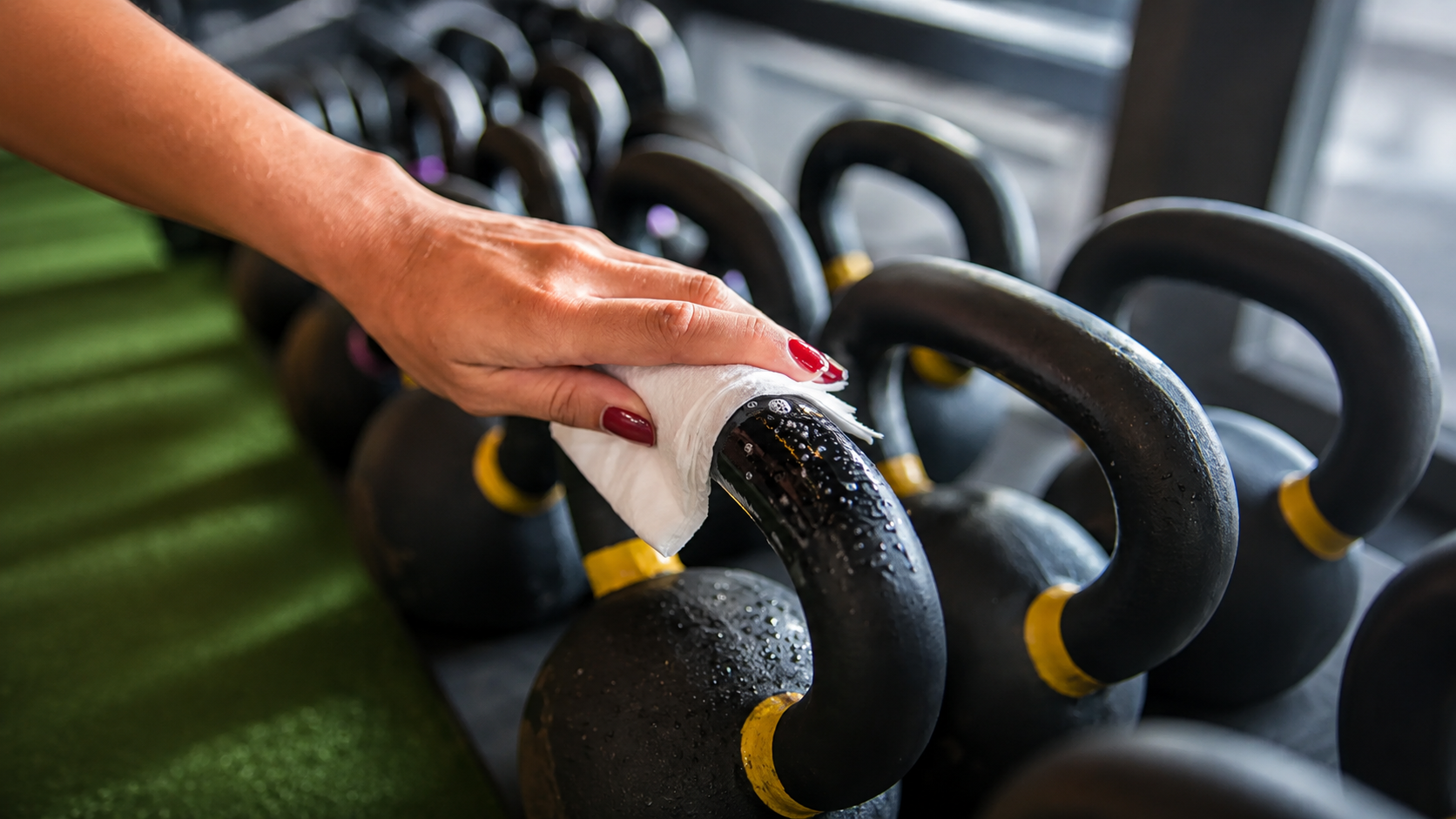
- Disinfect contact surfaces: Handles, grips, adjustment levers, and console buttons. Let the disinfectant sit the full contact time listed on the label, usually 30 to 60 seconds.
- Address knurled steel separately: Nylon brush along the knurling, wipe dry immediately, then apply a light coat of oil.
- Clean the floor: Mop rubber matting with warm water and mild detergent, then let it dry completely before replacing equipment.
- Dry everything fully: Any moisture left behind defeats the purpose and starts a corrosion problem instead.
Cardio machines need a bit more care since they combine sweat exposure with electronics. Treadmills in particular collect sweat in the console area and dust under the deck, and models like those in our review of the best heavy-duty treadmills under 800 dollars benefit from monthly attention around the motor housing. Rowing machines need the seat rail and handle cleaned every month, and lighter units from our roundup of the best lightweight rowing machines under 200 dollars are easy to stand up and clean underneath.
Daily Habits That Prevent the Problem
Deep cleaning is damage control. These habits mean there’s less to clean in the first place.
- Wipe down after every session: Thirty seconds with a dry towel removes most of what would otherwise sit and multiply.
- Use a towel on bench pads: A barrier between skin and vinyl keeps sweat out of seams entirely.
- Wash workout clothes promptly: Damp gear in a gym bag becomes a bacterial culture within hours.
- Keep humidity below 50 percent: Bacteria and mold both need moisture in the air, not just on surfaces.
- Shower reasonably soon after training: Skin infections start on skin before they reach equipment.
Keep Cleaning Part of a Broader Routine
Hygiene and mechanical maintenance overlap. Drying equipment properly after cleaning is the same habit that prevents rust, and our guide on how to prevent rust on gym home equipment in humid climates covers moisture control that serves both goals.
Fold deep cleaning into your regular schedule rather than treating it separately. Our gym home equipment maintenance schedule lays out weekly, monthly, and annual tasks so cleaning happens alongside bolt checks and lubrication. More equipment-specific routines live in our gear care category.
Cleaning supplies are also worth budgeting for upfront rather than improvising with whatever is under the sink. Our guide on how to set a gym home budget based on your fitness goals covers the accessory costs people forget when planning a build.
Thirty minutes a month and thirty seconds after each session is the whole job. Your equipment lasts longer, your skin stays clear, and your gym home stops smelling like a locker room in July.




Write Your Review
No reviews yet. Be the first to share your experience!