

A Smith machine occupies about 50 by 70 inches of floor and stands 82 to 90 inches tall, and unlike a rack, it cannot be shoved against a wall without losing function. The bar path needs clearance on both sides, plates need loading room, and the frame is too heavy to reposition on a whim. Placement is a one-time decision. Here is how to make it correctly.
Measure the Working Envelope, Not the Base
The footprint on the spec sheet is not the space you need. A machine with a 50 by 70 inch base requires roughly 8 by 8 feet of working area once you account for plate loading on both sleeves, room to step in and out, and clearance for the bench you slide underneath.
Height is where tight rooms fail. In an 8 foot basement, subtract 3 inches for rubber flooring and you have 93 inches left. An 86 inch machine leaves 7 inches, which works for pressing but eliminates any overhead pull-up attachment. The full envelope calculation is the same logic used in this guide on planning space for a power rack the right way, and it applies here with less forgiveness.
Put It on the Longest Wall, Not the Corner
The instinct is to shove it in a corner. That is wrong for a Smith machine. Corner placement blocks one sleeve, which means loading plates from one side only and turning every weight change into a shuffle.
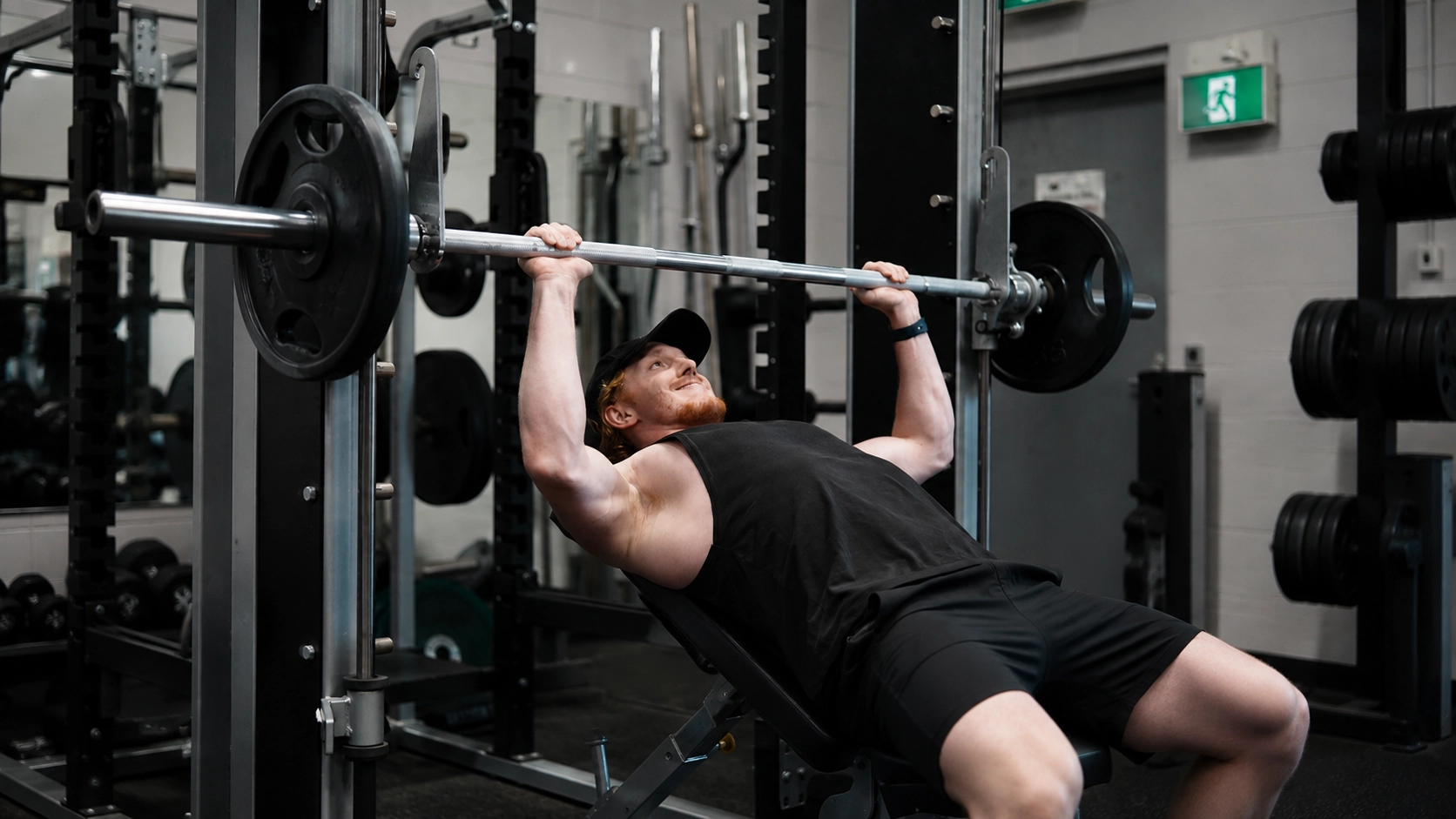
Place the frame flat against the longest available wall with at least 30 inches of clearance on each side of the bar. Leave 3 feet in front for bench setup and stepping back. Behind the frame you need only 6 to 12 inches, since the guide rails prevent any rearward bar travel.
| Room Size | Fits Smith Machine | Notes |
|---|---|---|
| 8 x 8 ft | Base unit only | No cable attachments |
| 10 x 10 ft | Yes, comfortably | Room for bench and plates |
| 10 x 14 ft | Yes, with cables | Full setup workable |
| Under 8 ft wide | No | Bar loading blocked |
Angled Rails Steal Floor Space You Did Not Budget
Most Smith machines run a 7 to 12 degree angled rail, meaning the bar travels forward as it descends. On a 12 degree rail with a 30 inch range of motion, the bar moves roughly 6 inches horizontally.
That forward space is not storage. Putting a plate tree or a bench there creates a collision at the bottom of a squat, which you will discover under load exactly once. Tape the bar path on the floor before you place anything else in the room. Frame geometry varies more than product photos suggest, so checking rail angle across the Smith machine lineup before ordering saves a lot of measuring afterward.
Attachments Are What Actually Break a Tight Room
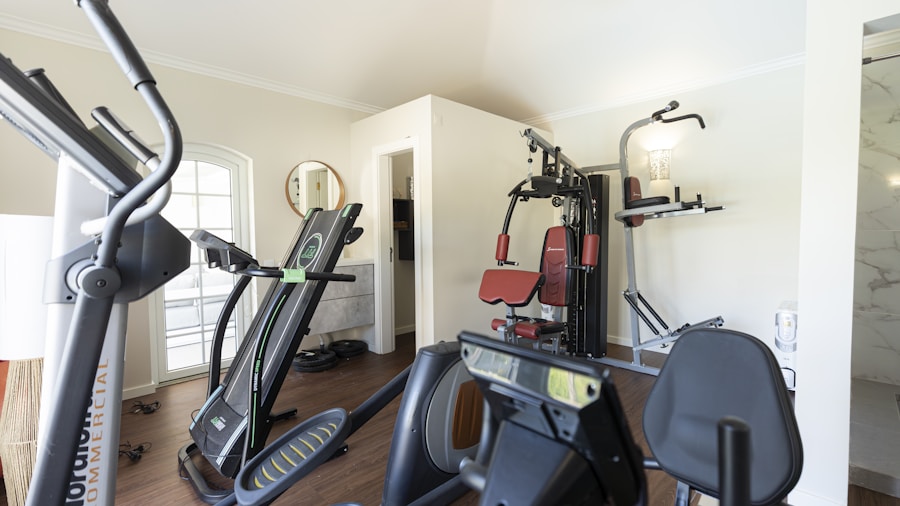
A base Smith machine fits an 8 by 8 space. Add cable arms and the envelope pushes to 8 by 11 feet, because crossover handles need room to travel and you need room to stand between them.
This is the calculation people skip. A Smith machine with a lat pulldown under 1000 dollars adds a seat and knee pad that extend the front footprint by roughly 24 inches, which eats the bench area you were counting on. Full stations like these all-in-one Smith machines under 5000 dollars consolidate three pieces of equipment into one frame, which is a genuine space win in a 12 by 14 room and a genuine problem in a 9 by 9 one.
Decide which attachments you will actually use before you measure, not after the machine arrives.
When the Room Wins
Here is the honest part. If your space is under 8 feet wide, no placement strategy fixes it. You cannot load plates without side clearance, and a machine you load awkwardly is a machine you stop using by month three.
Digital resistance units are the workaround worth knowing about. Machines like these Speediance smart Smith machines from 3000 to 4000 dollars generate load electronically instead of with plates, which removes the loading clearance requirement entirely and cuts the width need by about 2 feet. That is expensive floor space, but in a small room it is often the only version of this equipment that actually fits.
Tape the full outline on your floor before ordering anything, then walk through a squat and a bench press inside it. If the machine shares space with a living area, these living room gym design ideas that avoid bulk cover visual placement, buying used and second-hand equipment for a gym home lets you trial a footprint cheaply, and the rest of the gym design guides handle the room around it. Painter’s tape costs $4 and prevents a 400 pound mistake.


Write Your Review
No reviews yet. Be the first to share your experience!