

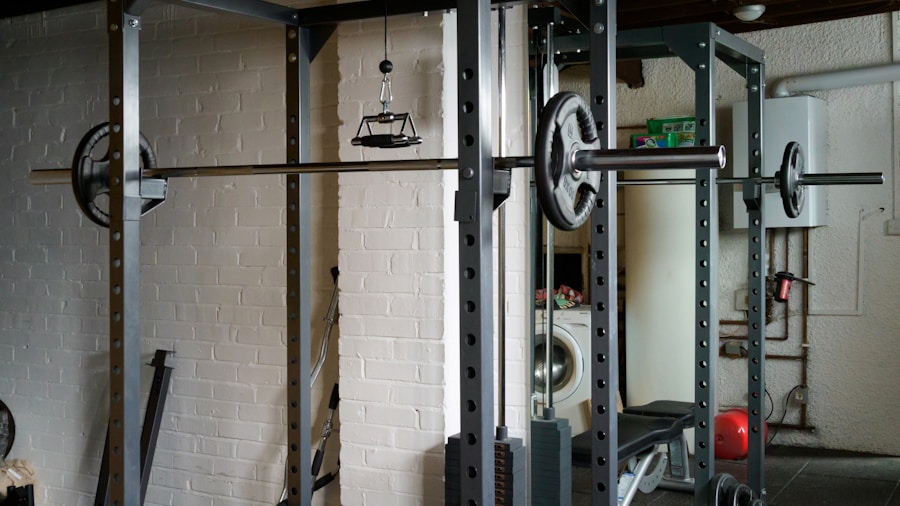
People measure the rack. That is the mistake. A 48 by 48 inch footprint tells you almost nothing about whether the thing will work in your room, because you do not lift inside the frame dimensions. You lift inside the space the frame needs around it, and that number is roughly three times larger.
Measure the Working Envelope, Not the Frame
A standard 4-post rack with a 48 by 48 inch base needs a working envelope of about 8 by 8 feet. Here is where that goes.
The barbell is the real constraint. A 7 foot Olympic bar is 86 inches wide, and you need at least 6 inches of clearance on each side to load plates without scraping a wall. That alone establishes a 98 inch minimum width, so 8 feet 2 inches, regardless of how narrow the rack itself is.
Depth needs 3 feet behind the rack for pull-ups and bar path clearance, plus 3 to 4 feet in front for bench press setup and walking plates in. Height is the one people discover too late: most racks stand 82 to 92 inches, and you need 6 inches above that for pull-ups, which means a standard 8 foot ceiling with ductwork gets tight fast. Measure to the lowest obstruction, not the drywall.
The Numbers by Rack Type
| Rack Type | Footprint | Working Envelope |
|---|---|---|
| Wall-mounted folding | 21 x 48 in | 8 x 6 ft |
| Half rack | 48 x 30 in | 8 x 7 ft |
| 4-post full rack | 48 x 48 in | 8 x 8 ft |
| 6-post with extension | 48 x 84 in | 8 x 11 ft |
Notice that width barely changes across all four. The bar sets it. What changes is depth, which is why a wall-mounted rack in the 200 to 500 dollar range saves you 2 feet of floor depth but zero width. If your room is 7 feet wide, no rack style solves that. You need a shorter bar or a different room.
Ceiling Height Decides More Than Floor Space
An 8 foot ceiling gives you 96 inches. Subtract 3 inches for rubber flooring and you are at 93. An 84 inch rack leaves 9 inches of pull-up clearance, which works if you are under 6 feet tall and do not mind a slight knee bend.
A 90 inch rack in that same room leaves 3 inches. That is a rack you cannot do pull-ups on. Short racks in the 72 to 80 inch range exist specifically for this problem, and they are the right call in a basement rather than a compromise, since a power rack sized for small spaces keeps overhead pressing viable where a taller frame would not.
Check your garage door track too. It swings into the ceiling plane, and plenty of people have discovered this after bolting a rack down.
Plan the Room Around the Rack, Not the Other Way Around
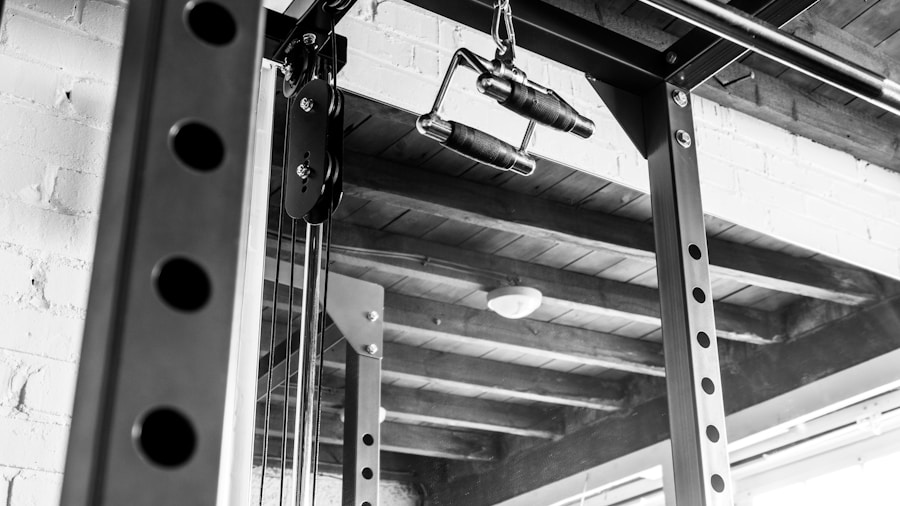
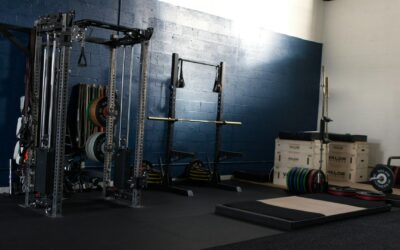
The rack goes in first, positioned to claim its 8 by 8 area. Everything else works around that boundary. Plate storage belongs on the rack uprights or a wall tree within 6 feet, since walking 15 feet with a 45 pound plate gets old by week three.
Vertical space is where you recover square footage. Wall racks for bars, resistance bands, and accessories keep the floor clear, and these vertical storage solutions for a gym home cover mounting that does not require a stud finder and a prayer. Bumper plates need a dedicated spot, not a pile, because a stack on concrete becomes an ankle hazard in poor lighting.
If the rack shares a multi-use room, sightlines matter as much as measurements. These living room gym design ideas that avoid bulk cover placement that keeps a 250 pound steel frame from dominating the space, and a retro gym home design approach uses finish and color to make the frame read as intentional rather than industrial.
You Probably Need Less Room Than You Think
Now the honest correction, because the numbers above look intimidating. An 8 by 8 foot envelope is 64 square feet. That is a single-car garage bay with room left over, or one corner of a 12 by 14 foot basement.
People talk themselves out of a rack because they picture a dedicated gym. You do not need one. What you need is 64 square feet that nothing else claims during your training window, which most homes have. The rack does not care that a couch sits 4 feet away.
Where people genuinely run out of room is with accessory-heavy setups. A Sportsroyals rack with a complete setup bundles lat pulldown and cable attachments, which pushes the envelope closer to 8 by 11 feet. Worth it if you have the depth. A problem if you measured for the base frame and stopped there.
Tape the outline on your floor before you order anything. Mark the 8 by 8 area, walk through a squat setup and a bench press, and see what you bump into. If you are still deciding between frame styles, the complete power rack buying guide and the full power rack lineup break down what each build actually requires. Painter’s tape costs $4 and has saved more returns than any spec sheet.




Write Your Review
No reviews yet. Be the first to share your experience!