

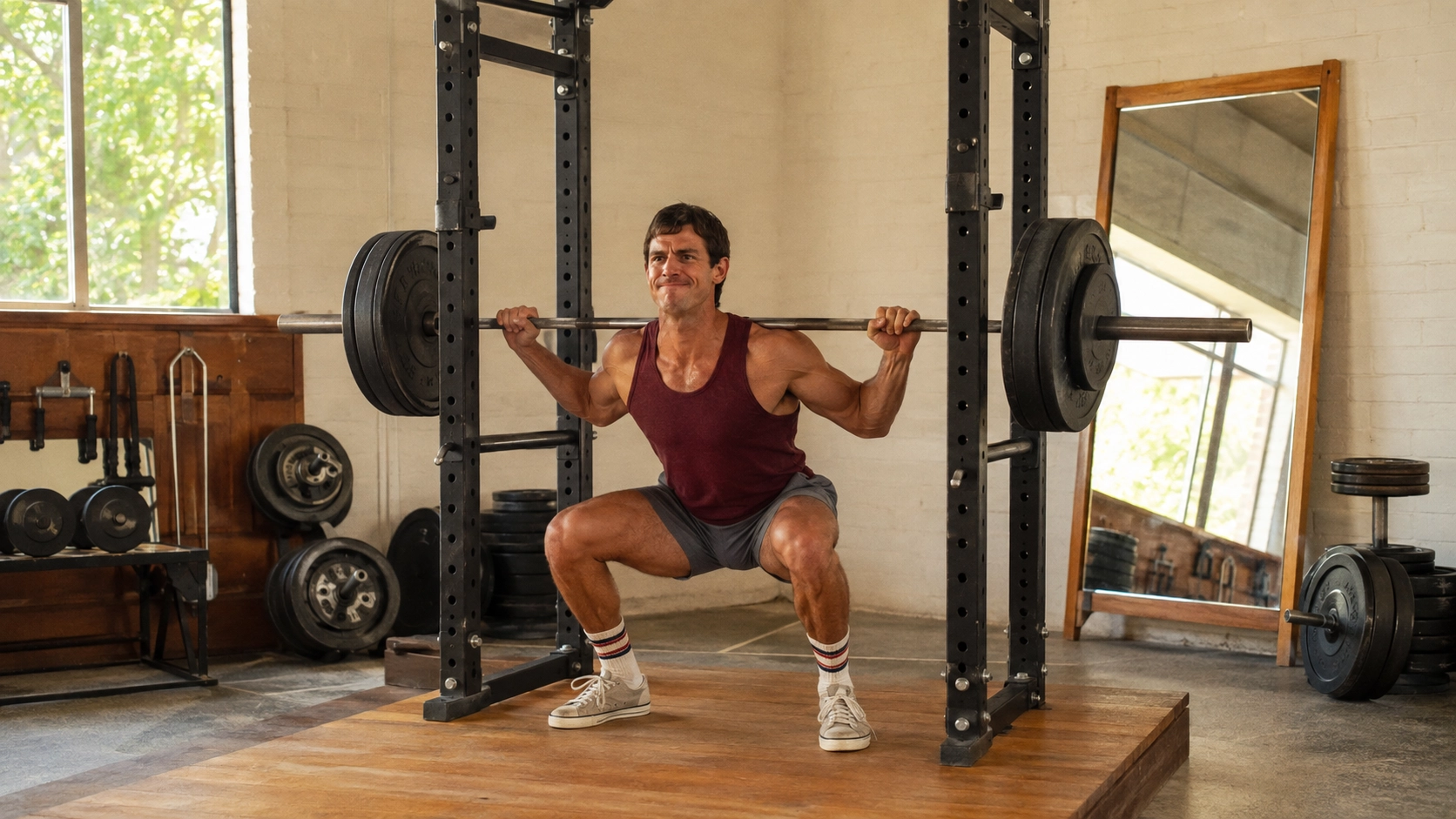
There’s a reason the old Gold’s Gym photos still circulate: those spaces looked like places where work happened. No screens, no chrome, no ambient lighting, just chalk dust and iron. A vintage gym home leans into that aesthetic, and the happy accident is that retro design is genuinely cheaper to execute than modern minimalism, because the look depends on character rather than matching everything.
Pick Your Era First
Vintage covers about seventy years of very different looks, so choosing a decade keeps your space coherent instead of looking like a thrift store exploded.
| Era | Signature Look | Key Elements |
|---|---|---|
| 1930s to 40s strongman | Sepia, wood, circus strength | Wooden floors, globe dumbbells, leather |
| 1950s to 60s YMCA | Institutional, painted brick | Wooden benches, wall pennants, simple racks |
| 1970s Golden Era | Warm wood, natural light, cream walls | Wooden platforms, cast iron plates, mirrors |
| 1980s garage gym | Bold color, concrete, neon accents | Painted plates, boombox, motivational posters |
The 1970s Golden Era look is the most forgiving to build, since warm neutrals and wood tones work in almost any room. The 1980s look is the most fun and the least expensive, because bold paint and thrifted posters do most of the heavy lifting.
Build the Look With Used Equipment
This is where retro design becomes a budget strategy rather than an expense. Vintage aesthetics call for older gear, and older gear costs less than new gear.
Cast iron plates with raised lettering, hex dumbbells, and older York or Ivanko pieces show up regularly on Facebook Marketplace for a fraction of new prices. Surface rust and worn paint are features here, not flaws. A plate with forty years of chalk in the lettering looks better than anything you can buy new.
Our guide on how to design a gym home with used and second-hand equipment covers what’s safe to buy secondhand and how to inspect it, which matters more when you’re deliberately shopping for old iron. Specialty bars also fit the era well, since cambered and safety squat bars have been around for decades. Our roundup of the best cambered barbells for powerlifters from 200 to 300 dollars covers modern versions of a classic design.
Get the Materials and Colors Right
Retro spaces are defined by material texture more than by furniture. Three choices carry most of the look.
- Wood: Plywood platforms, wooden bench slats, or a butcher-block shelf instantly warm up a space and read as pre-1990.
- Exposed structure: Painted brick, visible joists, or bare concrete. Don’t cover what’s already period-appropriate.
- Muted paint: Cream, olive, oxblood, mustard, or dusty teal. Avoid cool grays, which read modern immediately.
- Warm lighting: 2700K to 3000K bulbs, ideally in caged fixtures or simple pendants rather than LED panels.
Lighting is the cheapest change with the biggest effect. Swapping cool white bulbs for warm ones transforms a garage from clinical to inviting for about fifteen dollars.
Add the Details That Sell It
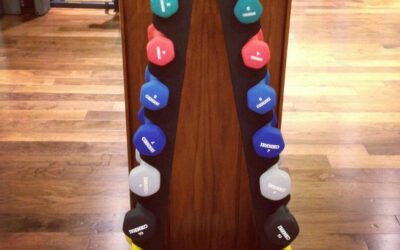
Details are where a retro gym home stops looking like a regular gym with old plates in it. Wall-mounted storage keeps the floor clear while showing off the equipment as decor, and our guide on vertical storage solutions on a budget covers hooks and racks that suit an open, displayed look.
Worth adding: a wall clock with a sweep second hand, a chalk bowl, a wooden stool, framed vintage strength photos or reproduction posters, and a physical notebook for logging lifts instead of an app. A real chalkboard for the day’s session beats a whiteboard for atmosphere.
Skip anything with a screen if you can. If you need cardio, a simple upright bike blends in better than a console-heavy machine, and our roundup of the best exercise bikes for small spaces from 300 to 400 dollars covers models with minimal displays.

Blend Retro Style With Modern Function
Aesthetics shouldn’t cost you safety or usability. Use a modern rack with reliable safety bars even if it’s not period-correct, then paint it a warm color and surround it with vintage elements. Nobody is checking the manufacture date of your J-cups.
Keep modern flooring under lifting areas regardless of era. Rubber matting isn’t retro, but neither is a cracked concrete slab and a broken toe. Our guide on DIY gym home design ideas on a budget covers flooring and lighting projects that work with any aesthetic direction.
If your space doubles as an office, retro style actually blends unusually well with desk furniture, since wood and warm tones suit both functions. Our guide on combining workspace and workout equipment covers those layouts. For contrast, browse modern gym home design trends for 2026 and our full gym designs category.
Pick a decade, hunt down old iron, swap your bulbs to warm white, and let the paint do the rest. A retro gym home costs less than a modern one and tends to feel far more like somewhere you’d actually choose to spend an hour.






Write Your Review
No reviews yet. Be the first to share your experience!