

Strength training and muscle building look similar from the outside and run on different numbers. Strength lives at 80 to 90 percent of your one rep max, in sets of 1 to 5, with rest intervals long enough that people assume they are wasting time. A power rack is the piece of equipment that makes those loads safe to train alone. Here is how to structure the work.
Sets, Reps, and Intensity for Strength
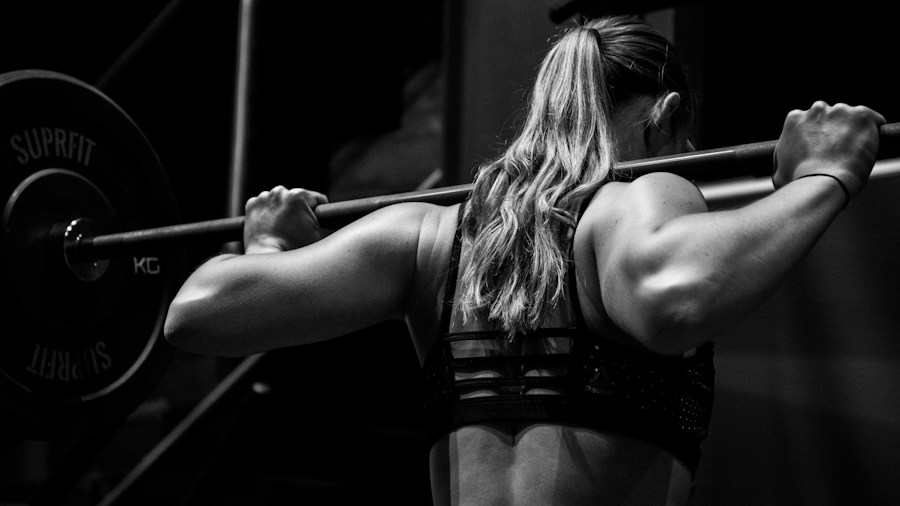
The rep range does most of the work. Sets of 1 to 5 at 80 to 90 percent recruit the high-threshold motor units that drive maximal force. Sets of 10 at 65 percent build muscle and do relatively little for a one rep max.
| Goal | Reps | Intensity | Rest |
|---|---|---|---|
| Max strength | 1 to 3 | 87 to 95% | 4 to 5 min |
| Strength | 3 to 5 | 80 to 87% | 3 to 4 min |
| Strength-size | 6 to 8 | 72 to 80% | 2 to 3 min |
Rest is the part people cut and should not. Three minutes between heavy squat sets is not laziness, it is what allows the next set to be performed at the intensity that made it worth programming. Cutting to 90 seconds turns your fourth set into a conditioning set.
Order the Session by Priority
Heaviest and most technical first, always. Squat or deadlift opens the session, the main press comes second, and everything else follows.
The reason is neural, not muscular. Central nervous system output is highest in the first 20 minutes, and a lift performed after 30 minutes of accessory work is performed at reduced capacity even when the muscles feel fresh. If your squat is the priority, nothing precedes it except warm-up sets.
Warm up on the first lift only. Two to three ramping sets at 40, 60, and 75 percent takes 6 minutes and prepares you for the rest of the session. Separate warm-ups for each exercise are how a 45 minute session becomes 80.
A Four-Day Upper/Lower Split
Lower A: Back squat 5×3 at 85 percent, Romanian deadlift 3×6, weighted carries 3 sets.
Upper A: Bench press 5×3 at 85 percent, barbell row 4×5, weighted pull-ups 3×5.
Lower B: Deadlift 4×3 at 85 percent, front squat 3×5, back extensions 3×10.
Upper B: Overhead press 5×3 at 85 percent, incline bench 3×6, chin-ups 3xAMRAP.
Total session time runs 50 to 60 minutes including rest. Beginners should run a simpler three-day structure first, which this beginner power rack workout lays out in full. Move to this split once linear progression stalls, usually around month six.
Progress in Waves, Not Straight Lines
Adding 5 pounds every week works for about four months, then stops. At intermediate level, strength progresses across three to four week blocks rather than session to session.
Run week one at 80 percent, week two at 85, week three at 87 to 90, then drop week four to 70 percent for reduced volume. Start the next block 5 pounds above where the previous one started. This is slower on paper and considerably faster in practice than grinding a linear scheme into the ground.
Use safeties on every heavy set. Set the pins 2 inches below your lowest bar position so they never interfere with a clean rep but catch a failed one. This is the entire reason to train in a rack, and frames across the power rack lineup vary in pin adjustment increments, which matters more than most spec comparisons suggest.
Accessories Are Optional, Pulling Is Not
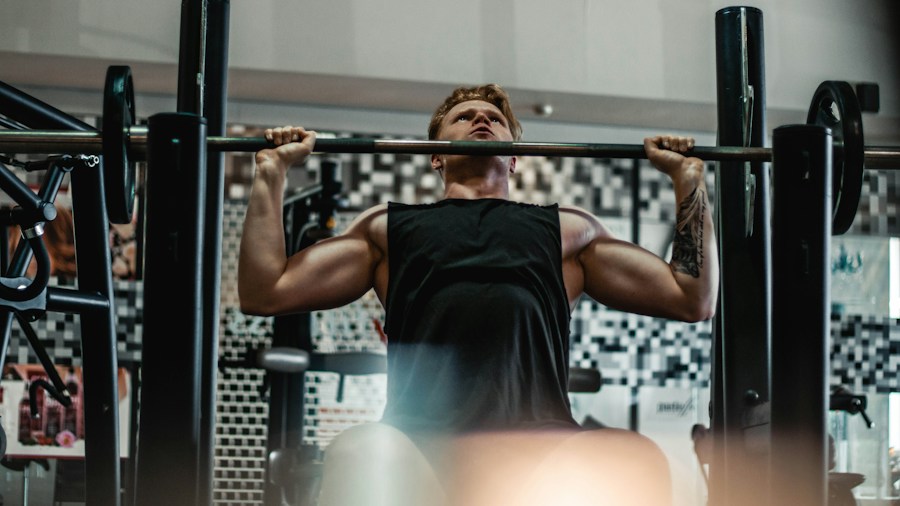
A bare rack covers squat, bench, press, and rows, but vertical pulling needs either a pull-up bar or a cable. Pull-ups from the top bar handle it for most people.
If you cannot yet do five clean reps, a lat pulldown gives you a scalable load rather than guessing at band tension, and power racks with a lat pulldown under 1000 dollars cover that without a separate station. Bundled builds like these Sportsroyals racks with a complete setup add bench and storage in one purchase.
You Need Less Rack Than You Think
Here is the honest part. A rack with a full pulley system under 3000 dollars is genuinely good equipment and contributes almost nothing to the program above. Strength comes from five barbell lifts, adequate rest, and wave progression. None of that requires a cable.
A wall-mounted rack in the 200 to 500 dollar range with safeties runs this entire split. Spend the difference on plates.
Heavy first, rest properly, progress in waves. The rest of the training guides cover programming around it.







Write Your Review
No reviews yet. Be the first to share your experience!