

Thirty minutes is enough for a real barbell session if you stop treating it like a shortened version of a 60 minute one. The fix is not doing everything faster. It is cutting the exercise count to three, keeping rest intervals honest, and pairing movements that do not compete for the same muscles. Here is the plan.
The Math of a 30 Minute Session
Budget 5 minutes for warm-up sets and 25 minutes for work. At 2 minutes of rest between sets, that gives you roughly 11 to 12 working sets total. Three exercises at 4 sets each fits. Five exercises does not.
This is where most short sessions fail. People keep the full exercise list and cut rest to 45 seconds, which turns strength work into conditioning and produces neither. Pick fewer lifts and rest properly.
Pair Movements That Do Not Compete
Supersets are the real time multiplier here. Pairing a lower body lift with an upper body pull means you rest one system while training the other, cutting dead time roughly in half without shortening actual recovery for either movement.
| Day | Superset A | Lift B |
|---|---|---|
| Day 1 | Squat + Bent Row | Bench Press |
| Day 2 | Deadlift + Overhead Press | Bent Row |
| Day 3 | Squat + Bench Press | Romanian Deadlift |
Run 4 sets of 5 on the superset pair with 90 seconds between rounds, then 3 sets of 8 on the third lift. That lands at 26 to 28 minutes including warm-up.
Load It Correctly, Because You Have No Room for Junk Sets
In a 30 minute session every set has to count. Work at 75 to 85 percent of your one rep max on the main lifts, which is the range where 4 sets of 5 actually drives strength. A one rep max calculator converts your recent training numbers into those percentages without needing a max attempt.
Warm up on the first lift only. Two sets, one at 40 percent and one at 65 percent, takes 4 minutes and prepares you adequately for the rest of the session. Warming up separately for each exercise is where the other 15 minutes goes.
Cut the Plate-Changing Time
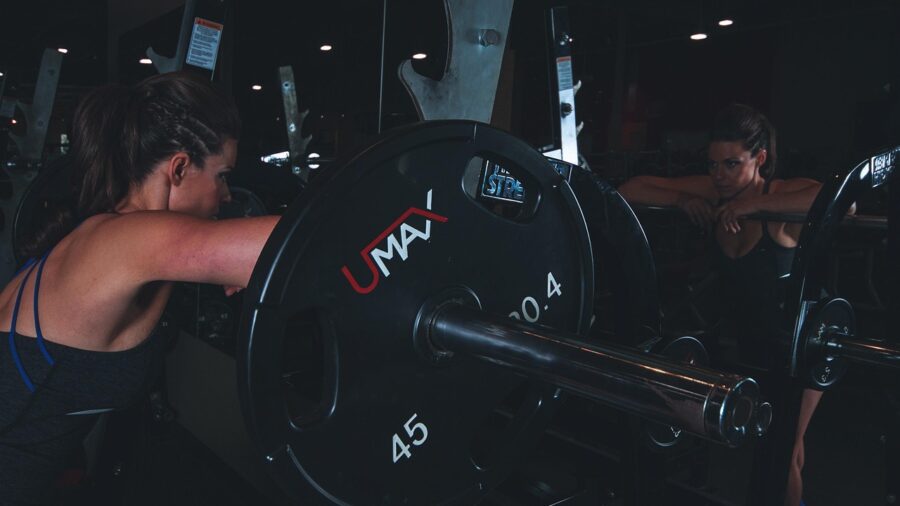
Nobody accounts for this and it costs 4 to 6 minutes per session. Stripping and reloading a bar between a 225 pound squat and a 135 pound press burns time you budgeted for training.
Two solutions. Either order your session so weight only goes down, never up, or keep a second loaded bar ready. A pre-loaded barbell under 100 dollars handles rows and presses at a fixed weight, so the main bar stays loaded for squats the entire session. For deadlift days, a hex trap bar in the 200 to 400 dollar range lets you pull without stripping the squat bar, and the dual handle heights mean you can change the movement without changing plates.
Run It Three Days a Week, Not Five
The temptation with short sessions is to train more often since each one is easy to schedule. Resist it. Three sessions covers every major movement pattern twice in a 9 day window, which is enough stimulus for steady progress at almost any level below advanced.
Add 5 pounds to upper body lifts and 10 pounds to lower body lifts each week. When you miss reps in the same lift twice in a row, drop 10 percent and build back. That is the entire progression model. If you want conditioning on off days, a beginner cardio plan you can run at home fits in the same 30 minute window without cutting into recovery.
You Are Not Missing Much
Here is the honest part. A well-run 30 minute session with three compound lifts produces most of the strength gain that a 75 minute session does. The extra 45 minutes usually buys accessory work, longer rest, and time spent on your phone between sets.
Arm isolation, calf raises, and rear delt flyes are not what drives your squat or bench. Skip them without guilt. What you actually lose in a short session is variety, which matters for long-term interest more than for results. If that becomes a problem after a few months, rotating in a different implement addresses it cheaply. A cambered barbell for powerlifters changes the loading pattern on squats and presses enough to feel like new work without adding a single minute to the session.
Set a timer and treat it as a hard stop. The full barbell lineup covers which bar suits which style of training. A session you finish in 30 minutes three times a week beats a 75 minute program you abandon by week five.






Write Your Review
No reviews yet. Be the first to share your experience!