

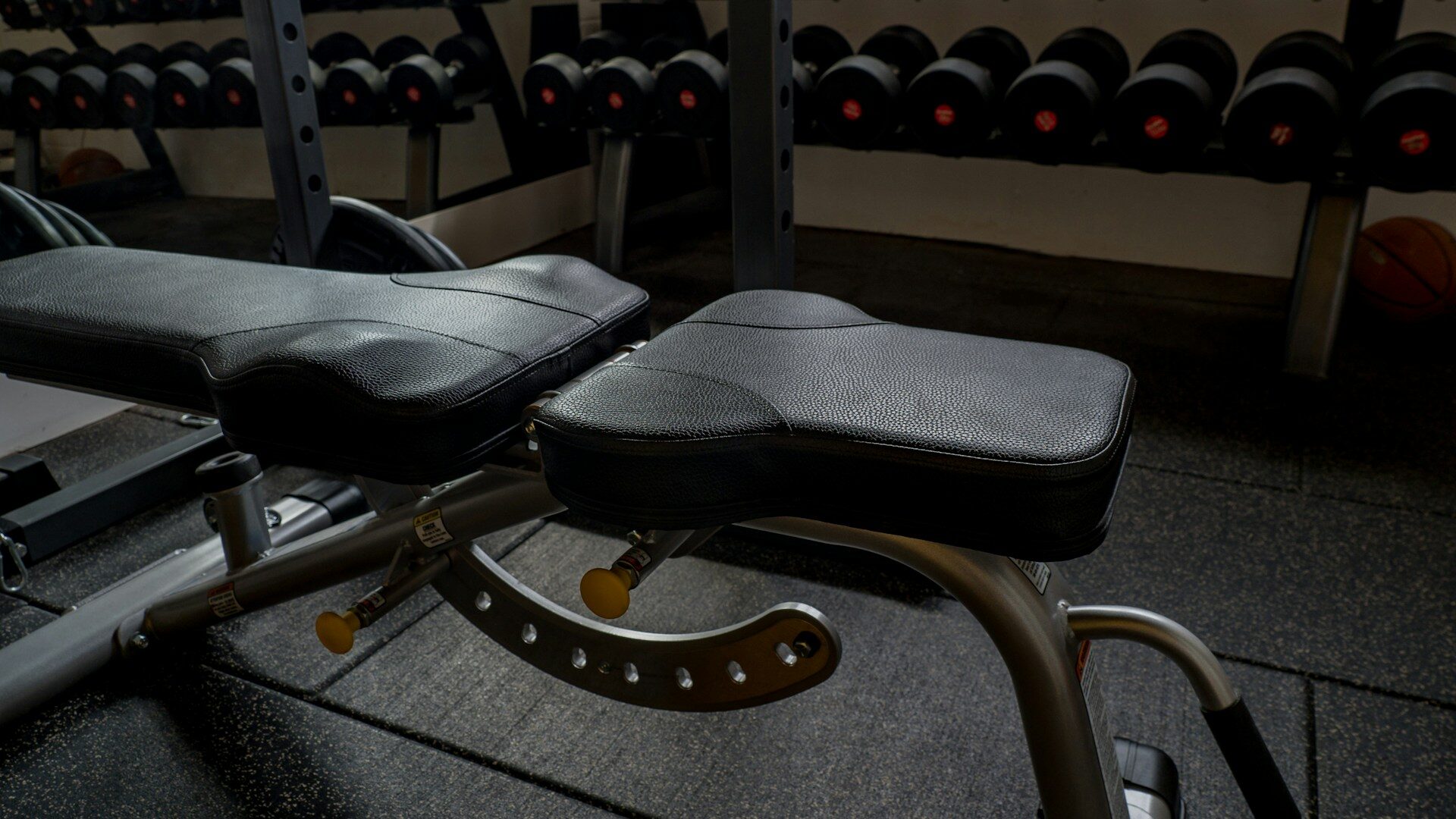
For most people, a weight bench means one thing: the bench press. That is a shame, because a solid bench is one of the most flexible pieces in a home gym. With a pair of dumbbells, it can train legs, back, shoulders and core just as well as chest.
Here are bench-based moves that cover the whole body, plus a simple session to put them together.
Lower Body Moves
- Bulgarian split squat: rest the back foot on the bench and lower into a deep lunge. It builds quads and glutes one leg at a time.
- Box squat to bench: squat back until you lightly touch the pad, then stand. Great for learning depth and control.
- Hip thrust: brace your upper back against the side of the bench and drive your hips up. One of the best glute builders available.
- Step-up: use a flat, stable bench and drive through the front foot. Only do this on a bench that does not tip or slide.
Back and Pulling Moves
- One-arm dumbbell row: one knee and hand on the bench, row the dumbbell toward your hip.
- Chest-supported row: lie face down on an incline bench and row both dumbbells. It removes lower back strain from the movement.
- Dumbbell pullover: lie across or along the bench and lower one dumbbell behind your head to stretch the lats.
Shoulder and Arm Moves
- Seated overhead press: set the backrest upright for back support.
- Incline curl: the incline stretches the biceps for a stronger contraction.
- Bench dip: hands on the edge, feet on the floor, lower and press back up for triceps.
- Prone Y-raise: lie face down on an incline and raise light weights into a Y shape for upper back and rear shoulders.
Core Moves
- Decline crunch or sit-up: if your bench has a leg holder, a decline setting adds challenge.
- Lying leg raise: hold the top of the bench and raise straight legs.
- Elevated plank: hands or forearms on the bench make planks easier to learn, while feet on the bench make them harder.
Sample Full-Body Bench Session
This workout uses only a bench and dumbbells. Rest 60 to 90 seconds between sets.
| Exercise | Sets x Reps | Bench Setting |
|---|---|---|
| Bulgarian split squat | 3 x 8 per leg | Flat |
| Hip thrust | 3 x 10 | Flat, used sideways |
| Chest-supported row | 3 x 10 | Incline |
| Seated overhead press | 3 x 8 | Upright |
| Incline curl | 2 x 12 | Incline |
| Lying leg raise | 2 x 12 | Flat |
Want more structure? Our dumbbell-only full-body workout plan pairs well with these bench moves.
Bench Safety Basics
Check that adjustment pins are fully locked before every set, keep the bench on a level surface, and stay within its weight rating. Adjustable benches can have a small gap between the seat and backrest, so position yourself on solid padding. If you are still choosing a bench, avoid the common errors in our article on the weight bench buying mistake almost everyone makes.
Final Thoughts
A weight bench earns its floor space when it trains more than your chest. Split squats, hip thrusts, rows and supported presses turn it into a full-body station. Start with the sample session, then swap moves to keep training fresh.
Find more routines in our training guides.
FAQs
Can you get a full-body workout with just a bench and dumbbells?
Yes, you can train every major muscle group. Combine a lower body move, a row, a press and a core exercise in each session.
Do I need an adjustable bench for these exercises?
Not for most of them. A flat bench handles split squats, hip thrusts and rows, while incline moves need an adjustable model.
How many days a week should I train with a bench?
Two to four full-body sessions work well for most people. Leave at least one rest day between hard sessions for the same muscles.




Write Your Review
No reviews yet. Be the first to share your experience!