

The question contains a small contradiction, and that is actually the useful part. If you eat before, the workout is no longer fasted. So the real decision is whether to train fasted at all, and if you do, how fast you need to eat afterward. Here is what the evidence supports.
What Fasted Actually Means
Fasted training means no calories for at least 8 to 12 hours, which for most people means training before breakfast. Coffee, water, and plain tea do not break it. A splash of milk technically does, though the effect is negligible.
Your body is running on stored glycogen and fat either way. Liver glycogen depletes overnight maintaining blood sugar, so you start a morning session with roughly 60 to 70 percent of your liver stores rather than a full tank. Muscle glycogen is largely intact unless you trained hard the previous evening.
The Fat Loss Claim Does Not Hold Up
Here is the honest correction. You do oxidize a higher percentage of fat during a fasted session, which is why the claim spread. Your body compensates over the following hours by burning proportionally less fat, and total 24 hour fat balance ends up roughly the same.
Multiple controlled trials comparing fasted and fed training at matched calories found no meaningful difference in body composition over 4 to 12 weeks. Fasted training is a convenience and digestion choice, not a metabolic shortcut. If body composition is your metric, tracking it with a body fat calculator over eight weeks tells you more than any fasting protocol.
When Fasted Training Works and When It Does Not
| Session Type | Fasted OK? | Notes |
|---|---|---|
| Walk or easy cardio | Yes | No downside |
| Cardio under 45 min | Yes | Output holds up |
| HIIT over 30 min | Marginal | Output drops late |
| Heavy lifting | No | Strength suffers |
| Over 90 min anything | No | Glycogen runs out |
The pattern is straightforward: duration and intensity decide it. Under 45 minutes at moderate effort, eat nothing and train. Past that, fuel first. Specific pre-cardio numbers are covered in this guide on how many carbs you need before a cardio workout.
If You Eat Before, Eat Small
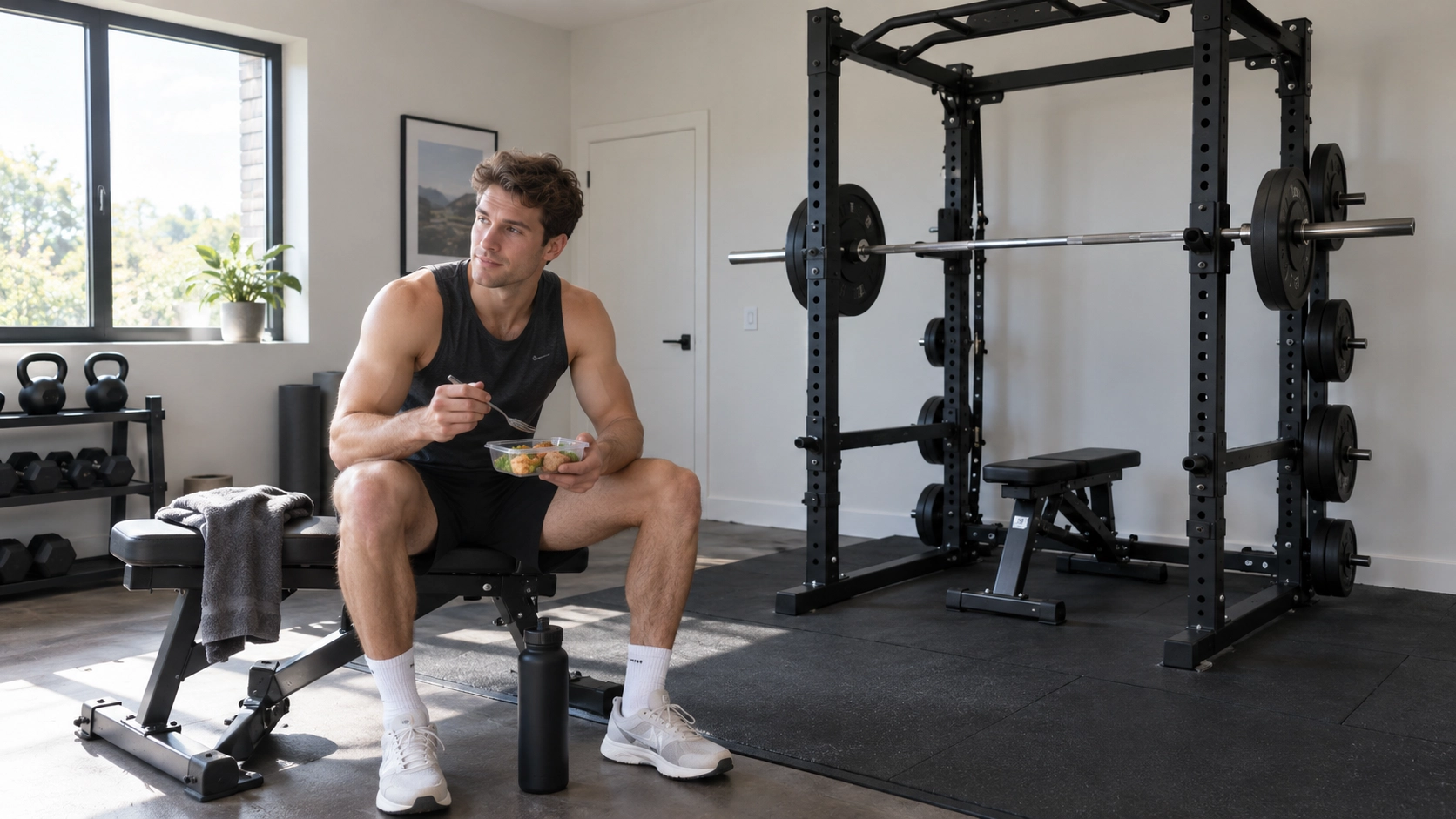
Deciding to fuel does not mean a full breakfast. Fifteen to 30 grams of fast-digesting carbohydrate 20 to 30 minutes out covers most sessions, and it is enough to prevent the fade without sitting in your stomach.
Keep fat and fiber low. Fat slows gastric emptying and fiber is why people cramp 15 minutes in. A banana, a slice of toast with honey, or a few dates all work. Options that digest cleanly are covered in this list of best foods to eat before a morning workout, and if you are tracking intake closely, a net carbs calculator helps separate fiber from the total.
After Is Where the Timing Actually Matters
The post-workout window is wider than the 30 minute rule suggests, but fasted training narrows it. You trained on depleted liver glycogen, so you are arriving at the meal with more to replace than someone who ate beforehand.
Eat within 1 to 2 hours. Aim for 25 to 40 grams of protein and a real carbohydrate source. General guidance on post-workout nutrition from Healthline on what to eat after a workout covers the macronutrient split, and this guide on what to eat after a strength training session handles the lifting-specific version.
Waiting four hours because you are extending a fasting window is where people go wrong. Fasted training plus delayed refeeding is two stressors stacked, and it shows up as poor recovery within a couple of weeks.
Pick the One You Will Actually Do
The second honest point. Adherence beats optimization here by a wide margin. If eating before a 6 AM session means you skip the session, train fasted. If training fasted leaves you lightheaded and miserable, eat something.
Your total daily intake is what drives results, and the before-versus-after question moves the needle very little next to it. Having food ready is what makes either approach work, which is why these meal prep ideas for busy gym home users matter more than the timing debate does.
Train fasted for short, moderate sessions. Eat 20 grams beforehand for anything longer or heavier. Either way, eat properly within two hours after. The rest of the fitness nutrition guides cover the daily framework this sits inside.




Write Your Review
No reviews yet. Be the first to share your experience!