
Morning workouts have one nutritional problem: you’re training on a body that hasn’t eaten in ten hours, and there isn’t much time to fix that before you start. Eat too much and you’ll feel it on the third set. Eat nothing and you may run out of steam halfway through. The right pre-workout meal depends almost entirely on how long you have between eating and training.
Match the Meal to Your Timeline
This is the whole decision. Digestion takes time, and the amount of time you have determines what you can comfortably eat.
| Time Before Training | What to Eat | Rough Size |
|---|---|---|
| 15 to 30 minutes | Fast carbs only, minimal fiber and fat | 100 to 150 calories |
| 45 to 60 minutes | Carbs plus a little protein | 200 to 300 calories |
| 90 minutes to 2 hours | Balanced meal, moderate everything | 350 to 500 calories |
| Under 15 minutes | Nothing solid, or train fasted | Water or a sip of juice |
Fat and fiber are the two things that slow digestion most, which makes them useful at dinner and unhelpful at 6 a.m. thirty minutes before squats. Save the avocado toast for after.
Best Options When You Have 30 Minutes or Less
This is where most morning trainers actually live. You need something that hits your bloodstream fast and doesn’t sit in your stomach.
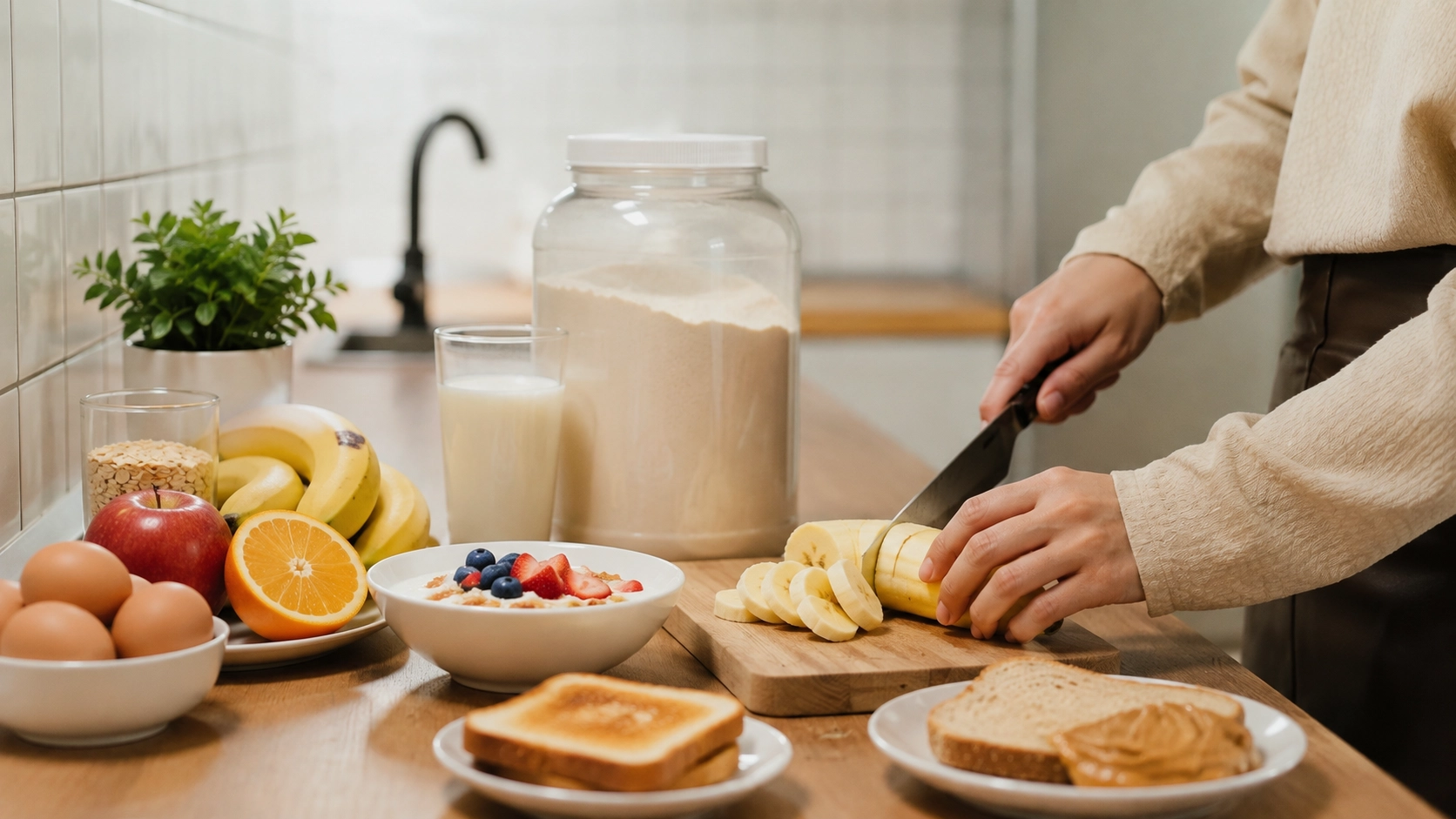
- Banana: The classic for a reason. Fast carbs, potassium, no preparation, portable.
- White toast with honey or jam: Quick-digesting carbs with almost no fat or fiber.
- Rice cakes: Nearly instant digestion. Add a thin scrape of jam if you want flavor.
- Dates or dried fruit: Concentrated carbs in a very small volume.
- Half a sports drink or diluted juice: When even solid food feels like too much.
Skip anything with significant fat, fiber, or protein at this window. Oatmeal, eggs, and nut butter are excellent foods that will simply still be sitting there when you start lifting.

Best Options With an Hour or More
With more time, you can add protein, which helps with muscle preservation and keeps you satisfied through the session.
Greek yogurt with berries and a drizzle of honey is close to ideal: quick carbs, 15 to 20 grams of protein, low fat, and it goes down easily first thing. Oatmeal with a scoop of protein powder works similarly and suits people who want something warm.
Eggs on white toast, a small smoothie with banana and protein powder, or cottage cheese with fruit all land in the same useful range. There’s good practical guidance on high-protein breakfasts built for gym goers if you want more variations, and breakfast options aligned to specific fitness goals covers how the choice shifts depending on whether you’re cutting or building.
Keep the fat modest regardless. A full English breakfast an hour before a training session is a decision you’ll regret specifically and repeatedly.
Should You Train Fasted?
Training fasted is fine for some people and miserable for others, and the research doesn’t strongly favor either approach for body composition.
Fasted works reasonably well for lower-intensity cardio and shorter sessions. It works poorly for heavy lifting, long sessions, and anything requiring sustained intensity, where the performance drop is noticeable.
If you’re training fasted specifically to burn more fat, the effect is smaller than commonly claimed. Total daily calories drive fat loss, not the fuel state of a single session. Our body fat calculator is more useful for tracking actual progress than the scale, and our ideal weight calculator gives you a realistic target to work toward.
Hydration Is the Part Everyone Skips
You wake up dehydrated. Eight hours of breathing and no fluid intake means most people start their morning workout already down a meaningful amount of water, which affects strength, endurance, and how hard the session feels.
Drink 12 to 20 ounces of water when you wake up, ideally 30 minutes before training. Add a pinch of salt or an electrolyte tablet if you sweat heavily or train in a warm space. Our water intake calculator gives you a daily target based on body weight and activity level.
Coffee before training is genuinely useful. Caffeine improves performance and perceived effort, and the mild diuretic effect is negligible compared to the benefit.

Match Fuel to the Session You’re Doing
Different training needs different fuel. High-intensity sessions burn through glycogen fast, so they benefit most from pre-workout carbs. Strength work with long rest periods is more forgiving.
Circuit and interval work demands the most, since there’s no real rest to recover in. If your morning sessions look like that, eat something. Our roundup of the best dumbbells for HIIT workouts under 300 dollars covers sets built for fast transitions, and our list of the best kettlebells for beginners under 200 dollars covers another strong option for conditioning circuits.
Straight strength training is more tolerant of a light or absent breakfast. Our dumbbell-only full-body workout plan works well on a banana and a coffee if that’s all you can manage. If you’re watching carbohydrate intake specifically, our net carbs calculator helps you place your pre-workout carbs within your daily total.
Check the clock first, then decide. Thirty minutes means a banana, an hour means yogurt and fruit, and two hours means you can eat like a normal person. Water in all three cases.



Write Your Review
No reviews yet. Be the first to share your experience!