

The mistake is squatting the swing instead of hinging it. Your knees bend, your hips drop, the bell travels down to the floor between your legs, and you lift it up with your quads and shoulders. It looks close enough to correct that people run this pattern for years, wondering why their swings feel like a front raise and their lower back complains.
Hinge Versus Squat: The Difference in One Sentence
A squat drops your hips down. A hinge pushes your hips back. That is the entire distinction, and it changes which muscles do the work.
In a proper hinge, your shins stay nearly vertical and your knees bend only slightly, maybe 15 to 20 degrees. Your hips travel backward as if you were closing a car door with them. Your torso angles forward because the hips moved, not because you leaned.
In a squatted swing, the knees travel forward, the hips drop toward the floor, and the torso stays upright. The bell then has nowhere to go but down and forward, and you end up lifting it with your arms.
The Three Symptoms You Can Self-Diagnose
| Symptom | Cause | Fix |
|---|---|---|
| Shoulders burn | Arms lifting the bell | Drive hips harder |
| Bell hits the floor | Hips dropped, not back | Push hips rearward |
| Lower back sore | Rounding at the bottom | Brace, shorten range |
| Quads sore | Squatting the pattern | Vertical shins cue |
Sore quads after a swing session is the clearest tell. Swings should leave your glutes and hamstrings tired, not your legs in front. If your quads are the sorest thing the next morning, you squatted every rep.
The Wall Drill That Fixes It in Ten Minutes
Stand with your back about 8 to 10 inches from a wall, feet shoulder width. Without bending your knees much, push your hips straight back until your glutes touch the wall, then drive forward to standing. Do 15 reps.
If you cannot reach the wall without your knees traveling forward, step closer and try again. Once you can hit the wall consistently at 10 inches, move out to 12, then 14. This teaches the hip hinge with no load and no momentum to hide behind.
Then do the same thing holding a light bell, hiking it between your legs like a football snap rather than lowering it. A bell in the 18 to 26 pound range works here, and sets like these kettlebells for beginners under 200 dollars cover that weight range for learning the pattern.
The Bell Should Float, Not Get Lifted
At the top of a correct swing, the bell floats weightless for a fraction of a second at roughly chest height. You are not raising it. Hip extension launched it and you are simply keeping the handle from escaping.
Your arms stay relaxed throughout. Think of them as ropes connecting the bell to your shoulders. If you consciously pull at any point, the hips did not generate enough force and you compensated.
The top position is a standing plank: glutes squeezed hard, abs braced, ribs down, knees locked. Not a lean back. Leaning back at the top is the second most common error and it puts the load straight into your lumbar spine.
Too Light Is Worse Than Too Heavy
Here is the counterintuitive part. Most technique problems come from bells that are too light, not too heavy.
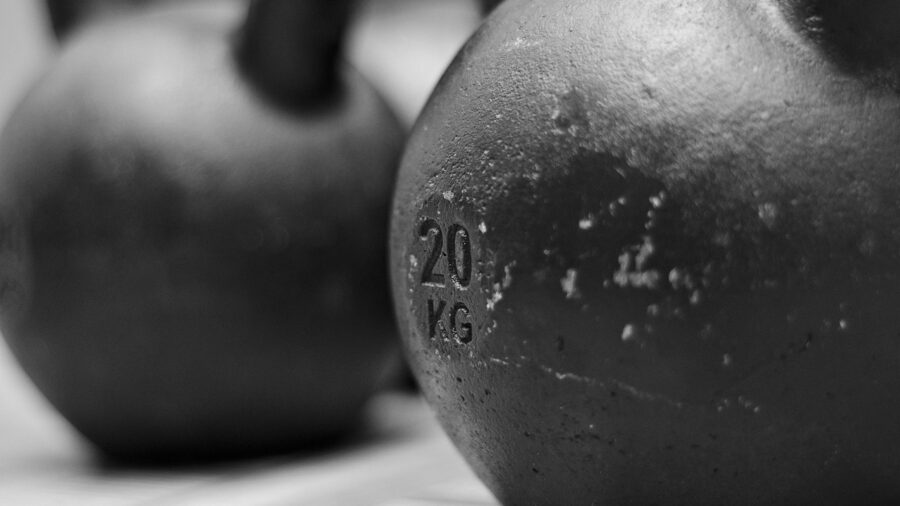
A 12 pound bell can be lifted with your arms, so your body never learns it has to hinge. A 35 pound bell cannot, which forces the hips to take over. Men should generally start at 26 to 35 pounds, women at 18 to 26, which is heavier than most beginners expect and lighter than most people can eventually handle. The working range for most lifters is covered by sets like these Titan Fitness kettlebells for full body workouts.
The caveat: heavy only fixes form if you already know the hinge. Learn the pattern with the wall drill first, then load it. Handle finish matters more than people think at this stage, since a slick or rusty handle makes you grip harder and grip tension travels up into the shoulders. Options like rust-resistant kettlebells under 100 dollars stay predictable in humid rooms, and the broader kettlebell lineup covers finish differences.
Film One Set From the Side
You cannot feel the difference between a hinge and a shallow squat reliably. You can see it instantly. Set a phone on the floor 8 feet away at hip height and record 10 reps from the side.
Check two things: do your shins stay vertical, and does the bell pass above knee height on the backswing rather than dropping toward the floor. Bells with a wide flat base like these flat-base kettlebells for small apartments under 200 dollars stay put between filming takes, which sounds trivial until one rolls into your phone.
Hinge, do not squat. Push the hips back, keep the shins vertical, let the arms hang. The rest of the training guides cover programming once the pattern is solid.




Write Your Review
No reviews yet. Be the first to share your experience!