

The dumbbell advice a beginner needs is almost the opposite of what an advanced lifter needs. One person needs light weights, small jumps, and room to grow. The other needs heavy weights, durability, and fast transitions between sets. Buying the wrong tier means either outgrowing your set in six months or spending 2000 dollars on weights that sit unused. Here’s how to tell which side you’re on.
Figure Out Which Category You’re In
Training age matters more than how you feel about your fitness. Someone who lifted seriously years ago and stopped is not a beginner in terms of equipment needs, and someone who has done bodyweight work for a decade might still be.
A rough guide: if your working dumbbell press is under 35 pounds per hand, you’re in beginner territory for equipment purposes. Between 35 and 60 pounds, you’re intermediate. Above that, you need advanced-tier equipment or you’ll be limited by the weights rather than by your effort.
Be honest here rather than aspirational. Buying for the lifter you hope to be in three years is how people end up with a 100-pound dumbbell they use as a doorstop.
What Beginners Actually Need
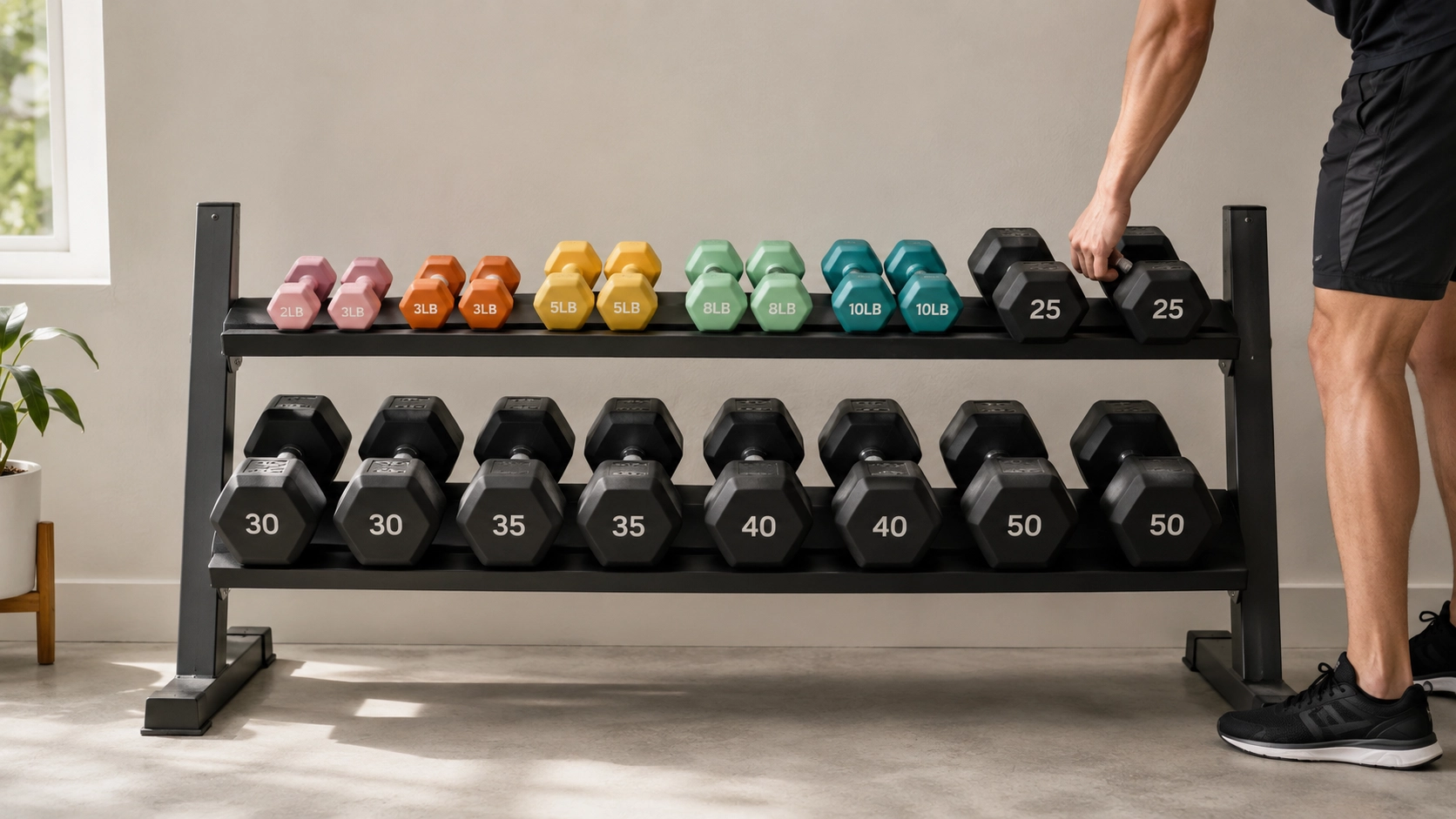
Beginners need range, not weight. You’ll use light dumbbells for lateral raises and heavier ones for rows in the same session, so a set covering roughly 5 to 30 pounds serves better than a single heavy pair.
Small increments matter enormously early on. Progressing from 15 to 20 pounds is a 33 percent jump, which is far too much on isolation work. Five-pound increments, or adjustable dumbbells with 2.5-pound steps, keep progress smooth.
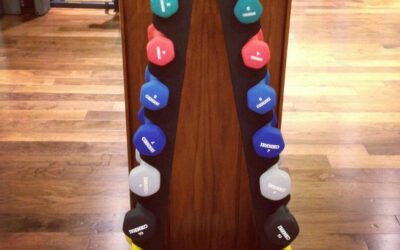
Budget sets do the job well at this stage. Our roundup of the best CAP dumbbells with rack under 200 dollars covers complete starter sets that cost less than a couple of months of gym membership. Adjustable dumbbells are the other strong option, since one pair replaces an entire rack in a fraction of the space, and our list of the best adjustable dumbbells under 200 dollars covers affordable models.
What Advanced Lifters Actually Need
Once you’re pressing 60-plus pounds per hand, the priorities flip completely.
| Priority | Beginner | Advanced |
|---|---|---|
| Weight range | 5 to 30 lbs | 25 to 100+ lbs |
| Increment size | 2.5 to 5 lbs | 5 to 10 lbs |
| Adjustment speed | Not critical | Critical, fixed preferred |
| Handle diameter | Standard | Thicker, better knurling |
| Durability demand | Moderate | High, dropped regularly |
| Typical budget | $150 to $400 | $1000 to $3000 |
| Storage | Small rack or floor | Full multi-tier rack |
Fixed dumbbells become the better choice at this level. Adjustable mechanisms wear under heavy repeated use, and the seconds spent adjusting between sets add up across a session. Complete sets with proper racks are the standard endpoint, and our roundup of the best dumbbell sets with rack under 2500 dollars covers full-range setups where the rack itself has to hold several hundred pounds safely.
Adjustable vs Fixed: The Real Trade-Off
This is where most buying decisions actually land, so it’s worth being specific about what each format costs you.
- Adjustable wins on: Space, cost per pound, and covering a wide range with one purchase.
- Adjustable loses on: Adjustment time between sets, durability when dropped, and awkward shape for floor work.
- Fixed wins on: Instant grab-and-go, durability, and consistent feel across every weight.
- Fixed loses on: Cost, floor space, and needing a rack to stay organized.
The deciding question is usually your training style. Slow, heavy strength work tolerates adjustment time fine. Circuits and supersets do not, since a 20-second weight change kills the intensity you’re trying to build. If your sessions involve fast transitions, our roundup of the best dumbbells for HIIT workouts under 300 dollars covers sets built for rapid switching.
For conditioning-style training, keeping intensity in the right zone matters more than the exact weight used. Our heart rate calculator gives you the target ranges to train against.
Plan for the Lifter You’ll Be in Two Years
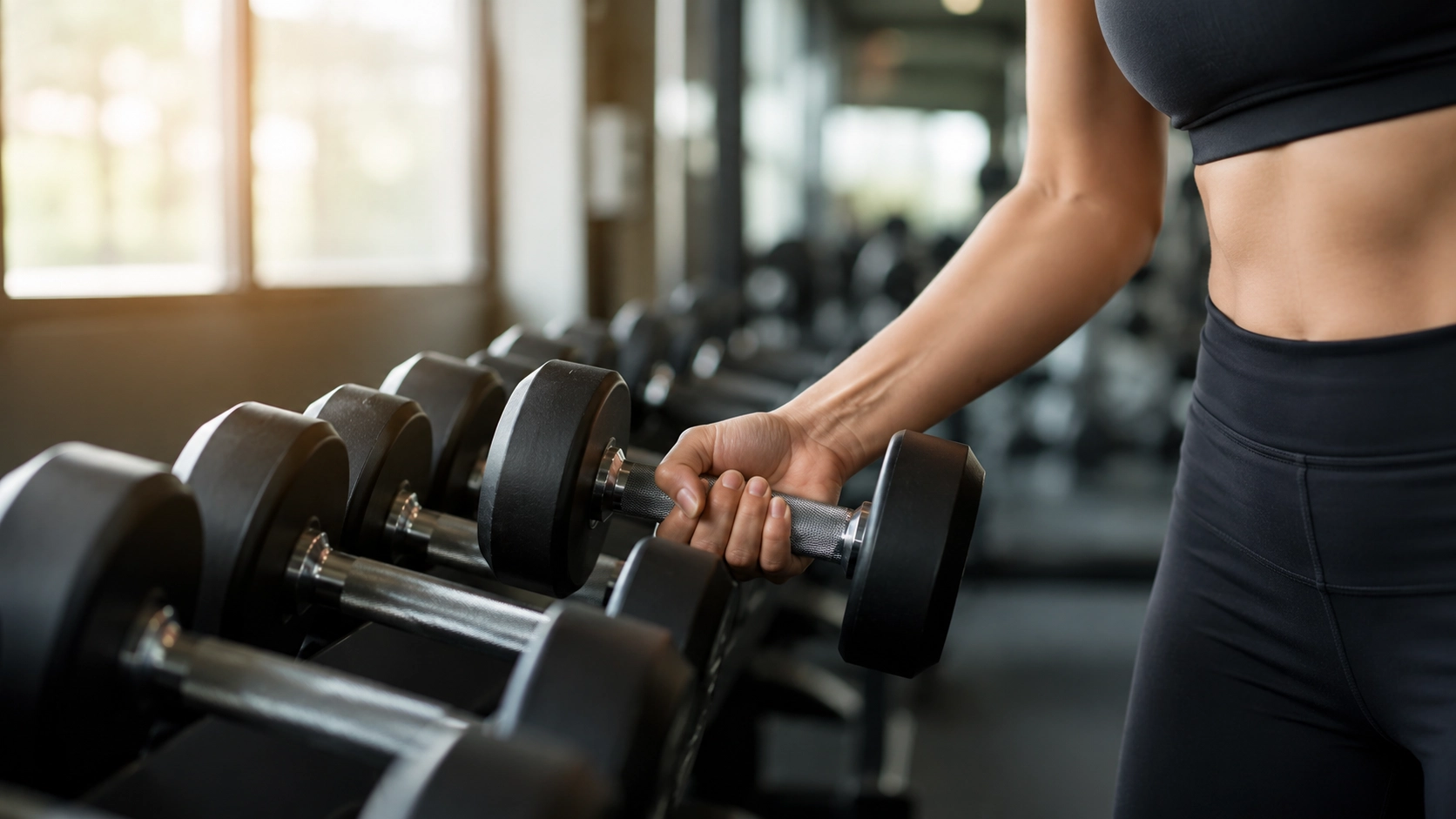
The middle path most people should take: buy a good adjustable pair or a modest fixed set now, then add heavier fixed dumbbells later as specific weights become limiting.
You almost never need a complete 5-to-100-pound set. Most home lifters use five or six pairs regularly and leave the rest gathering dust. Track which weights you actually reach for over a few months, then buy heavier versions of those specific pairs.
Resale is worth considering too. Fixed dumbbells hold value remarkably well and sell quickly secondhand, so upgrading later is less costly than it looks. Our full dumbbells category covers the range across both tiers if you want to compare formats side by side.
Beginners should buy range and small increments cheaply. Advanced lifters should buy heavy, durable, and fixed. Everyone else should buy one good adjustable pair and let their actual training tell them what to add next.

Write Your Review
No reviews yet. Be the first to share your experience!