

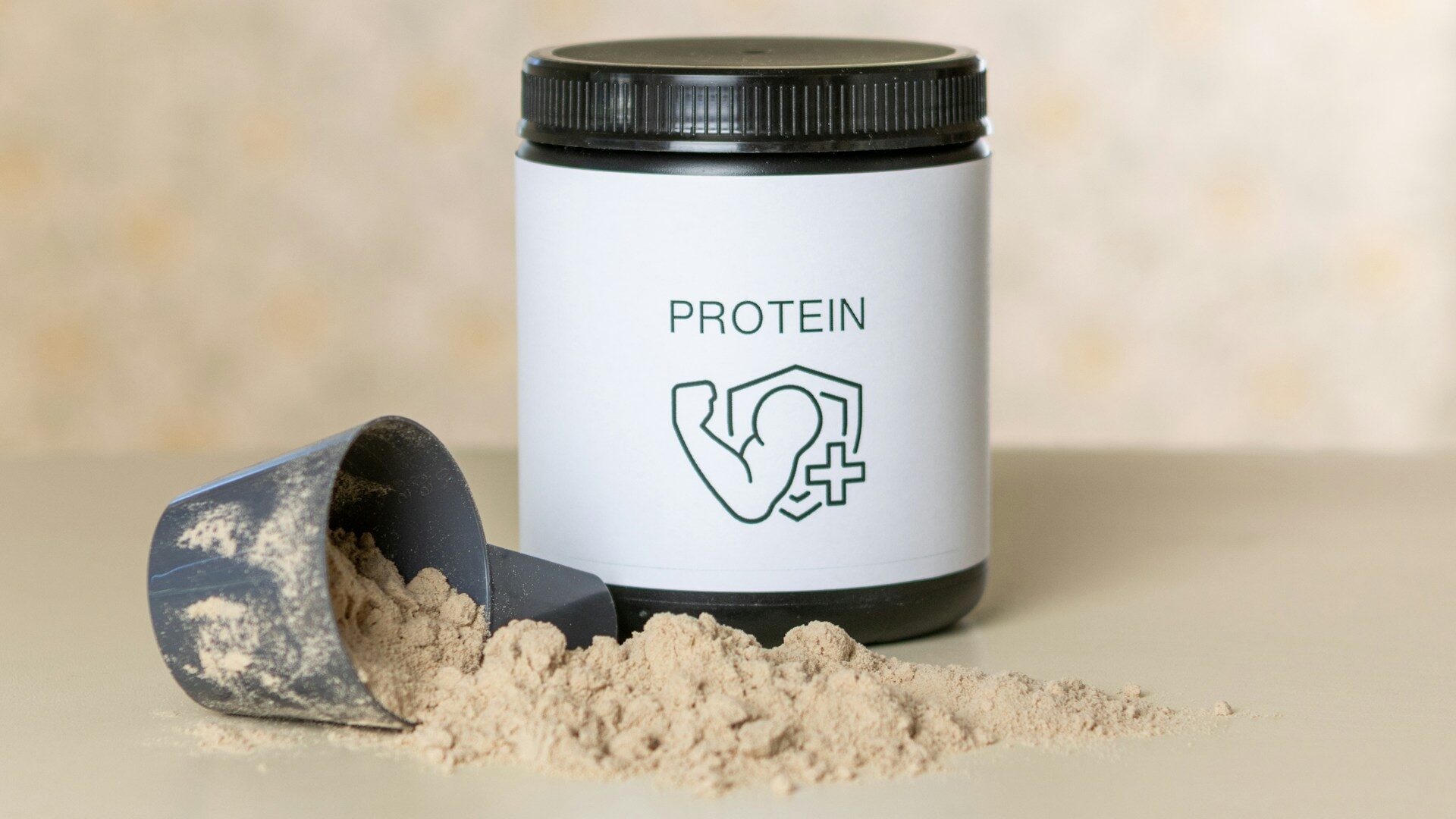
Protein powder is one of the most popular supplements among people who train at home. It is convenient, easy to store and helps you reach your daily protein target. But labels vary widely, and marketing claims can make it hard to compare products. Knowing what to look for helps you choose a powder that fits your goals.
Start With Protein per Serving
Look at the grams of protein per scoop and compare them with the total serving size in grams. A powder with 25 grams of protein in a 30-gram scoop is mostly protein. One with 20 grams in a 45-gram scoop contains more carbs, fats or fillers. This ratio is one of the quickest ways to judge quality.
Know the Protein Source
| Protein Type | Digestion | Good For |
|---|---|---|
| Whey concentrate | Fast | General use, often cheaper |
| Whey isolate | Fast | Lower lactose, higher protein per scoop |
| Casein | Slow | Before bed or long gaps between meals |
| Plant blends (pea, rice, soy) | Moderate | Dairy-free and vegan diets |
Plant blends that combine sources tend to offer a more complete amino acid profile than a single plant protein.
Check Sugar, Carbs and Calories
Some powders, especially mass gainers, contain large amounts of added sugar and calories. That may suit someone trying to gain weight, but not someone focused on lean muscle. Check the added sugar line, the total carbs and the calories per serving to make sure they match your plan.
Read the Ingredient List
Ingredients are listed in order of quantity, so the protein source should appear first. Watch for proprietary blends that hide exact amounts, and look at sweeteners, thickeners and flavorings if you are sensitive to them. A shorter ingredient list is often easier to understand, though it is not automatically better.
Look for Independent Certification Seals
Supplements are not reviewed the same way as medicines in the United States. Independent certifications, such as NSF Certified for Sport or Informed Sport, show that a product was checked by an outside lab for banned substances and label accuracy. These seals are especially important for competitive athletes.
- Check the serving size and protein-to-scoop ratio.
- Match the protein type to your diet and digestion.
- Watch for added sugar and hidden blends.
- Prefer products with independent certifications.
Remember: Food Comes First
Protein powder is a convenient supplement, not a requirement. Whole foods like eggs, dairy, meat, fish and beans can cover your needs too. See our list of budget-friendly protein sources and our guide to protein timing for the bigger picture.
Final Thoughts
Reading a protein powder label comes down to a few checks: protein per serving, the protein source, added sugar, the ingredient list and independent certification. With those in mind, you can quickly compare products and choose one that supports your training. If you have allergies or health conditions, check with a healthcare professional first.
FAQs
How much protein should a good powder have per scoop?
Around 20 to 30 grams per scoop is typical. Compare it to the scoop size to see how much of each serving is protein.
Is whey isolate better than whey concentrate?
Isolate has more protein and less lactose per scoop. Concentrate works well for most people and is often more affordable.
Do I need protein powder to build muscle?
No, it is optional. Whole foods can provide all the protein you need, and powder simply makes it more convenient.










Write Your Review
No reviews yet. Be the first to share your experience!