

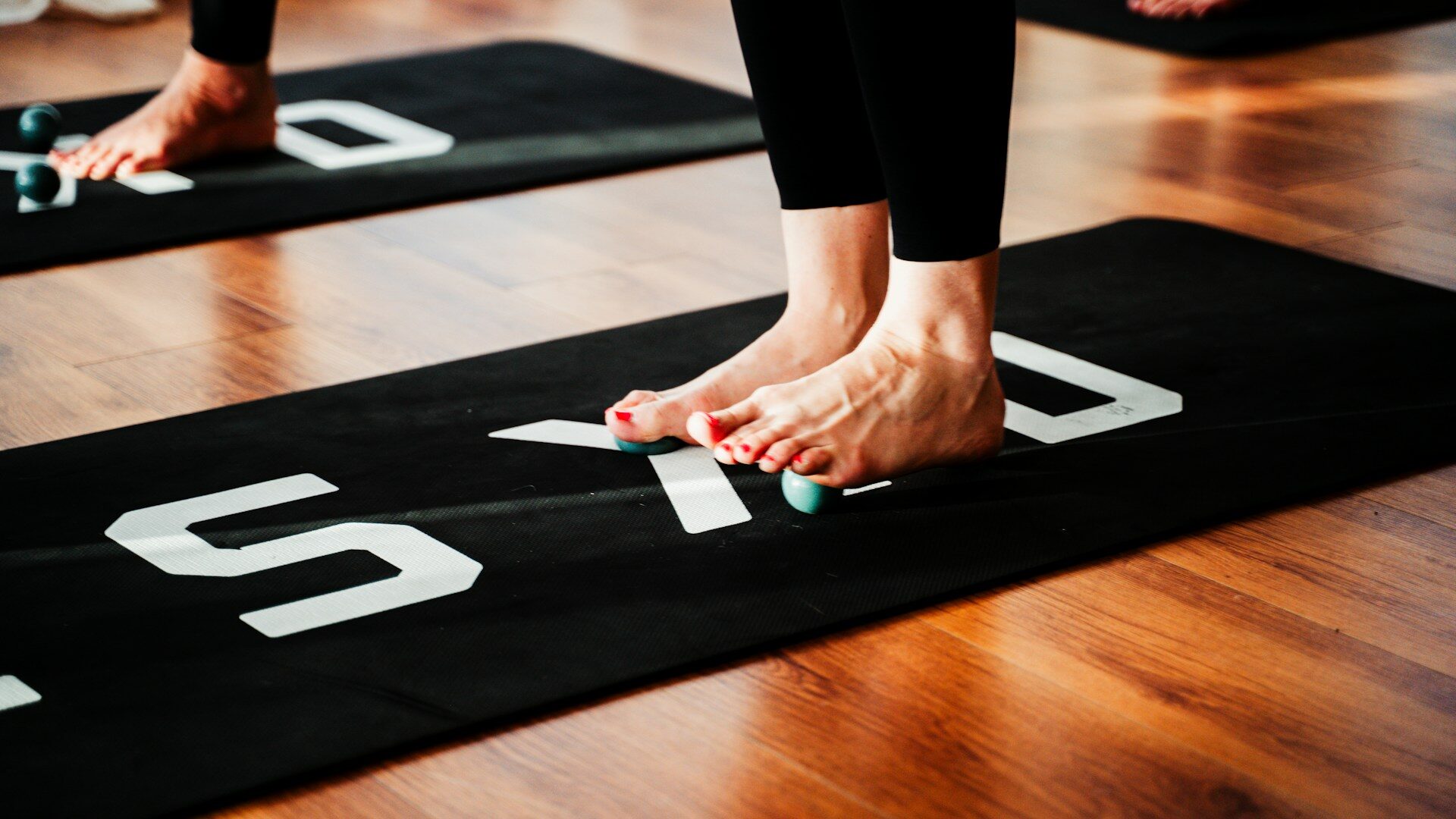
Most home gyms put every square foot toward racks, benches and cardio machines. Recovery work gets squeezed into whatever floor is left, so it often gets skipped. Stretching between a barbell and a cardio machine is awkward, and few people bother after a long session. A small corner set aside for stretching, foam rolling and cool-downs changes that. When the mat is already down and the tools are in reach, recovery becomes part of every session.
Why a Separate Space Helps
- Less friction: no need to clear plates or move a bench to stretch.
- A clear signal: stepping into the corner tells your brain the workout is over.
- Safer stretching: no equipment edges or dropped weights nearby.
- Better habits: visible tools remind you to use them.
How Much Space You Need
A space about 6 feet by 4 feet is enough to lie flat on a mat with arms overhead. If you can spare 6 by 6 feet, you can add a small shelf and room to move between positions. Corners work well because two walls give you something to lean on for stretches. A spot near a window adds natural light and makes the space feel calmer than the lifting area.
What to Put in It
| Item | Use | Priority |
|---|---|---|
| Thick exercise mat | Stretching, mobility, breathing | Must have |
| Foam roller | Legs, back and hips | Must have |
| Lacrosse or massage ball | Feet, glutes, shoulders | Must have |
| Stretch strap or band | Hamstrings and shoulders | Nice to have |
| Massage gun | Quick targeted work | Nice to have |
| Small shelf or basket | Keeps tools tidy | Nice to have |
Layout Tips
- Place the corner away from the lifting area, ideally behind the rack or near a wall with no equipment.
- Use a softer floor surface than your lifting platform, such as a thick mat over rubber flooring.
- Hang a clock or timer where you can see it while lying down.
- Keep a water bottle spot and a towel hook nearby.
- Add warm lighting if the rest of the gym is bright and harsh.
Short on space? Our minimalist home gym ideas show how to fit more in less room.
Simple Routines to Do There
Five to ten minutes after each session is enough. Try hip and hamstring stretches after leg day, chest and shoulder openers after pressing, and foam rolling after cardio. Our guides on power rack cool-down moves and hamstring stretches after leg day give ready-made routines.
Final Thoughts
A dedicated recovery corner turns cool-downs from an afterthought into a habit. All you need is a small patch of floor, a mat, a roller and a ball, plus a tidy spot for extras. Set it up once and you will find yourself stretching after nearly every workout. Get more layout ideas in our gym design guides.
FAQs
How big should a recovery corner be?
About 6 by 4 feet is enough. That lets you lie flat with arms overhead.
Do I need special flooring for stretching?
No. A thick exercise mat over your existing floor works well.
What is the most useful recovery tool?
A foam roller. It covers the most muscle groups for little cost.


Write Your Review
No reviews yet. Be the first to share your experience!