
Stepping off an elliptical the second your timer hits zero leaves your heart rate elevated, blood pooled in your legs, and your hip flexors locked in the same shortened position they held for 40 minutes. A proper cool-down takes 10 to 12 minutes and fixes all three. Here is the sequence, in order.

Minutes 1 to 5: Keep Moving on the Machine
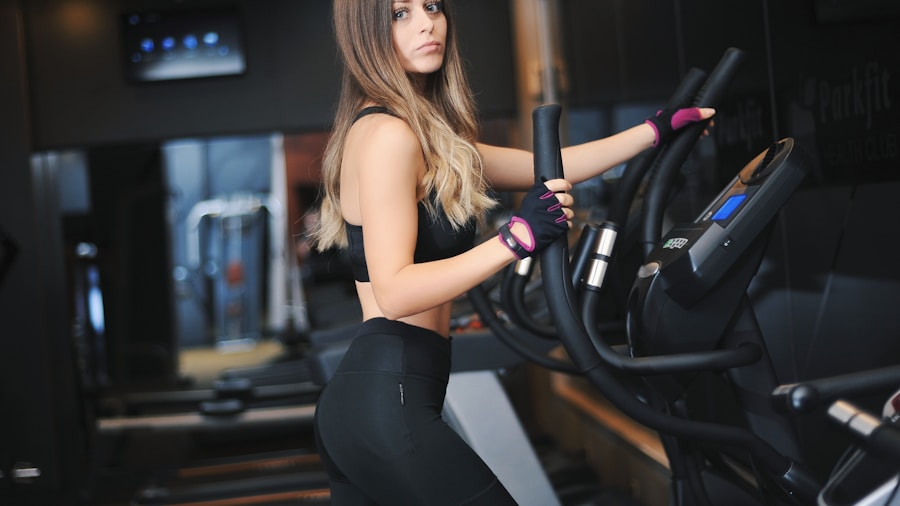
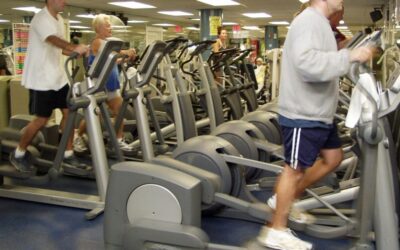
Do not stop pedaling. Drop the resistance to level 1 or 2 and reduce your cadence to 40 to 50 strides per minute for five full minutes. Your leg muscles act as a pump pushing blood back toward the heart, and shutting that pump off abruptly is what causes the lightheaded feeling people get after hard cardio.
Watch your heart rate come down rather than watching the clock. You want to reach roughly 60 percent of your maximum before you step off, which for most people means dropping 30 to 50 beats from your working rate. A heart rate calculator gives you the actual target zones for your age instead of a guess. If your recovery rate is unusually slow, that is worth noting over several sessions.
Machines with a smooth flywheel response make this easier, since you can drop resistance without the stride feeling suddenly loose. Units like these NordicTrack ellipticals built for climbers hold a consistent stride path even at the lowest settings.
Minutes 6 to 8: Reverse Your Stride
Here is the step almost everyone skips. Pedal backward for two to three minutes at the same easy resistance.
Forward elliptical motion loads the quads and hip flexors heavily. Reversing the stride shifts emphasis to the hamstrings and glutes, which counterbalances the pattern you just repeated a few thousand times. It is also a decent challenge for coordination when you are tired, which is entertaining for anyone watching.
Keep your posture tall and your grip light on the handles. If you are leaning on the console to stay upright, you are done with the machine and should move to the floor.
Minutes 9 to 12: Static Stretching Off the Machine
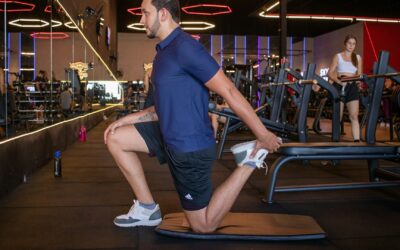
Now that your muscles are warm and circulation is elevated, static holds are actually productive. Hold each position 30 seconds per side, breathing normally.
| Muscle Group | Stretch | Hold |
|---|---|---|
| Hip flexors | Half-kneeling lunge | 30 sec each |
| Quads | Standing quad pull | 30 sec each |
| Calves | Wall lean, back leg straight | 30 sec each |
| Hamstrings | Seated forward fold | 45 sec |
| Shoulders | Cross-body arm pull | 30 sec each |
The shoulder stretch matters more than people expect if you use the moving handles. Forty minutes of pushing and pulling adds up, and the front delts tighten the same way the hip flexors do. Whether this routine prevents next-day soreness is a separate question, and this breakdown of preventing muscle soreness after a gym home workout covers what the evidence actually supports.
Refuel and Rehydrate Within the Hour
A 45 minute elliptical session at moderate intensity burns somewhere between 350 and 500 calories depending on bodyweight and resistance. You lose fluid regardless. Drink 16 to 20 ounces within the first hour, more if the session ran long or the room was warm.
You do not need a recovery shake after moderate cardio. A normal meal within two hours covers it. Protein matters more if you lifted the same day. The hydration and refueling logic here overlaps heavily with cycling, and these recovery tips after a long exercise bike ride apply almost directly to elliptical sessions of similar length. Session length itself is worth calibrating, and this overview of how long a workout should last covers reasonable durations by training type.

When You Can Skip the Cool-Down Entirely
The contrarian note. If you just did 20 minutes at conversational intensity, you do not need a 12 minute cool-down. Two minutes of easy pedaling and a hamstring stretch is enough, and treating every light session like a race effort is how routines get abandoned.
Scale the cool-down to the workout. Interval sessions like a HIIT treadmill workout built for calorie burn genuinely need the full protocol because heart rate spikes leave more to unwind. A steady 25 minute spin does not. Machine choice affects this too. A quiet elliptical for apartments in the 200 to 400 dollar range encourages shorter, more frequent sessions where a long cool-down would eat half the workout, while heavier commercial ellipticals for home offices over 1500 dollars tend to invite the longer efforts that warrant one.
Build the sequence into the machine timer so it happens automatically. Set your total to 50 minutes instead of 40 and let the last 10 handle themselves. Models like these Niceday ellipticals for a gym home make that simple with programmable cool-down phases. The routine you do not have to remember is the one you actually do.


Write Your Review
No reviews yet. Be the first to share your experience!