

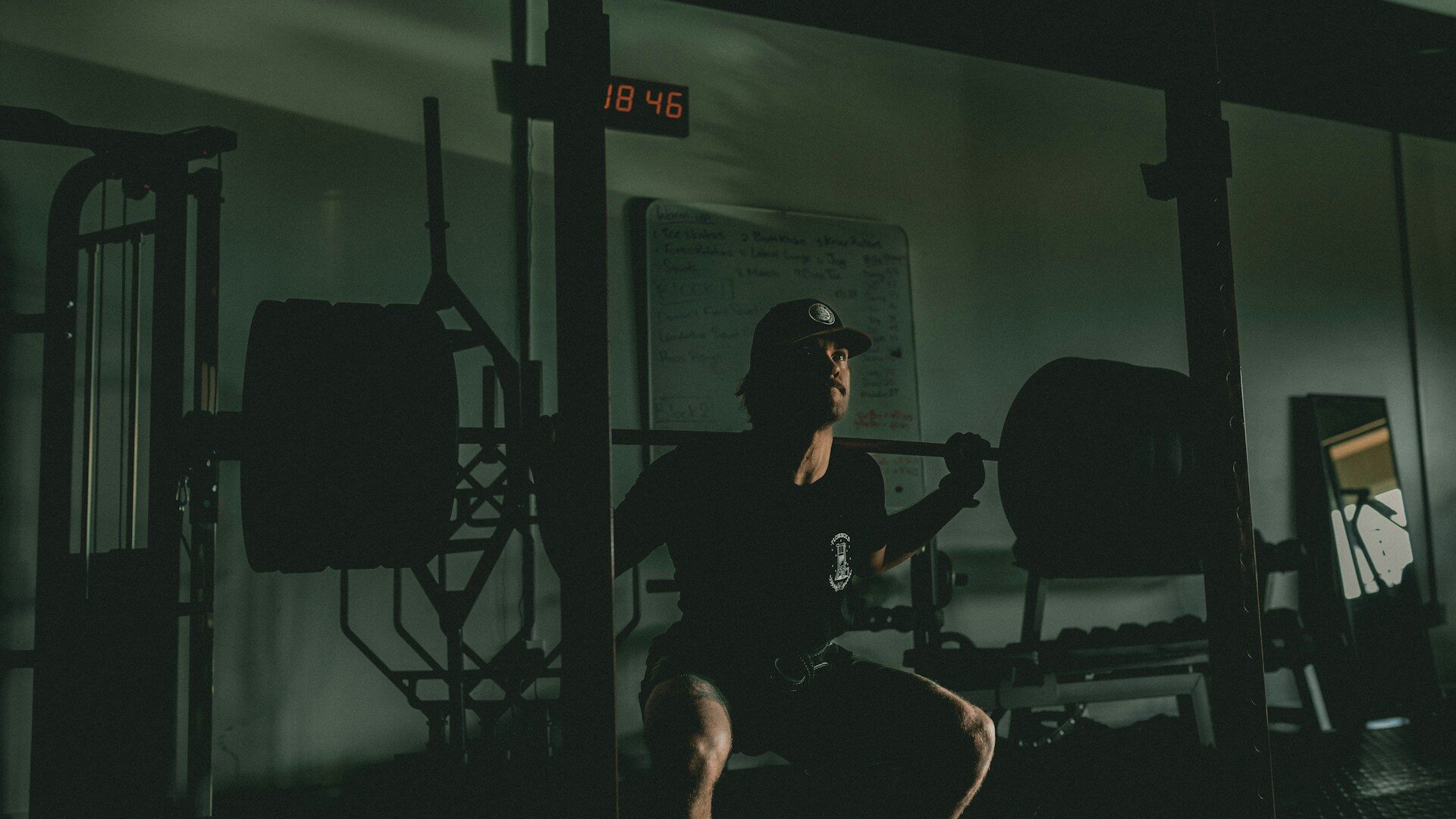
Squats are one of the best exercises for strong legs and healthy knees. Yet plenty of lifters finish a squat session with a dull ache around the kneecap or a sharp twinge on the inside of the joint. In most cases, the squat itself is not the problem. The way it is set up, loaded or recovered from is.
Below are the most common causes of knee pain after squats and what you can do about each one. If pain is severe, comes with swelling or locking, or lasts more than a week or two, see a doctor or physical therapist.
Common Causes at a Glance
| Cause | Where You Feel It | First Fix |
|---|---|---|
| Knees caving inward | Inside of the knee | Push knees out over your toes |
| Load increased too fast | Front of the knee, below the kneecap | Drop weight and build back gradually |
| Stiff ankles | Front of the knee | Ankle mobility work or heel elevation |
| Bouncing out of the bottom | Around the kneecap | Control the descent and pause briefly |
| Too little recovery | General ache | Space hard leg days further apart |
Knees Caving In
When your knees drift toward each other as you stand up, the joint takes stress at an awkward angle. This often comes from weak hips or simply not paying attention to knee position. Cue yourself to spread the floor with your feet and keep your knees tracking in line with your toes. Light banded side steps and glute bridges before squatting can help wake up the hip muscles that control this.
Adding Weight Too Quickly
Muscles get stronger faster than tendons do. If you add weight every session for months, the tendon below your kneecap can become irritated even while your legs feel strong. Use smaller jumps, take a lighter week every month or so, and do not chase a new personal best when your knees already feel cranky.
Stance, Depth and Ankle Mobility
There is no single correct squat stance. Most people do well with feet about shoulder width and toes turned out slightly. Squatting deep is not bad for healthy knees, but forcing depth with stiff ankles can push the knees and lower back into poor positions. Try these adjustments:
- Widen your stance a little and turn your toes out more.
- Place small plates or a wedge under your heels to make depth easier.
- Stretch your calves and practice ankle mobility drills a few times a week.
- Squat to the depth you can control with a neutral spine, then build from there.
Warm Up and Recover Properly
Cold knees dislike heavy loads. Spend five minutes on a bike or elliptical, then do a few light sets of squats before your working weight. After training, gentle cycling the next day can ease stiffness. For more ideas, see our low-impact cardio workout ideas for bad knees. Sleep, enough protein and rest days between hard leg sessions also matter more than most lifters think.
Final Thoughts
Knee pain after squats usually traces back to knee position, fast load jumps, stiff ankles or poor recovery. Fix the cause, lower the weight for a while if needed and build back up with patience. Most lifters find they can keep squatting for years with healthy knees. Explore more in our recovery guides.
FAQs
Is it normal for knees to hurt after squats?
Mild muscle soreness around the thighs is normal, but joint pain is not. Pain in the knee itself usually points to a form or loading issue.
Should I stop squatting if my knees hurt?
Not always. Many people can keep squatting with less weight, a shorter range of motion or a different stance while the knee settles.
Are deep squats bad for your knees?
No, not for healthy knees. Deep squats are safe when you can reach the depth with control and good alignment.
Do knee sleeves help with pain?
They can make knees feel warmer and more supported. Sleeves are helpful, but they do not fix poor form or overloading.








Write Your Review
No reviews yet. Be the first to share your experience!