
The Smith machine gets unfairly dismissed by people who’ve never trained alone in a basement at 6 a.m. with nobody around to pull a bar off their chest. Its fixed path removes the balance demand of free weights, which is a genuine trade-off, but it also lets you push closer to failure safely. For a gym home without a spotter, that’s a real advantage worth building a program around.
What the Smith Machine Does Well
The bar travels on fixed rails, so it can only move up and down (or along a slight arc on angled models). Your stabilizer muscles do less work, which means the target muscle does more. That’s a drawback for athletic carryover and a benefit for hypertrophy.
The safety hooks are the real selling point. You can rotate the bar and rack it at almost any point in the range, which means failing a rep is a non-event. Train hard, take sets closer to failure, and stop worrying about what happens if the last rep doesn’t go up.
The fixed path also makes it easier to learn movement patterns. Beginners can groove a squat or press without the bar wandering, then transfer that to free weights later.
Set Up the Machine Correctly First
Foot placement changes everything on a Smith machine. Because the bar path is fixed, your body has to accommodate the machine rather than the other way around.
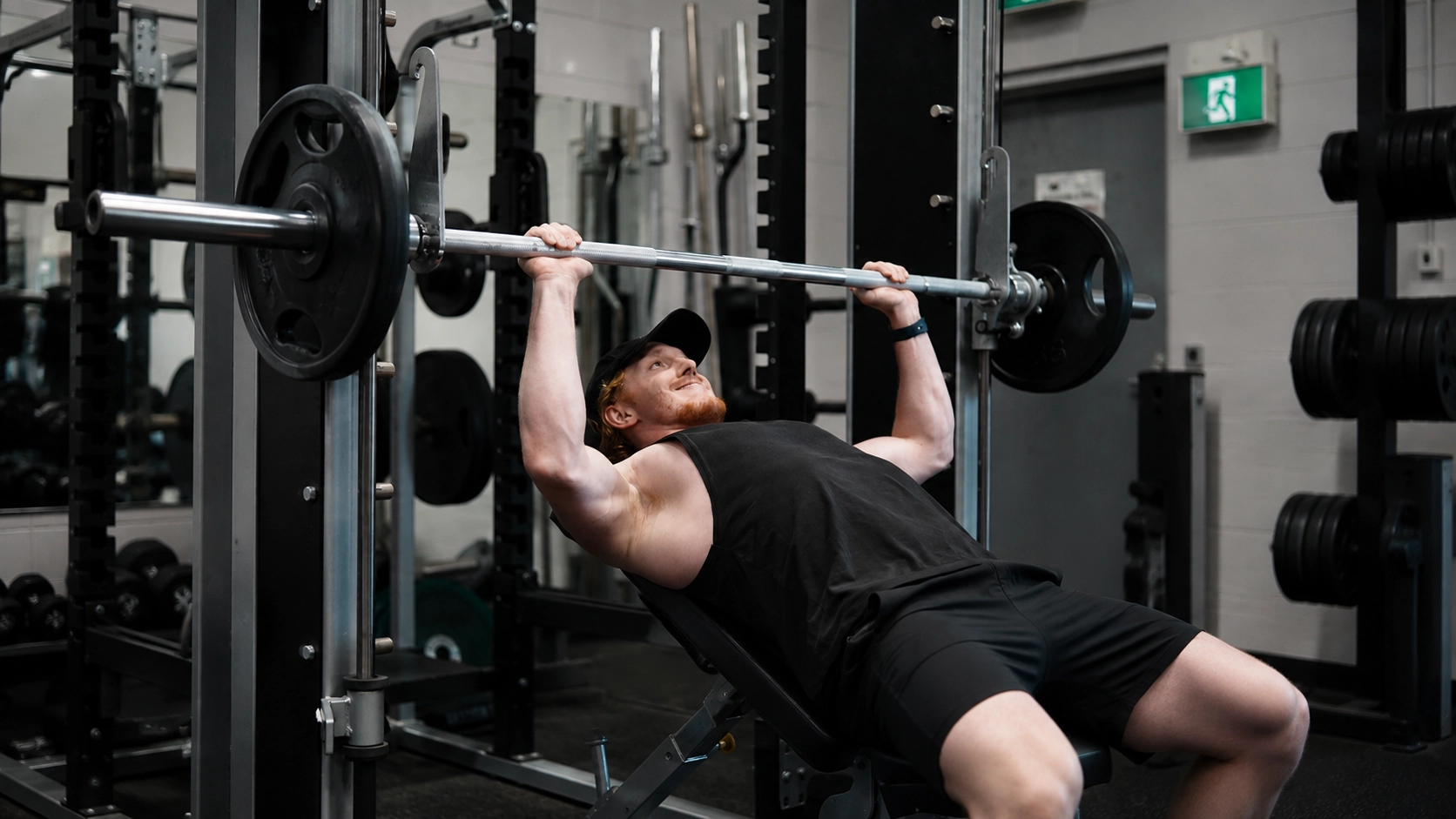
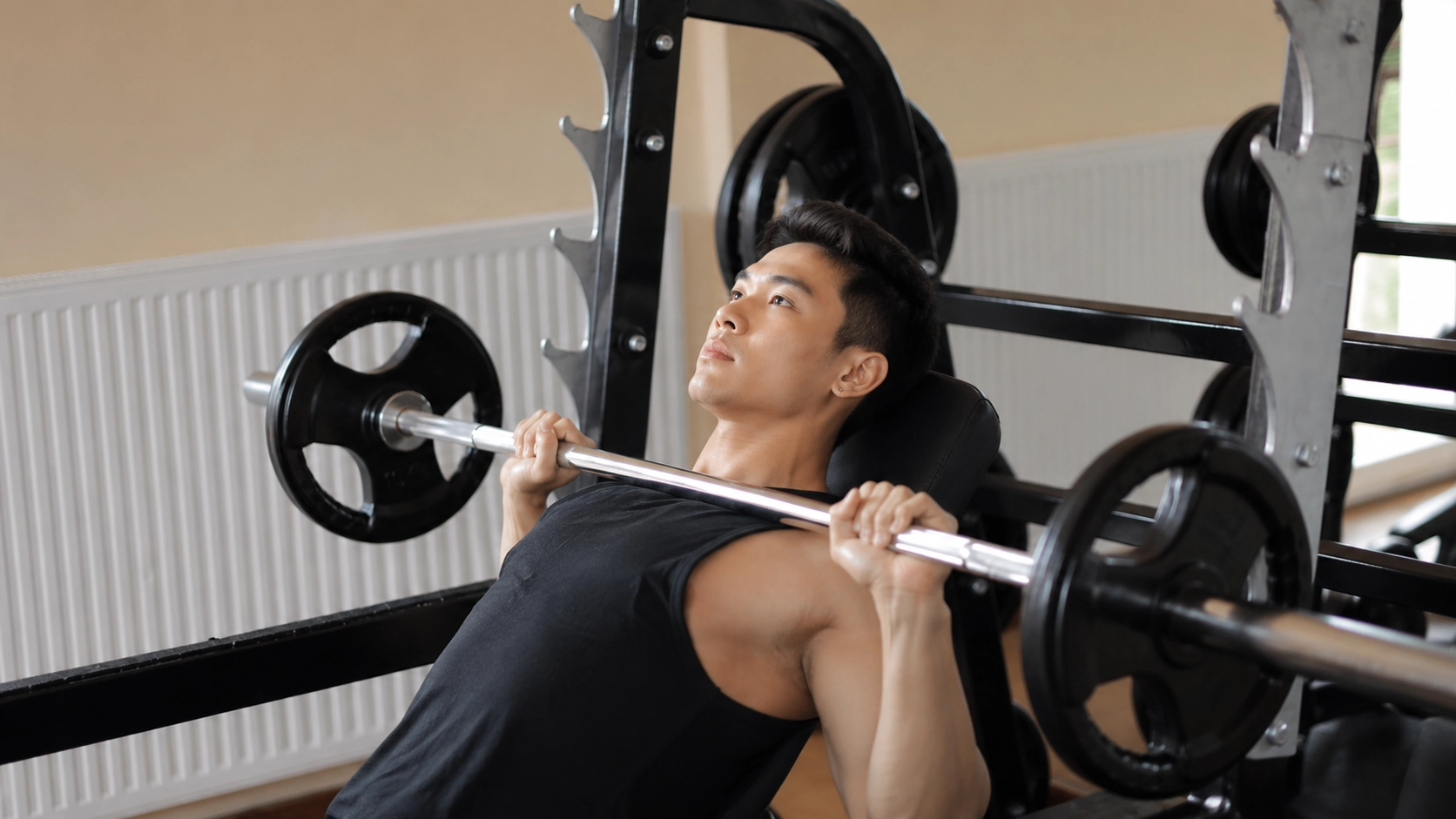
For squats, place your feet slightly forward of the bar, not directly under it. This lets your hips travel back naturally instead of forcing your knees far past your toes. For bench press, position the bench so the bar touches your mid-chest, not your throat or your stomach. Adjust the bench position, not your body.
Set the safety stops just below your bottom position on every lift before you start. It takes ten seconds and it’s the entire reason you own the machine. If you’re comparing models, our full Smith machines category covers hook placement and adjustability across builds.
A Full-Body Smith Machine Workout
Run this twice a week with at least two days between sessions. Three sets of 8 to 12 reps on each movement unless noted.
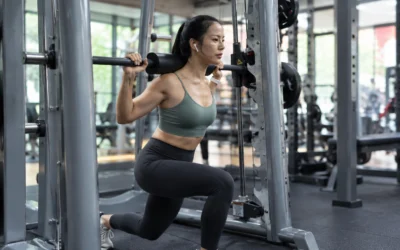
- Smith squat: Feet forward, controlled descent to parallel or slightly below. The anchor movement of the session.
- Smith bench press: Flat or slight incline. Touch mid-chest, press without locking out hard.
- Smith bent-over row: Hinge at the hips, pull to the lower ribs. Keep the back flat throughout.
- Smith overhead press: Seated or standing. Set safeties at chin height.
- Smith Romanian deadlift: Slight knee bend, push the hips back, feel the hamstrings load.
- Smith split squat: One leg back on a bench or floor. Two sets per leg.
- Smith calf raise: Standing on a plate for range. Two sets of 15 to 20.
That’s roughly 45 to 55 minutes including warmup. If your schedule is tighter, our guide to 30-minute high-intensity home lifting routines covers how to compress a full-body session without gutting the stimulus.
Add Cable Work for Complete Coverage
The Smith machine handles compound movements well but leaves gaps. Lateral raises, face pulls, curls, and triceps work all benefit from cables or dumbbells alongside the bar.
Combination units solve this in one footprint. Our review of the best Smith machines with cable crossover system under 4000 dollars covers builds that pair the bar with a full cable station, which turns a single machine into a complete gym home. Smart machines take it further with digital resistance and guided programming, and our roundup of the best multi-purpose smart Smith machines from Speediance covers that category.
Progress the Program Over Time
Add weight when you hit the top of the rep range on every set with clean form. Small jumps work better than big ones: five pounds on squats and rows, two and a half on presses.
When linear progression stalls, change one variable rather than everything. Add a set, slow the eccentric to three seconds, or shorten rest periods. Rotate between flat and incline bench every few weeks to hit the chest differently.
Heavier training demands more from the machine. If your squat and press numbers are climbing, our list of the best Smith machines for heavy lifters covers builds with the weight capacity and bar stability to keep up. Our roundup of the best high-performance Smith machines under 4000 dollars covers the same territory with more attachment options.
Pair strength days with easy cardio on off days to support recovery without adding fatigue. Our beginner cardio workout plan works well as a complement to twice-weekly full-body lifting.
Set your safeties, place your feet forward, and run the same seven movements consistently for eight weeks before changing anything. The Smith machine rewards patience and consistency more than it rewards creativity.

Write Your Review
No reviews yet. Be the first to share your experience!