
Rowing is one of the few machines that works nearly everything, which is exactly why it leaves you tight in places a treadmill never would. Every stroke closes your chest, loads your lats, and rounds your thoracic spine hundreds of times in a row. Without a proper cooldown, that adds up to shoulders that creep forward and a mid-back that feels permanently stuck. Ten minutes afterward fixes almost all of it.

What Rowing Actually Tightens
Understanding the pattern makes the stretches make sense. The drive phase pulls your shoulders back and loads your lats, hamstrings, and glutes. The recovery phase compresses you forward into a deep hip and spine flexion.
Repeat that a few hundred times and predictable things happen. Your lats shorten, your chest tightens from the forward-reaching position, your hip flexors stay compressed, and your thoracic spine gets stiff from repeated rounding. Your forearms and grip take a beating too, which people rarely address.
The stretches below target exactly those areas rather than a generic full-body routine.
Cool Down Before You Stretch
Do not step off and go straight to the floor. Row easy for three minutes at very light resistance, letting your breathing settle. This clears metabolic byproducts and keeps blood circulating rather than pooling in your legs.
A structured post-workout routine supports recovery more than stopping abruptly, particularly after full-body sessions where multiple muscle groups are fatigued at once.
Stretch while you’re still warm. Tissue is pliable immediately after training, which is when static stretching does the most good and carries the least risk.
The Back and Shoulder Sequence
Hold each for 20 to 30 seconds per side, breathing normally. No bouncing, no pushing into sharp pain.
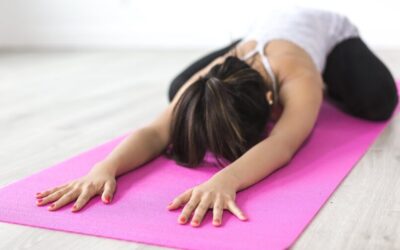
- Child’s pose with side reach: Kneel, reach forward, then walk both hands to one side. Opens the lats directly along the line rowing shortens them.
- Doorway chest stretch: Forearm on a door frame at shoulder height, step through gently. Counteracts the forward shoulder position.
- Thread the needle: On all fours, slide one arm under your body and rotate. Restores thoracic rotation that rowing never asks for.
- Cross-body shoulder stretch: Pull one arm across your chest, keeping the shoulder down rather than shrugged.
- Seated forward fold: Legs extended, hinge from the hips with a long spine. Targets hamstrings and lower back together.
- Cat-cow, slowly: Ten slow cycles. Mobilizes the whole spine after repeated rounding.
- Wrist and forearm stretch: Extend one arm, gently pull the fingers back, then reverse. Grip fatigue is real after long rows.
Seven stretches at 25 seconds runs about six minutes. Add the three-minute cooldown row and the whole thing takes ten.
Prioritize Based on Your Session
Not every row needs the full sequence. Match the emphasis to what you actually did.
| Session Type | Priority Areas | Time Needed |
|---|---|---|
| Long steady row, 30+ min | Lats, hamstrings, lower back | Full sequence |
| Sprint intervals | Hip flexors, quads, chest | 5 to 6 min |
| Short session, under 15 min | Chest, lats, wrists | 3 to 4 min |
| Rowing plus lifting | Full sequence plus shoulders | 10 to 12 min |
If you’re combining rowing with strength work, the overlap is significant and worth handling together. Our cool-down stretching routine after strength training covers the lower-body and pressing-focused stretches that complement this sequence.
Setup Problems That Cause Soreness
Sometimes tightness isn’t a recovery problem, it’s a technique problem. Persistent lower back pain after rowing usually means you’re leaning back too far at the finish or initiating the drive with your back instead of your legs.
Foot strap height matters too. Straps set too high let your heels lift excessively, which changes how force transfers through your posterior chain. Damper setting is another culprit: a very high setting turns rowing into a strength exercise your back may not be prepared for.
Machine quality plays a role in comfort as well. Smooth-running units reduce the jerky loading that aggravates the lower back, and our roundup of the best NordicTrack rowing machines for weight loss covers models built for longer sessions. For quieter options in shared spaces, our list of the best low noise rowing machines from 300 to 500 dollars covers belt-drive and magnetic models.
Support Recovery Beyond Stretching
Stretching handles tightness. Soreness is a different problem with different solutions: sleep, protein, hydration, and sensible training volume all matter more than any stretch.
Our guide on how to prevent muscle soreness after a gym home workout covers warmups, nutrition, and recovery tools that reduce next-day stiffness before it starts.
Understanding your session load helps you judge how much recovery you need. Our calories burned calculator gives you a sense of the demand, which is useful when planning how hard to go the following day.
Equipment access shapes consistency more than anything else. Compact machines from our roundup of the best lightweight rowing machines under 200 dollars store easily, and for higher-volume training our list of the best rowing machines for weight loss under 1000 dollars covers sturdier builds.
Row easy for three minutes, then work through the seven stretches while you’re still warm. Your shoulders will thank you at your desk tomorrow, which is where rowing tightness usually announces itself.
Write Your Review
No reviews yet. Be the first to share your experience!