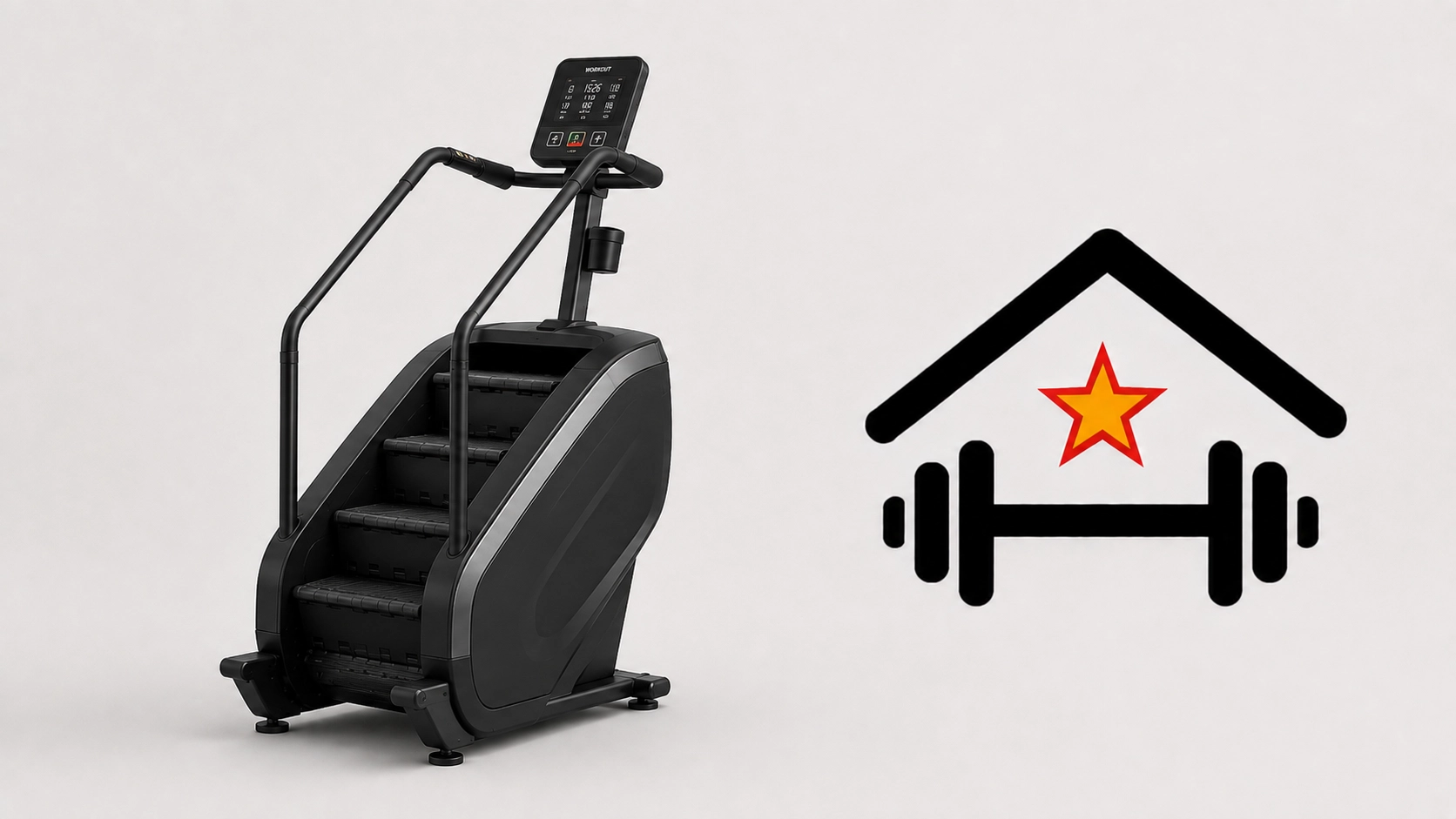
A stair climber recreates the motion of climbing a flight of stairs on a stationary machine, using either independently moving pedals or a continuous rotating staircase. That stepping motion loads the glutes, quads, and calves far harder than walking or light jogging, making it one of the most efficient calorie-burning cardio machines you can fit in a home gym.
Types of Stair Climbers
Mini Stair Steppers
Mini steppers are compact, pedal-only units with hydraulic or magnetic resistance, built for a strong lower-body burn without the height or price of a full machine.
Rotating Staircase Machines
These full-size machines use a continuous belt of steps, the closest match to real stair climbing and the type most commercial gyms use, with a taller footprint and a higher price to match.
Under-Desk Stair Steppers
Shrunk down for light, continuous movement while seated at a desk, these trade workout intensity for the ability to stay active during the workday.
Key Features to Look For
Step height and depth need to feel natural for your stride, a platform that is too shallow forces you onto your toes and tires out your calves faster than it should. Resistance type matters too: hydraulic units are simpler and quieter, while magnetic resistance usually offers smoother, more consistent adjustment across levels. Handrail presence and a non-slip platform surface matter more here than on most cardio machines, since the vertical stepping motion carries a real fall risk if you lose your footing.
Common Mistakes to Avoid
Leaning heavily on the handrails is the most common mistake, it takes weight off your legs and cuts the actual calorie burn far below what the console display suggests. Taking short, rapid steps instead of full, controlled ones also reduces muscle engagement and puts more strain on the knees over a long session.
Stair Climber vs. Other Cardio Machines
Stair climbers burn calories faster per minute than a treadmill or exercise bike at a comparable effort level, since the stepping motion recruits more muscle mass against gravity. The tradeoff is a steeper learning curve and more strain on the knees and hips than a rower or elliptical, so it suits people who already have a reasonable base of lower-body strength.
Budget Tiers to Expect
Basic mini steppers start around $80 to $150. Mid-range units with sturdier frames, higher weight capacities, and smoother resistance typically run $150 to $350. Full-size rotating staircase machines with a taller step range and commercial-grade build often run $600 to $2,000 or more.
How to Use a Stair Climber Correctly
Keep your posture upright and your core engaged rather than hunching forward over the handrails. Step through your full foot instead of just your toes, and let your legs, not your grip on the rails, carry your body weight throughout the movement.
Who a Stair Climber Is For
Anyone who wants an intense, time-efficient lower-body and cardio workout and already has decent joint health and baseline leg strength to support the repeated stepping motion.
How to Choose a Stair Climber
Match step height and platform depth to your stride before anything else, since neither is adjustable after purchase. Then weigh machine type against your available floor space and ceiling height, and confirm the weight capacity comfortably exceeds your own.
Stair Climber Maintenance Basics
Pedal-based steppers rely on hydraulic or magnetic resistance units that need little upkeep beyond keeping the pivot points clean and free of dust buildup. Full-size rotating staircase machines have a step belt and drive chain that benefit from periodic lubrication, similar to a treadmill belt.
Listen for new clicking or grinding sounds during a session, they usually signal a pivot point or bearing that needs attention before it turns into a bigger mechanical issue. Wipe down the handrails and platform after each use, since sweat buildup on the grips and step surface can make both slippery over time.
Explore Related Categories
Compare a stair climber against a elliptical machine for a gentler joint profile or a treadmill for a more familiar walking and running motion. Our Calories Burned Calculator can help you compare expected effort across machine types.
Frequently Asked Questions
Is a stair climber better than a treadmill for weight loss?
A stair climber typically burns more calories per minute at a comparable effort level, but consistency matters more than machine choice for long-term weight loss.
Are stair climbers hard on the knees?
They can be for people with existing knee issues, since the motion is more demanding than walking. Starting with shorter sessions and proper form reduces the strain considerably.
How much space does a stair climber need?
Mini steppers need very little floor space, while full-size rotating staircase machines require enough ceiling height and floor footprint similar to a treadmill.
Ready to compare specific models? Browse our full Stair Climbers reviews for current picks.