
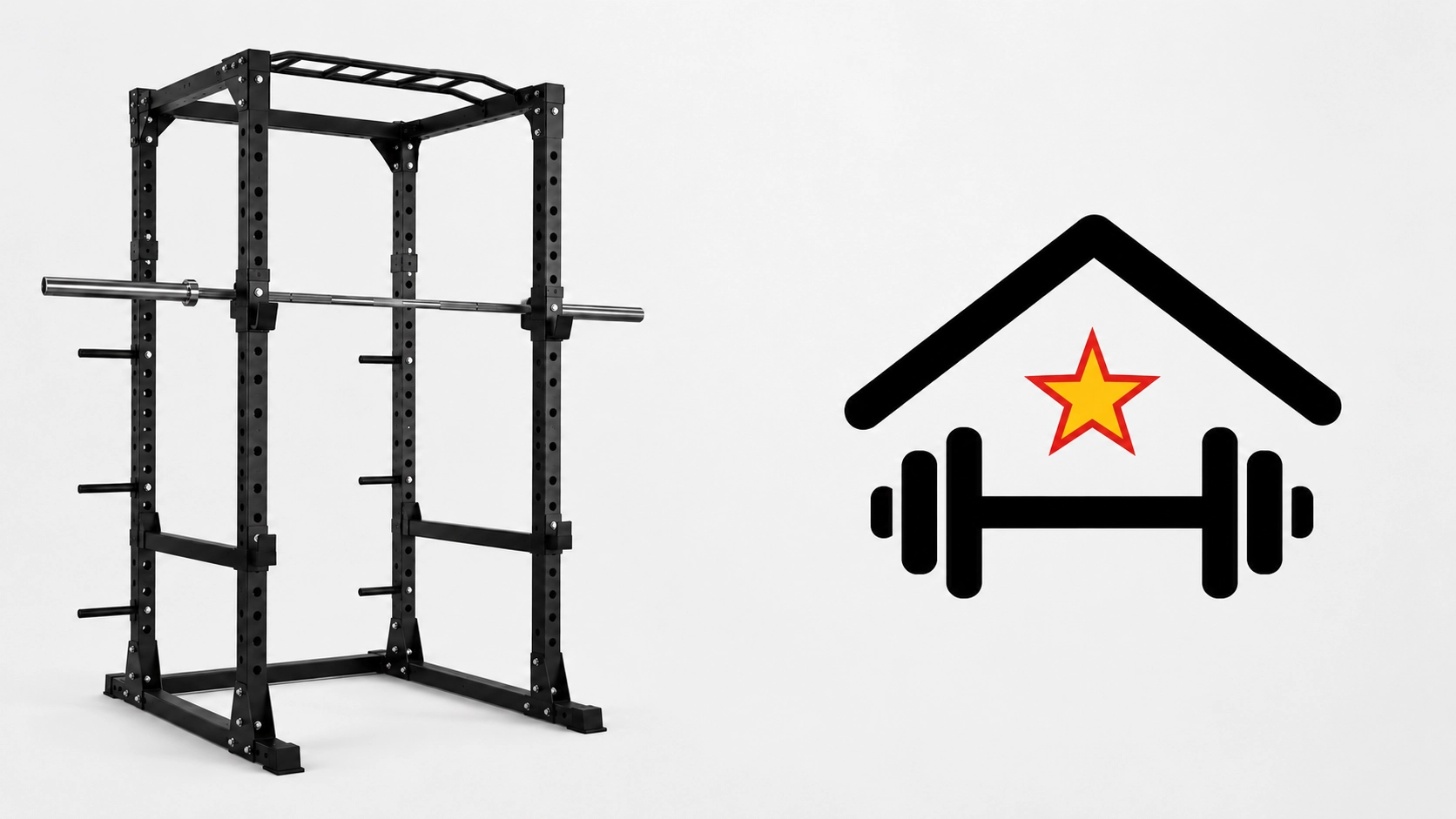
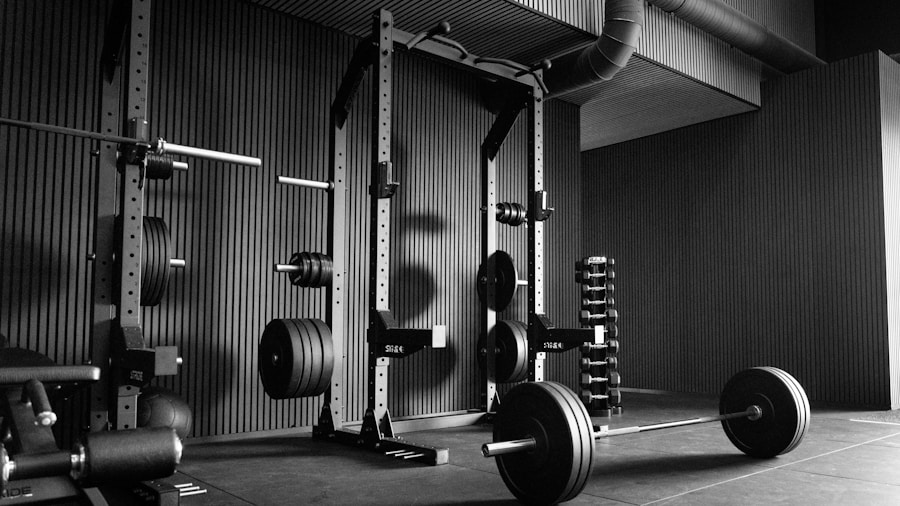
A power rack, also called a squat rack or power cage, is a free-standing steel frame with adjustable J-hooks and safety bars that lets you squat, bench, and press heavy weight safely without a spotter. For most home gyms working toward serious strength training, it is the single piece of equipment that unlocks everything else. Once you have a rack bolted down (or freestanding and weighted correctly), squats, overhead presses, rack pulls, and safe bar setups for bench press all become possible in a way that free weights alone cannot match.
Types of Power Racks
Full Cage (Four-Post)
A full cage surrounds you on all four corners, giving the most stability and the most attachment points for accessories like a pull-up bar, dip bars, landmine attachment, or cable pulley system. It is the heaviest-duty option, but it also takes up the most floor space and generally needs the most ceiling clearance.
Half Rack (Two-Post)
A half rack uses two vertical posts instead of four, saving a meaningful amount of floor space while still giving you J-hooks and safety arms to catch a failed rep. Most half racks give up a small amount of rigidity compared to a full cage, which rarely matters unless you are lifting at a competitive level.
Wall-Mounted or Folding Racks
These fold flat against the wall when not in use, which makes them the best option for small home gyms, apartments, or any space that has to double as a living area. The tradeoff is a lower weight capacity and fewer attachment points than a standing cage.
Key Features to Look For
Beyond the basic frame type, a few specs make a real difference day to day. Hole spacing (the gap between adjustment holes on the uprights) determines how finely you can dial in J-hook and safety bar height. Steel gauge affects both weight capacity and how much the rack flexes under heavy load. Numbered holes save you from re-measuring your setup every session, and westside hole spacing (tighter spacing near bench height) matters if you plan to bench press inside the rack.
Common Mistakes to Avoid
The most common mistake is skipping the safety bars entirely because they feel like an extra step. They exist for the moment a lift actually fails, which is exactly the moment you cannot afford to skip them. The second most common mistake is buying a rack that will not physically fit through your doorway or under your ceiling, so always measure clearance before ordering, not after.
How to Use a Power Rack Safely
Set the J-hooks at roughly sternum height for squats and set the safety bars just below your lowest rep depth before you start, not after. For bench press inside a rack, set the safety bars just above your chest at the bottom of the movement so a missed rep has almost nowhere to fall.
Who a Power Rack Is For
Anyone training alone who wants to lift near their limits without a spotter, and anyone progressing past dumbbell-only training into barbell squats, bench, and overhead press. It is less necessary for someone doing purely bodyweight or light dumbbell work.
How to Choose a Power Rack
Check your ceiling height clearance first, since this rules out taller racks in basements with low ceilings. Then weigh footprint against your space, confirm the weight capacity covers where your lifts are headed, and decide which attachments you actually need, like a pull-up bar, dip bars, or a lat pulldown.
Budget Tiers to Expect
Entry-level wall-mounted or folding racks typically start under $300 and suit lighter, beginner-level loads. Mid-range half racks in the $400 to $800 range cover most home lifters through intermediate strength levels with a real weight capacity. Full commercial-grade cages with heavy steel gauge and full attachment ecosystems often run $800 to $2,000 or more, and are really only necessary once you are lifting at a competitive or near-competitive level.
Explore Related Categories
A power rack rarely stands alone. Pair it with a solid weight bench for pressing work, a matching barbell sized to your plates, or a Smith machine if you want a guided-path alternative for some sessions. If you are trying to gauge how heavy you should be loading the bar, our 1RM Calculator gives you a starting number to train around.
Frequently Asked Questions
Do I need to bolt a power rack to the floor?
Most home racks are freestanding and rely on their own weight and footprint for stability, but bolting down is safer if you plan to lift near your max or do dynamic movements like kipping pull-ups.
How much ceiling height do I need?
Most full cages need at least 7 to 8 feet of clearance with a pull-up bar attached, so measure your actual ceiling height, not just the rack’s listed height, before buying.
Can a half rack do everything a full cage can?
For the core lifts, squat, bench, and overhead press, yes. You mainly lose some rigidity and attachment options compared to a full cage.
Ready to compare specific models? Browse our full Power Racks reviews for current picks.