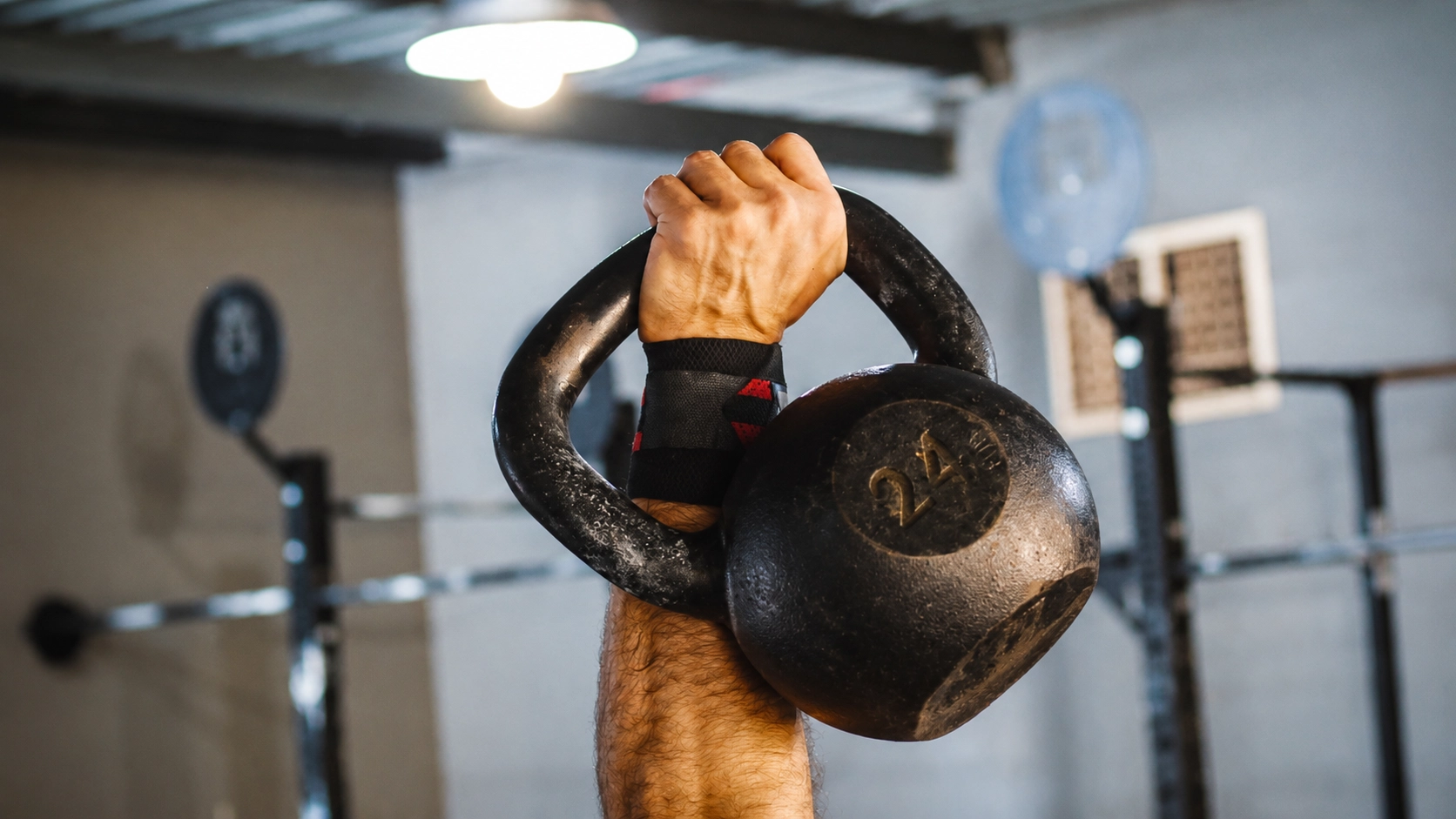
A kettlebell is a cast iron or steel weight shaped like a ball with a handle, built for swinging, ballistic, and full-body movements that barbells and dumbbells cannot replicate as well. The offset handle and center of mass change how your body has to control the weight, which is exactly what makes kettlebell training feel so different from standard strength work.
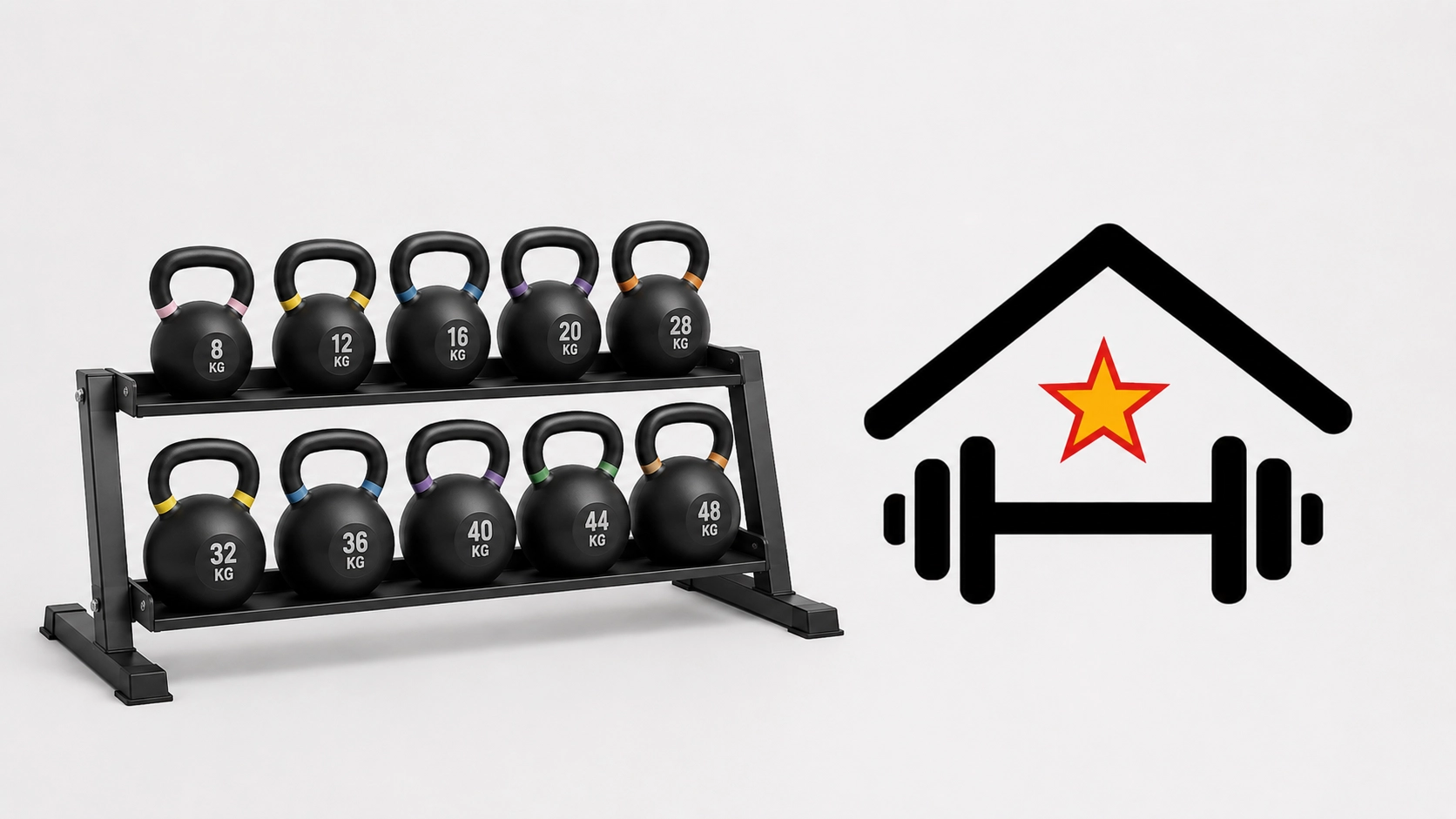
Types of Kettlebells
Cast Iron
The classic, durable option with a fixed weight per bell. Cast iron kettlebells are the most common and the easiest to find in a wide range of weights.
Adjustable Kettlebells
Adjustable kettlebells let one handle cover a range of weights in a smaller footprint, useful for small spaces, though the handle size stays fixed even as the weight changes.
Competition-Style
Competition-style kettlebells keep the same size and handle regardless of weight, which matters for anyone training the same technique consistently since the bell always feels the same in hand.
Vinyl or Sand-Filled
These are softer and more floor-friendly for apartments, reducing both noise and the risk of floor damage if a bell is set down harder than intended.
Key Features to Look For
Handle thickness needs to match your hand size and grip strength, a handle that is too thick makes ballistic movements like swings and cleans noticeably harder to control. A flat, stable base matters for any bell you plan to use for get-ups or floor-based movements. Check the finish too, powder-coated bells generally grip better with chalk than smooth painted ones.
Common Mistakes to Avoid
Starting with a bell that is too heavy is a common and risky mistake, since kettlebell technique relies on control more than raw strength, and a bell that is too heavy makes bad form far more likely. Skipping hip-hinge practice before swinging is another common mistake that shifts strain toward the lower back instead of the hips and hamstrings where it belongs.
Budget Tiers to Expect
A single cast iron kettlebell typically runs $30 to $80 depending on weight, with a useful starter set of two or three bells often landing between $100 and $250. Adjustable kettlebells cost more upfront, usually $150 to $300, but replace what would otherwise be several individual bells.
How to Use a Kettlebell Safely
The power in a kettlebell swing comes from hinging at the hips, not squatting down. Keep your back flat and let your hips drive the weight, rather than trying to lift it with your arms or lower back.
Who Kettlebells Are For
Anyone wanting a compact option that blends cardio and strength in one tool. Competition-style bells suit lifters doing frequent technical practice, while a single adjustable bell suits anyone just getting started.
How to Choose a Kettlebell
Decide between a single fixed weight or an adjustable set, check the handle thickness fits your grip size comfortably, and consider floor protection if you are training on a hard surface.
Building a Kettlebell Routine
A useful starter routine rotates through swings, goblet squats, cleans, and Turkish get-ups, movements that between them train your hips, legs, shoulders, and core without needing any other equipment. Because kettlebell training blends strength and cardio in the same movement, sessions tend to run shorter than a typical weight-lifting workout while still delivering a real training effect.
If you train kettlebells regularly, a second bell at a different weight opens up far more programming options than a single bell alone, letting you pair a heavier bell for swings with a lighter one for pressing or single-arm work in the same session.
One more practical note: if you train barefoot or in minimal shoes, pay extra attention to floor protection under your kettlebell work, since a dropped bell on a hard, unprotected floor is one of the more common ways home gyms end up with cracked tile or dented hardwood.
Grip chalk is a small, inexpensive addition worth having on hand too, since kettlebell handles get slippery fast once your hands start sweating, and a lost grip mid-swing is both a training setback and a real safety risk.
Explore Related Categories
Kettlebells pair well with dumbbells for a complete free-weight setup, and a weight bench rounds things out for pressing work a kettlebell cannot do as comfortably. Since kettlebell training doubles as cardio, our Calories Burned Calculator can help you estimate the effort of a session.
Frequently Asked Questions
What weight kettlebell should a beginner start with?
Most beginners do well starting around 15 to 25 lbs for women and 25 to 35 lbs for men, then adjusting based on how controlled the swing feels.
Can kettlebells replace dumbbells entirely?
Not entirely. Kettlebells excel at ballistic, hip-driven movements, while dumbbells are better suited to isolation and pressing work.
Do I need floor protection for kettlebell training?
A rubber mat is strongly recommended, especially for swings and any movement where the bell touches down with force.
Ready to compare specific models? Browse our full Kettlebells reviews for current picks.