
Dumbbells are handheld weights used in pairs or singly, and they are arguably the most versatile piece of equipment in any home gym since a single set can train nearly every major muscle group. Unlike a barbell, each side of your body works independently, which builds balance and catches strength imbalances that a barbell can hide.
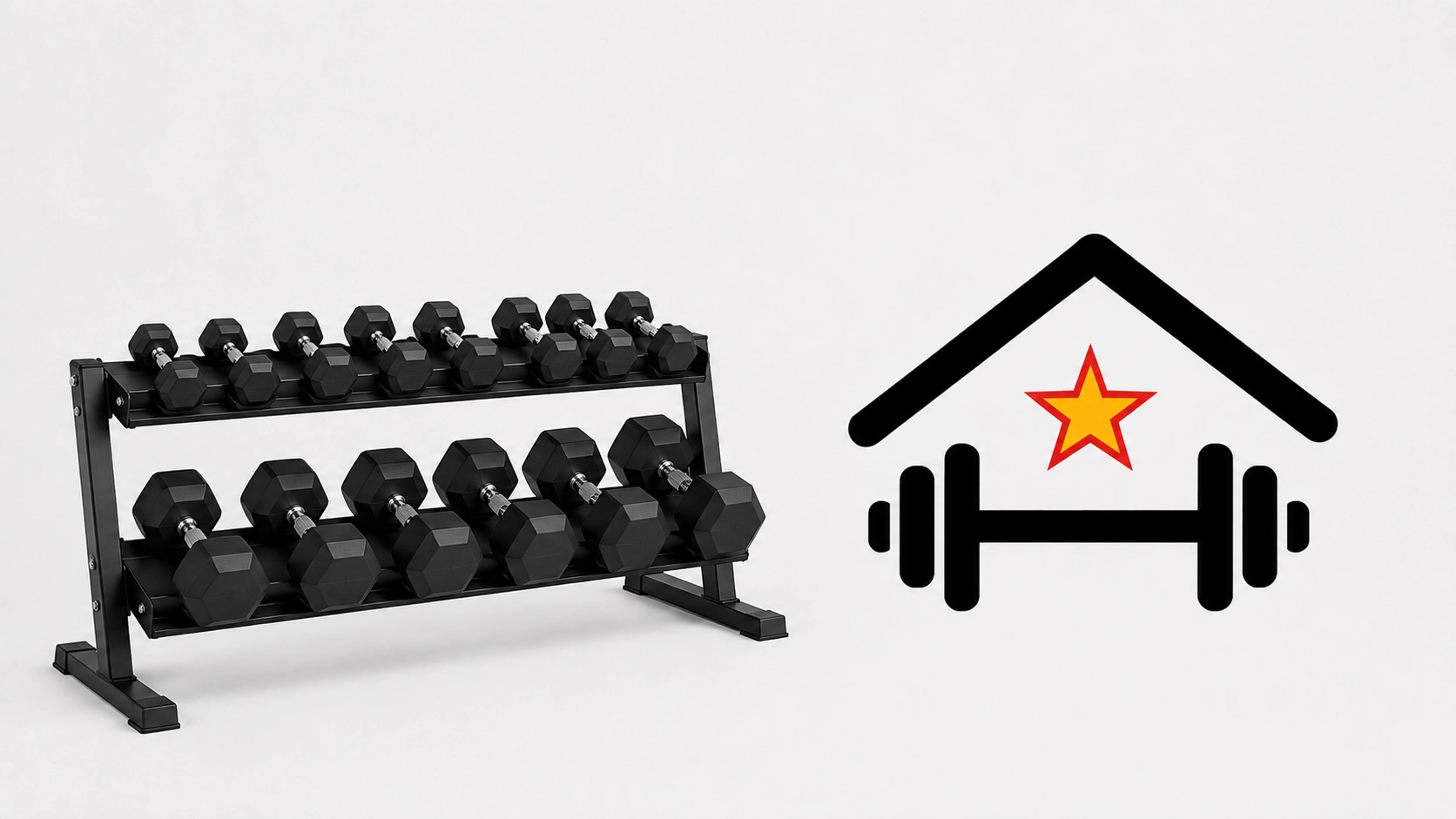
Types of Dumbbells
Fixed Cast Iron or Rubber-Coated
These come in a set range of weights, each pair its own fixed size. They are simple, durable, and quiet, but a full range from light to heavy takes up real rack space.
Adjustable Dumbbells
Dial-based or plate-loaded adjustable dumbbells pack a wide weight range into one compact pair, changing weight in seconds. They are the clear choice for small homes and apartments where a full rack of fixed weights will not fit.
Hex Dumbbells
Hex dumbbells have a flat six-sided head that will not roll away on the floor, which matters for floor presses and any exercise where the dumbbell rests on the ground between reps.
Key Features to Look For
Grip diameter and texture matter more than most buyers expect, a grip that is too thick or too smooth becomes the limiting factor on heavier lifts before your muscles even fatigue. For adjustable sets, check how quickly you can change weight between exercises, since a slow dial system breaks up your workout flow. Coating (rubber, urethane, or bare cast iron) affects both noise on your floor and how the dumbbell feels in hand.
Common Mistakes to Avoid
Buying a weight range that stops short of where your training will realistically go within a year is the most common mistake, since re-buying a whole new set is far more expensive than paying slightly more for a wider range upfront. Another mistake is ignoring floor protection: dropped dumbbells, especially hex or adjustable ones, can damage flooring quickly without a mat underneath.
Budget Tiers to Expect
A basic fixed pair or two starts under $50, but building a full fixed rack across a useful weight range often runs $300 to $800 or more. A single adjustable pair covering a wide range typically costs $200 to $500, which usually works out cheaper than buying the equivalent spread of fixed weights while taking up a fraction of the space.
How to Use Dumbbells
Start light enough that you can control the full range of motion with good form before adding weight, especially on overhead and single-arm movements where balance matters as much as strength. Increase weight only once your current load feels controlled for every rep, not just the first few.
Who Dumbbells Are For
Everyone, from total beginners to advanced lifters. Adjustable sets in particular solve the space problem for small homes that cannot fit a full weight rack, while fixed sets suit anyone with the space who wants zero setup time between exercises.
How to Choose Dumbbells
Weigh the fixed-versus-adjustable tradeoff: fixed weights let you switch instantly between sets, while adjustable sets save space and money over buying many pairs. Check the total weight range covers where your training is headed, and consider grip coating and handle diameter for comfort.
Dumbbells vs. Kettlebells vs. Barbells
Each free-weight tool does something the others do not. Dumbbells excel at unilateral, single-arm work and controlled isolation movements. Kettlebells are better suited to ballistic, momentum-driven exercises like swings and cleans that dumbbells handle awkwardly. Barbells let you load the most total weight through the biggest compound lifts, which is harder to do safely with dumbbells alone once the weight gets heavy. Most well-rounded home gyms end up with some combination of all three rather than relying on just one.
Storage is worth planning for early. A small rack or a set of floor stands keeps dumbbells organized and protects your flooring from dents, and it also makes it obvious at a glance which weights you actually reach for most, which is useful information when deciding what to add next.
Explore Related Categories
Dumbbells pair naturally with a weight bench for pressing and rows, and many lifters add kettlebells for ballistic movements dumbbells are not built for. To find a sensible starting weight for a new lift, our 1RM Calculator is a useful reference point.
Frequently Asked Questions
Are adjustable dumbbells as sturdy as fixed ones?
Good adjustable dumbbells hold up well for years of home use. The mechanism is the main wear point, so check reviews for reliability on the specific locking or dial system.
What weight range should a beginner start with?
Most beginners are well covered by a 5 to 25 lb adjustable range per hand, or the lightest 2 to 3 pairs in a fixed set, and can add more as strength builds.
Do I need a rack to store dumbbells?
Not strictly, but a rack keeps a fixed set organized and protects your floor. Adjustable pairs often skip the rack requirement entirely.
Ready to compare specific models? Browse our full Dumbbells reviews for current picks.