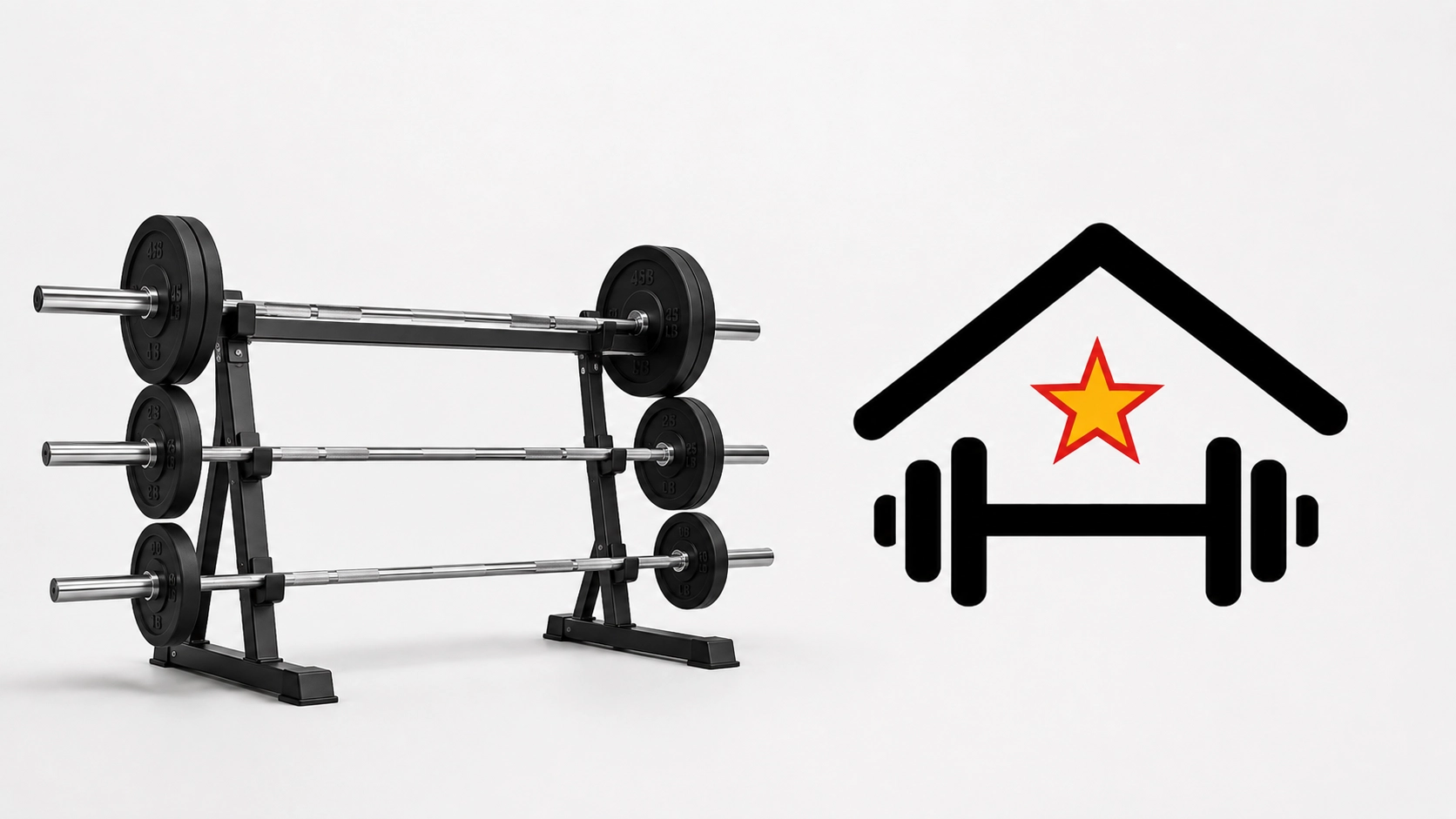
A barbell is a long steel bar loaded with weight plates on each end, and it is the standard tool for the biggest compound lifts: squat, bench press, deadlift, and overhead press. A single bar and a set of plates can carry a lifter from beginner to advanced, since the load simply scales with more plates rather than needing new equipment.
Types of Barbells
Standard Barbell
A standard barbell has a 1-inch sleeve and suits general home use with standard plates. It is the most affordable entry point but is not built for extremely heavy loading.
Olympic Barbell
An Olympic barbell has a 2-inch rotating sleeve built for serious plate-loading and heavier lifts. The rotating sleeve reduces wrist and elbow strain during Olympic-style lifts and heavy compound movements.
Trap or Hex Bar
A trap or hex bar surrounds you for a more knee-friendly, upright deadlift pattern, and it is a common choice for lifters managing lower back sensitivity.
EZ Curl and Cambered Bars
An EZ curl bar has a zigzag shape that eases wrist strain on curls and close-grip pressing. A cambered bar shifts load distribution for specialty squat variations and is more of an advanced-lifter accessory than a first purchase.
Key Features to Look For
Sleeve size is non-negotiable, it must match the plates you own or plan to buy. Whip (how much the bar flexes under load) affects feel during Olympic-style lifts more than general strength training. Knurling pattern and depth affect grip security, deeper knurling grips better but can be harsh on bare hands during high-volume sessions.
Common Mistakes to Avoid
Buying a bar and plates with mismatched sleeve sizes is the single most common and most frustrating mistake, since Olympic plates simply will not fit a standard 1-inch sleeve. Another common mistake is underestimating weight capacity, a bar rated just barely above your current max leaves no room to grow into heavier lifting.
Budget Tiers to Expect
Standard barbells start around $60 to $120 and suit light to moderate home use. Entry-level Olympic barbells typically run $150 to $300, while higher-capacity Olympic bars with better steel and tighter tolerances can run $300 to $600 or more for serious lifters.
How to Use a Barbell Safely
Match your grip width and bar choice to the specific lift, and make sure your plates match your bar’s sleeve size. Always use collars to lock plates in place, an unsecured plate shifting mid-lift is a real safety risk.
Who a Barbell Is For
Lifters who have outgrown dumbbell-only training and are progressing into heavier compound lifts, where loading a single bar is more efficient than juggling multiple dumbbells.
How to Choose a Barbell
Confirm the sleeve size matches the plates you already own or plan to buy, check the weight capacity against your goals, and consider knurling and whip if you are training for powerlifting-style lifts specifically.
Barbell Storage and Care
A bar left loaded with plates for long periods can develop a slight bend over time, especially cheaper bars without hardened steel. Store it unloaded, or at minimum rotate it periodically, and wipe down the shaft after sweaty sessions to prevent rust from building up on the knurling. A light coat of oil on the sleeves keeps them rotating smoothly for Olympic-style bars.
If you are building out a full barbell setup for the first time, plates are usually the bigger ongoing cost, not the bar itself. Bumper plates cost more than standard iron plates but are safer to drop and protect your flooring, which matters if you plan to do any Olympic-style lifting where the bar comes back down under load.
One more practical note: check your bar’s finish before buying if you live somewhere humid. Bare steel and black oxide finishes are the most prone to rust, while chrome, zinc, or stainless steel sleeves hold up much better in a garage or basement gym without climate control.
Explore Related Categories
A barbell needs a safe place to lift heavy, which usually means a power rack and a supportive weight bench. If you want a guided alternative for some sessions, a Smith machine is worth comparing. Our 1RM Calculator can help you plan your loading before you buy plates.
Frequently Asked Questions
Do I need an Olympic barbell as a beginner?
Not necessarily. A standard bar is fine for lighter training, but Olympic bars are the better long-term investment if you plan to progress into heavier lifting.
How do I know my plates will fit?
Check the sleeve diameter listed for the bar against your plates’ center hole size, 1-inch standard plates will not fit a 2-inch Olympic sleeve and vice versa.
What is bar whip and does it matter for beginners?
Whip is how much the bar flexes under heavy load. It matters mainly for Olympic lifting technique and is largely irrelevant for general strength training.
Ready to compare specific models? Browse our full Barbells reviews for current picks.