
Strength equipment covers everything built to move weight against resistance: racks, benches, and free weights that let you build muscle and strength without leaving home. Unlike cardio machines, most strength equipment has no motor and very few moving parts, which means it tends to last for decades with basic care, making it some of the best long-term value in a home gym.
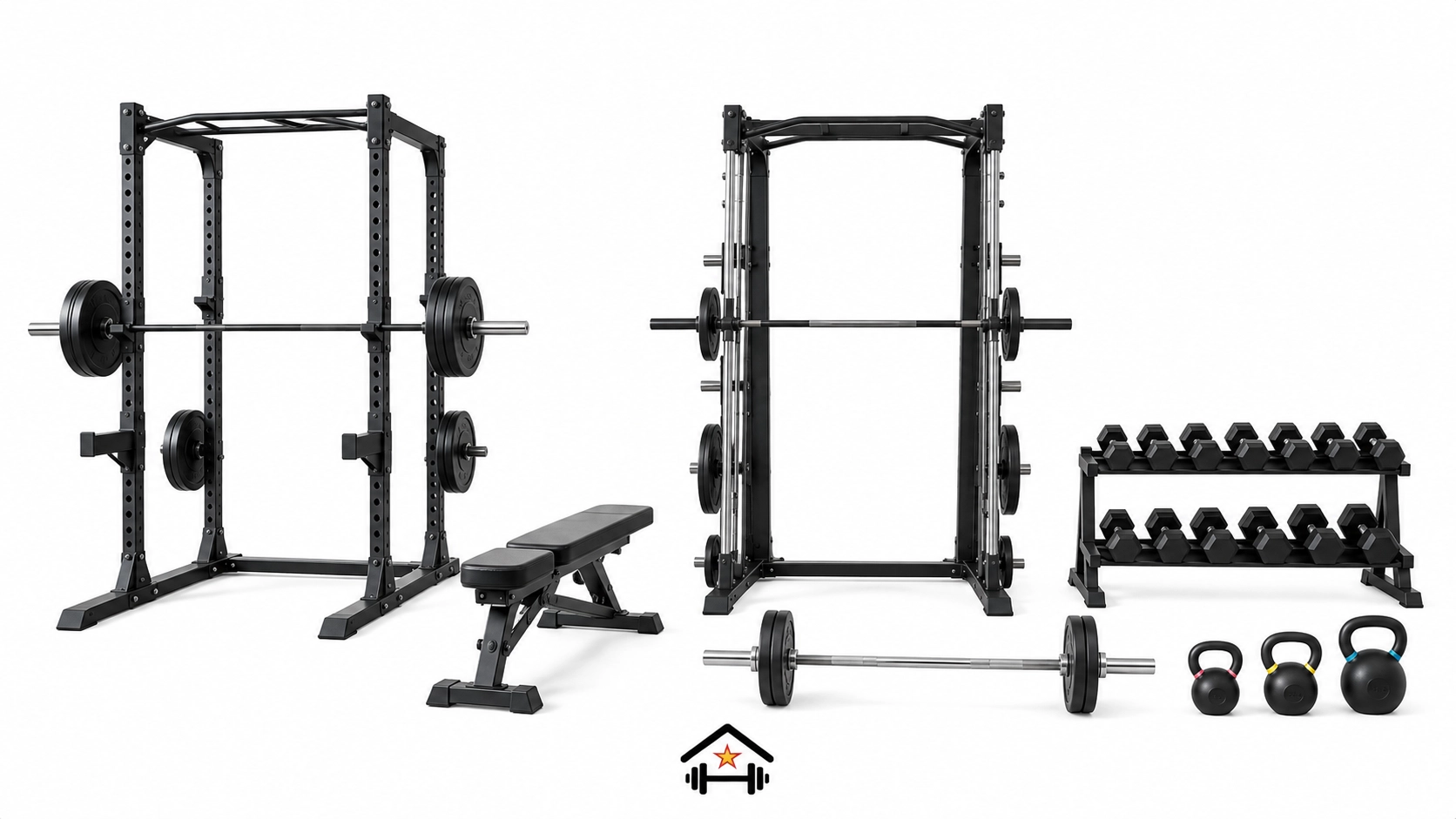
The Six Categories of Strength Equipment
Power Racks
A steel frame with adjustable safety bars that lets you squat, bench, and press heavy weight without a spotter. See our Power Racks guide.
Smith Machines
A guided barbell on fixed vertical rails, giving built-in safety catches at any point in the lift. See our Smith Machines guide.
Weight Benches
The flat or adjustable surface behind pressing, rows, and dozens of accessory lifts. See our Weight Benches guide.
Dumbbells
Handheld weights that train each side of your body independently, the most versatile tool in any home gym. See our Dumbbells guide.
Barbells
A loaded steel bar built for the biggest compound lifts: squat, bench, deadlift, and overhead press. See our Barbells guide.
Kettlebells
A ball-shaped weight with an offset handle, built for swinging and ballistic movements dumbbells cannot replicate well. See our Kettlebells guide.
How These Fit Together
Most home strength setups grow in a fairly predictable order. A bench and a pair of adjustable dumbbells cover a surprising amount of full-body training on their own and are usually the first purchase. Kettlebells often join next as a compact way to add ballistic, cardio-adjacent movements. Once training progresses toward heavier compound lifts, a barbell and a power rack (or a Smith machine as a guided alternative) become the natural next step.
Building a Setup on a Budget
If budget is tight, prioritize versatility over volume: one adjustable dumbbell pair and one adjustable bench cover more training variety per dollar than almost any other combination. Add a single kettlebell next for movements the other two cannot replicate. A rack and barbell are worth waiting for until you have a clear reason your current equipment is holding your training back, rather than buying them upfront on the assumption you will need them eventually.
Who Strength Equipment Is For
Anyone training for muscle, strength, or general fitness, not just competitive lifters. The right starting point depends far more on your current experience and available space than on any long-term goal.
How to Choose
Match your equipment to where your training actually is right now, not where you eventually want it to be. It is easy to overbuy a rack and barbell before you need one, when a bench and a pair of dumbbells would serve you just as well for months.
Free Weights vs. Machines
Free weights like dumbbells, barbells, and kettlebells demand more balance and stabilizer engagement, which builds functional strength that carries over well to everyday movement. Machines like power racks (used with a barbell) and Smith machines offer more built-in safety and a more controlled path, which suits beginners or anyone training alone without a spotter. Most well-equipped home gyms end up with a mix of both rather than committing fully to one approach, since each covers a gap the other leaves.
Storage and organization become a real consideration once you own more than a bench and one pair of dumbbells. A simple rack or set of floor mats keeps free weights from rolling and protects your flooring, and it also makes it far easier to see at a glance what you actually have on hand before adding more to the collection.
If you are furnishing a home gym for more than one person, prioritize equipment with a wide adjustment range, like an adjustable bench and adjustable dumbbells, since a single piece that works for multiple body sizes and strength levels is far more space and cost efficient than buying separate equipment per person.
Resale value is worth keeping in mind too. Strength equipment, especially barbells, plates, and racks, tends to hold value well on the used market since there is very little that can wear out or break on a well-built piece.
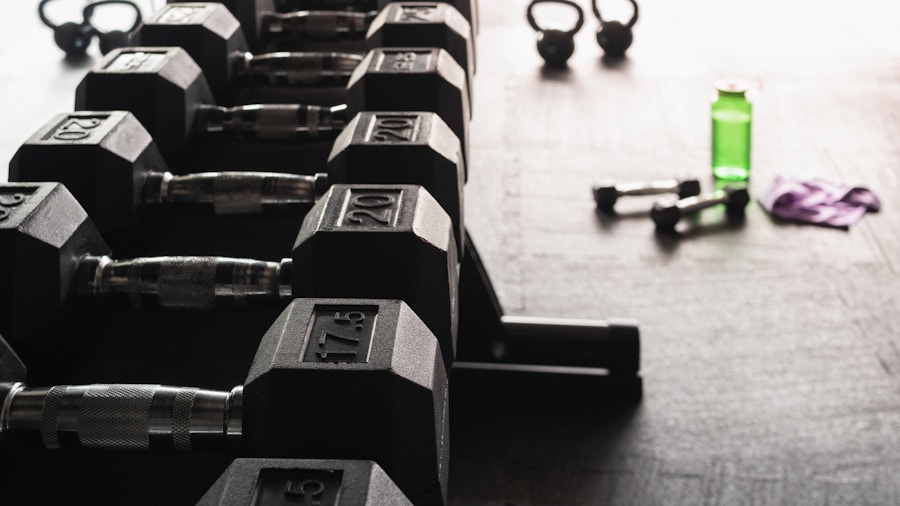
Explore Related Categories
Pair your strength setup with Cardio Machines for a complete routine, or check Training Guides for structured workout plans. Our 1RM Calculator helps you plan loading as your strength progresses.
Frequently Asked Questions
What strength equipment should I buy first?
A weight bench and an adjustable pair of dumbbells cover the widest range of exercises for the lowest upfront cost and space commitment.
Do I need a power rack to build strength at home?
Not right away. Many lifters train productively for months on dumbbells, kettlebells, and a bench before a rack becomes necessary.
How much space does a full strength setup need?
A bench and dumbbells fit in a small corner. A full rack and barbell setup typically needs at least 8 by 8 feet of clear floor space plus ceiling clearance.
Browse each category above for our full, current reviews and picks.