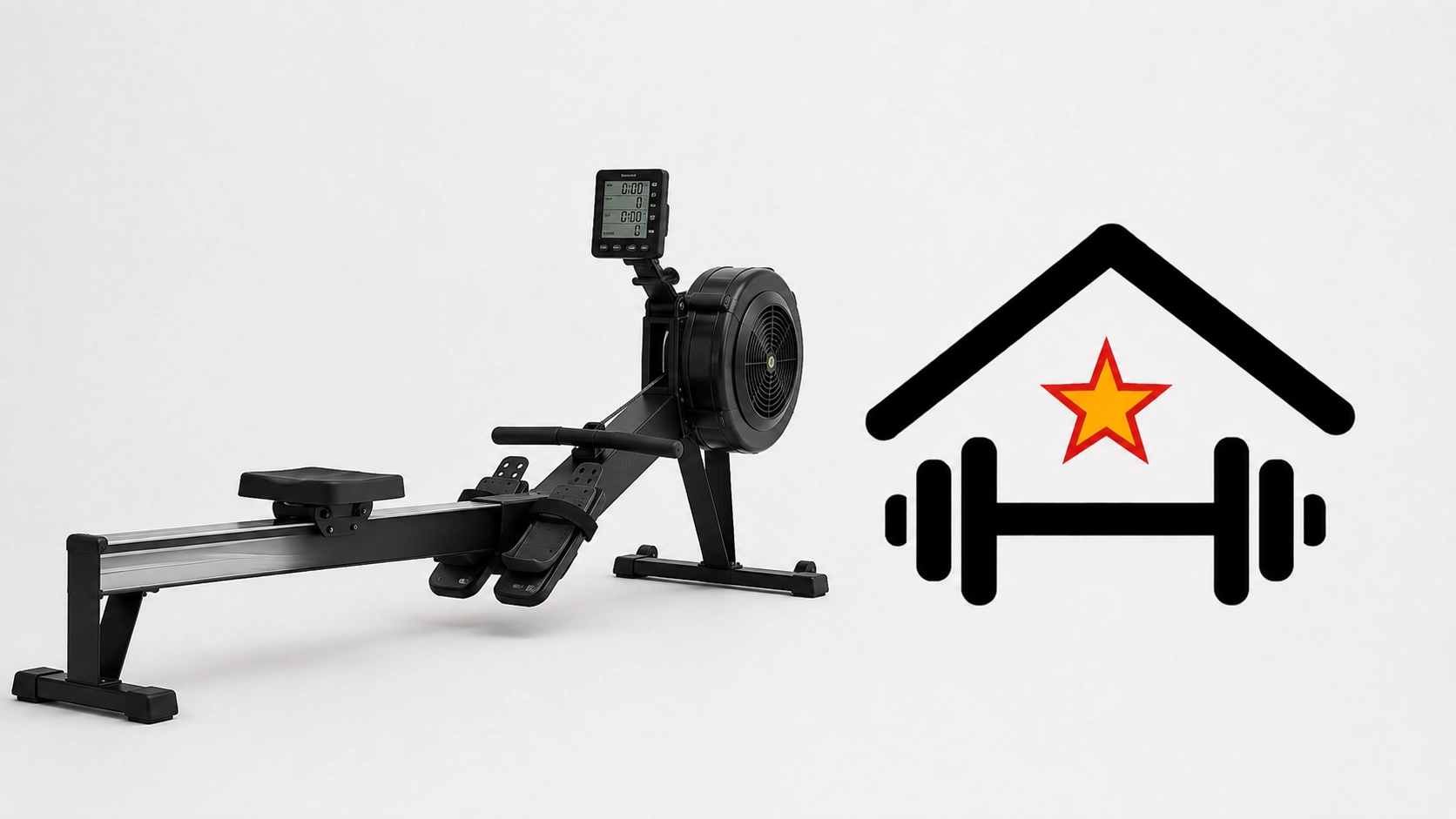
A rowing machine, or rower, uses a sliding seat and a pull handle to simulate the rowing stroke, training your legs, back, and arms together in one continuous motion. Few home cardio machines work as many major muscle groups in a single movement, which is why rowers have grown so popular for anyone wanting an efficient, full-body session.
Types of Rowing Machines
Air Resistance
Air resistance rowers get harder the faster you pull, closely matching the feel of rowing on water. The flywheel and fan design also make them naturally louder than other resistance types.
Magnetic
Magnetic rowers are quiet and offer precise, adjustable resistance levels independent of pull speed, which suits apartments and shared living spaces well.
Water Resistance
Water resistance rowers use a paddle in an enclosed tank for a smooth, natural feel and a distinctive sound many rowers prefer, though the tanks add weight and are not fully foldable.
Hydraulic
Hydraulic rowers use piston arms instead of a sliding rail, trading some realism for a much smaller footprint, making them the most compact option for very tight spaces.
Key Features to Look For
Rail length affects how tall a user can comfortably use the machine, taller users need a longer rail for a full leg drive without cramping the stroke. Seat and handle comfort matter over long sessions, a hard seat or thin handle grip becomes noticeable well before your muscles fatigue. Check the monitor or display quality too, since most rowing workouts are paced against distance, time, or stroke rate.
Common Mistakes to Avoid
Pulling with your arms first instead of driving with your legs is the most common technique mistake, and it both reduces the workout’s effectiveness and increases strain on your lower back. Buying based on resistance type alone without considering footprint is another common oversight, some rowers do not fold flat or stand upright for storage, which matters a lot in a shared space.
Rowing Machines vs. Other Cardio Machines
Rowers are widely considered the best low-impact option that still trains your upper body meaningfully, something treadmills, bikes, and most ellipticals cannot claim to the same degree. The tradeoff is a steeper technique learning curve: poor form on a rower is more likely to cause strain than poor form on a stationary bike.
Budget Tiers to Expect
Entry-level hydraulic or basic magnetic rowers start around $150 to $300. Mid-range air or magnetic rowers with better build quality and monitors typically run $400 to $900. Premium water resistance and connected smart rowers often run $900 to $1,800 or more.
How to Use a Rowing Machine Correctly
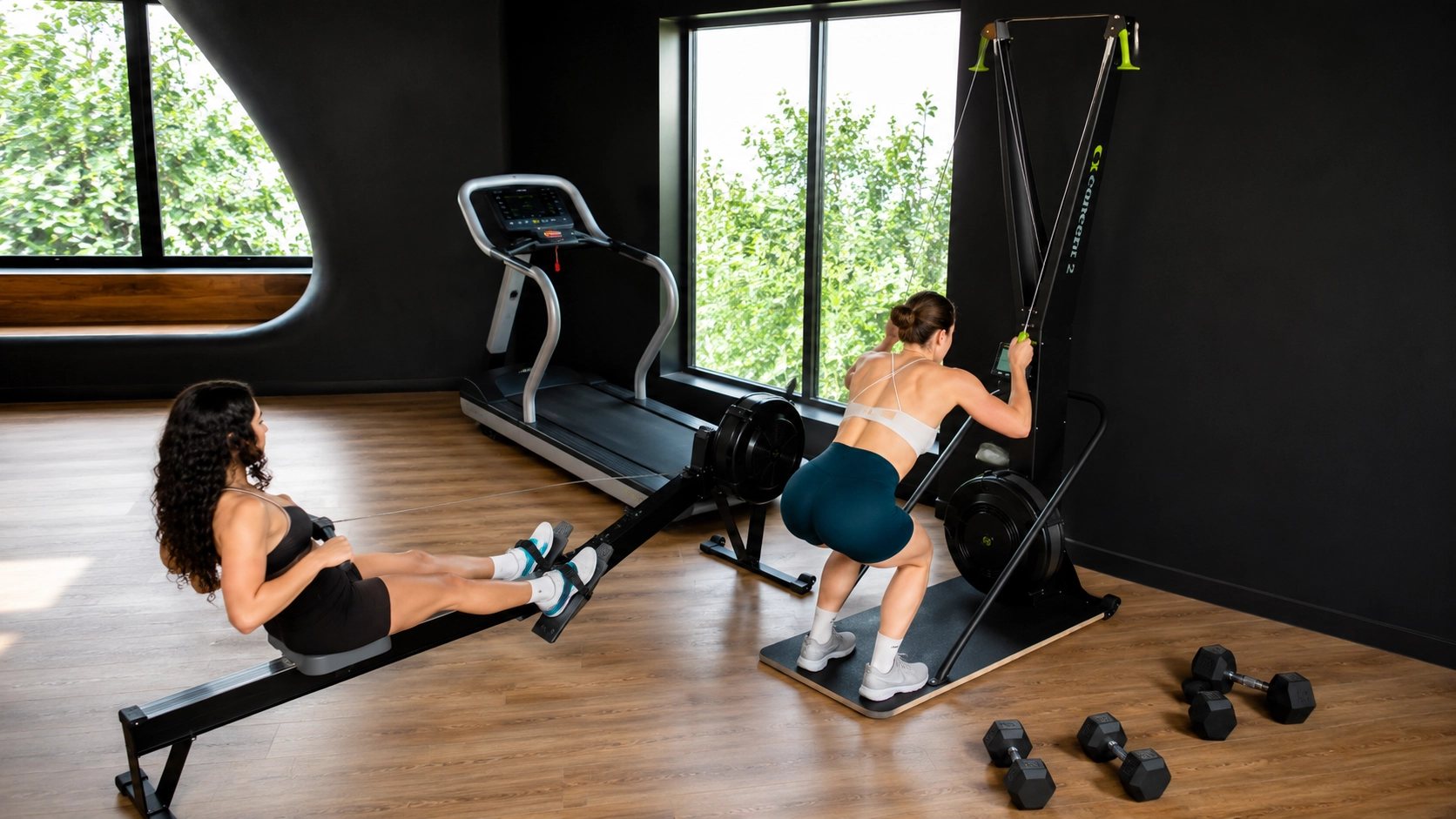
The stroke sequence matters more than raw effort: drive with your legs first, then lean back with your core, then pull with your arms, and reverse the order exactly on the way back.
Who a Rowing Machine Is For
Anyone wanting low-impact, full-body cardio. Rowers are noticeably easier on the joints than running while still delivering a demanding workout for both your cardiovascular system and your muscles.
How to Choose a Rowing Machine
Resistance type changes both the noise level and the feel of the pull, so pick based on how you like resistance to build through the stroke. Also check the footprint when folded or stored, and make sure the seat and rail are comfortable for your height.
Rowing Machine Maintenance Basics
Air resistance rowers need the flywheel housing dusted out periodically to keep resistance consistent and prevent buildup inside the fan cage. Magnetic rowers need very little maintenance beyond keeping the rail clean and lubricated where the seat slides. Chain or strap-driven rowers should have that connection checked occasionally for fraying, since it is the main wear component on most designs.
If you are new to rowing, consider a session or two focused purely on technique before chasing distance or speed, since the stroke sequence takes most people longer to internalize than they expect.
Damping settings, available on most air and some magnetic rowers, control how quickly the flywheel slows between strokes, letting you fine-tune the resistance curve independent of the base resistance level. Experimenting with damper settings is worth doing early, since the right setting for your fitness level makes a real difference in how sustainable a rowing session feels.
Explore Related Categories
If you want to compare low-impact options, look at exercise bikes and elliptical machines alongside rowers. Since rowing burns calories quickly, our Calories Burned Calculator can help you gauge session intensity.
Frequently Asked Questions
Is rowing bad for your lower back?
Only with poor technique. Correct form, legs first, then back, then arms, protects the lower back rather than straining it.
Which resistance type is quietest?
Magnetic rowers are consistently the quietest, followed by water resistance. Air resistance rowers are the loudest due to the fan mechanism.
Do rowing machines fold up for storage?
Many air and magnetic models fold or stand upright, but water resistance rowers generally do not due to the tank.
Ready to compare specific models? Browse our full Rowing Machines reviews for current picks.