
A weight bench is the flat or adjustable surface you lie or sit on for pressing, rows, and dozens of accessory lifts. It is more foundational to a home gym than most people expect, since a single bench and a pair of dumbbells can cover a full-body routine on their own, long before you ever add a rack or barbell.
Types of Weight Benches
Flat Bench
The simplest and most stable option, a flat bench suits chest presses, rows, and step-ups. Because it has no moving parts, it is also usually the most durable and the cheapest to buy.
Adjustable Bench
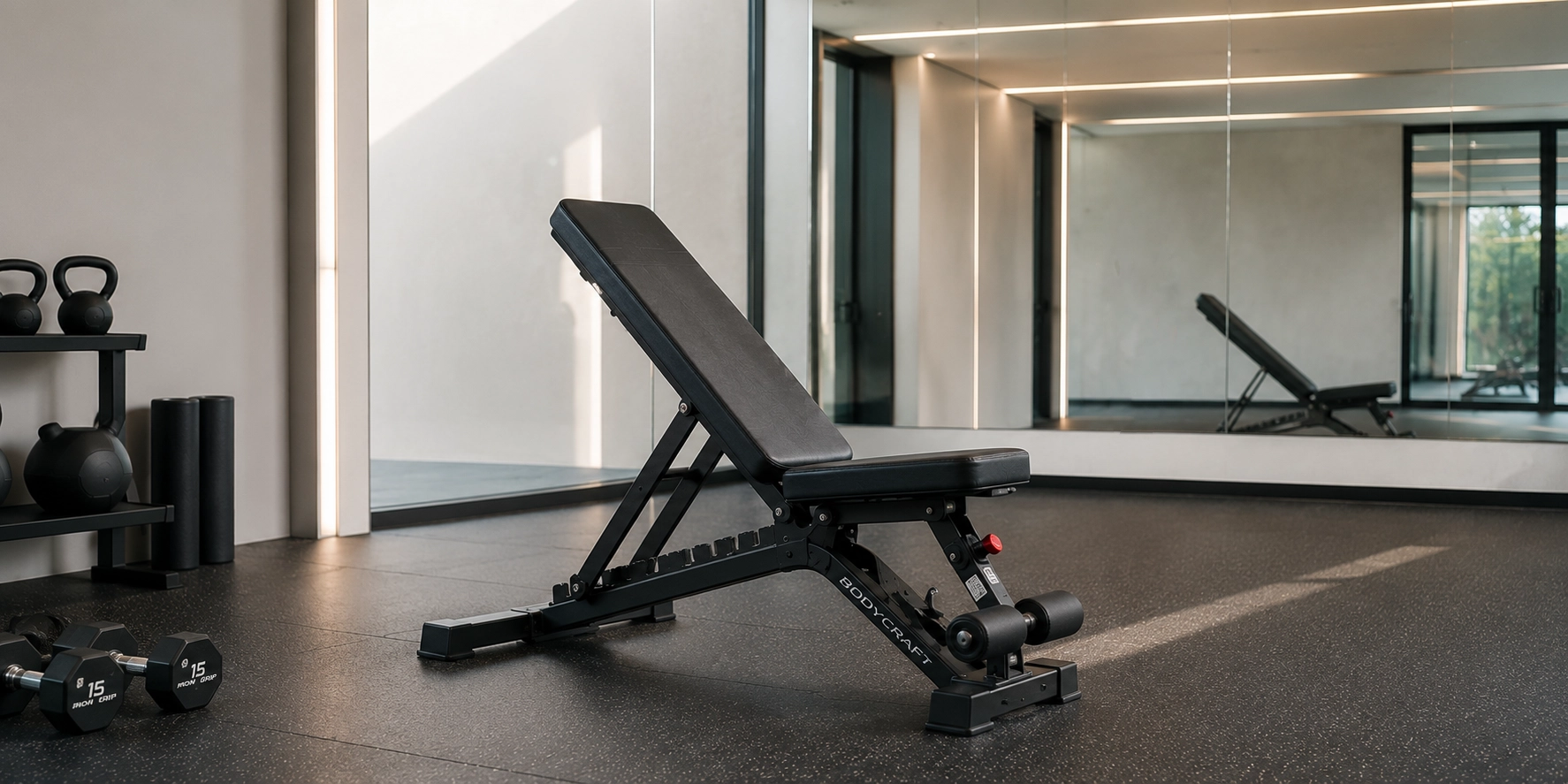
An adjustable bench moves between incline and decline positions, letting you target the upper chest, shoulders, and abs from a single piece of equipment. This is the most versatile option for a small home gym.
Foldable Bench
Foldable benches trade some rigidity and weight capacity for the ability to stand them up against a wall or slide them under a bed when not in use.
Specialty Benches
Preacher curl benches, ab benches, and other specialty designs target one specific exercise very well, but they are usually a second or third bench purchase rather than a first.
Key Features to Look For
Check the pad density and thickness, since a thin pad becomes uncomfortable fast under heavy dumbbell presses. Look at the adjustment mechanism, pin-and-pop adjustments are faster mid-workout than lever systems on some budget benches. Wheels on the base make repositioning a heavy bench much easier if you share the space with other equipment.
Common Mistakes to Avoid
Buying a bench with a weight capacity that only just covers your current lifts is a common mistake, since you will likely add weight over time and the bench needs headroom for that growth, including your own body weight plus the load you are pressing. Another mistake is ignoring adjustability early on: a flat-only bench feels like a good deal until you want to do incline work and realize you need a second bench.
How to Use a Weight Bench
Match the pad angle to the lift you are doing: a 30 to 45 degree incline targets the upper chest and shoulders, while flat is standard for chest presses and rows. Keep your feet planted flat on the floor for stability on any pressing movement.
Who a Weight Bench Is For
Anyone doing dumbbell or barbell pressing work, not just people focused on bench press specifically. It is one of the first pieces of equipment worth owning, often before a rack or barbell.
How to Choose a Weight Bench
Check the weight capacity against your heaviest lift plus your own body weight, confirm the adjustability range covers the angles you actually use, and consider padding density and folding if storage space is tight.
Budget Tiers to Expect
Basic flat benches start as low as $60 to $100 and cover pressing and rowing needs for most beginners. Adjustable benches with a solid weight capacity typically run $150 to $400. Commercial-grade adjustable benches built for heavy daily use, thicker padding, and higher weight capacities can run $400 and up, and are worth it mainly for households training multiple people or lifting consistently heavy.
Storage and Space-Saving Tips
If floor space is tight, a foldable bench that stands flush against a wall recovers most of that footprint when you are not training. Look for a bench with a low profile when folded, since some designs still stick out several inches even collapsed. If you have room to keep a bench out permanently, an adjustable model earns its keep by replacing what would otherwise be two or three separate specialty benches.
One more thing worth checking before you buy: how the bench feels under real load, not just its listed weight capacity on paper. Reviews from other buyers who actually load the bench heavily are far more reliable than a spec sheet number alone, since some budget benches flex noticeably well under their stated maximum.
Explore Related Categories
A bench pairs with almost everything else in strength training: dumbbells for pressing and rows, a barbell and power rack once you progress to heavier bench press. If you are still setting your training budget, our Buying Guides section can help you prioritize what to buy first.
Frequently Asked Questions
Should my first purchase be a bench or a rack?
A bench, in most cases. It works with dumbbells alone and does not require the space or budget a full rack does.
How much weight capacity do I actually need?
Add your body weight to the heaviest load you realistically expect to press or row, then leave meaningful headroom above that number for progression.
Is an adjustable bench worth the extra cost over a flat bench?
For most people, yes, since incline and decline positions open up shoulder and ab work a flat bench cannot do.
Ready to compare specific models? Browse our full Weight Benches reviews for current picks.