
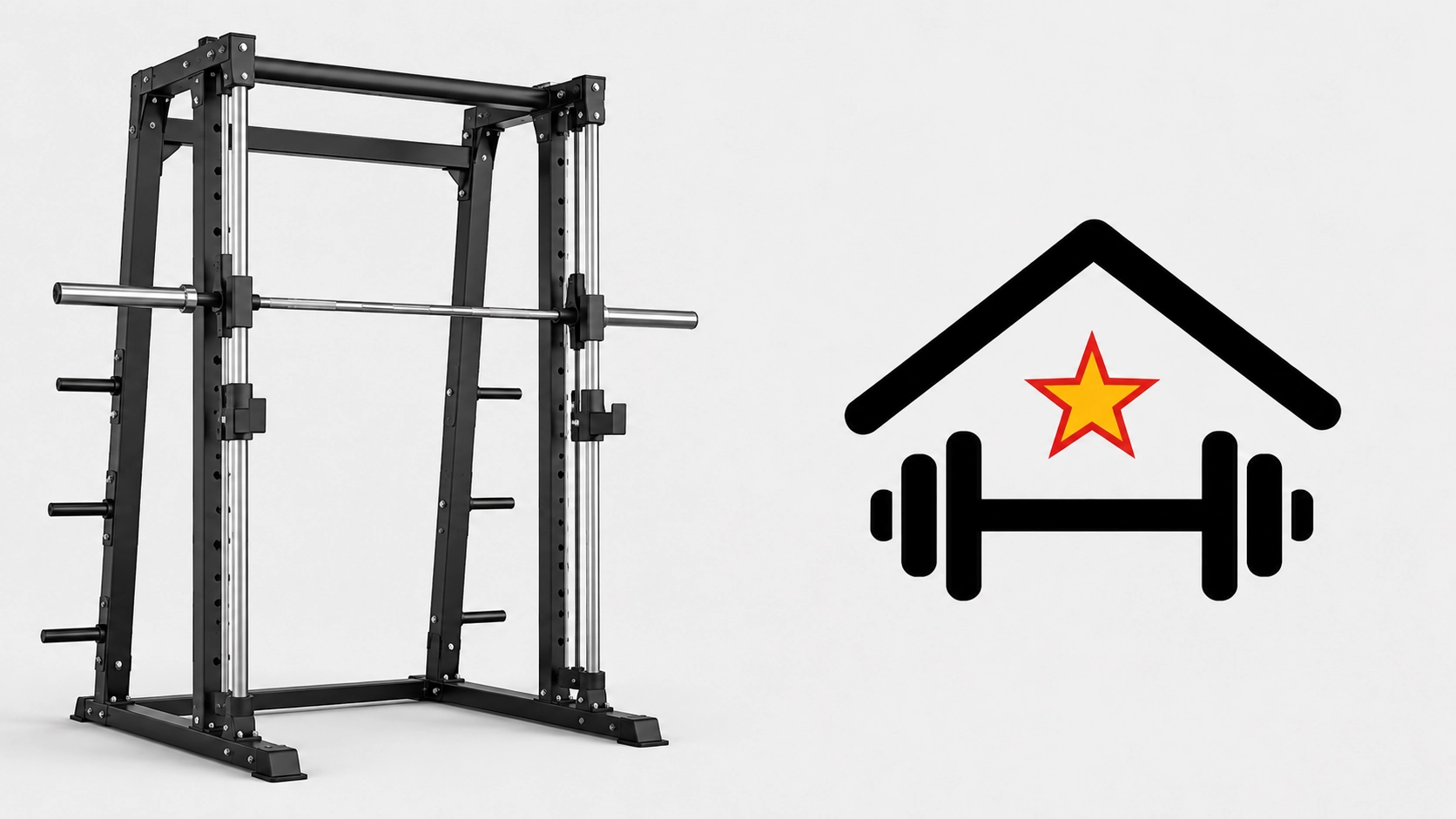
A Smith machine is a guided barbell fixed within vertical steel rails, moving only straight up and down. That fixed path gives you built-in safety catches at nearly any point in the lift, which is why it is often the first serious strength machine people add to a home gym. Unlike a free barbell, you never have to worry about the bar tipping sideways or needing a spotter to bail you out.
Types of Smith Machines
Standard Fixed-Path
The bar moves on a straight vertical track with no side-to-side or forward-back movement at all. This is the simplest, most affordable design, and it suits beginners who want maximum safety while learning barbell movements.
Counterbalanced
A counterbalanced Smith machine offsets the bar’s own weight (often with a counterweight system), so the effective resistance more closely matches what a real barbell would feel like. This suits lifters who want the safety of a fixed path without the bar feeling artificially light or heavy.
Smart or Connected
Newer smart Smith machines replace physical weight plates with motorized, app-controlled resistance, letting you change load in seconds and track your workouts automatically. These cost more but save floor space since there is no plate storage needed.
Key Features to Look For
Look at the range of adjustment positions for the safety catches, since finer adjustment means you can dial in the exact rep depth where the bar should stop. Check whether the machine includes a functional trainer or cable crossover attachment, since many Smith machines now double as a cable station. Frame stability under load matters too, cheaper frames can flex noticeably on heavy sets.
Common Mistakes to Avoid
A common mistake is treating the fixed bar path as an excuse to skip proper form. The rails only stop the bar from falling, they do not stabilize your body, brace your core, or control your descent for you. Another mistake is assuming a Smith machine squat and a free-weight squat load the same muscles identically. The fixed path changes the movement slightly, so strength on one does not always transfer perfectly to the other.
How to Use a Smith Machine Safely
Keep your core braced and control the descent on every rep. Rotate the bar to unlock or lock the safety hooks only when the bar is under control, never mid-rep, and always set the hooks at a height you can safely reach if you need to bail.
Who a Smith Machine Is For
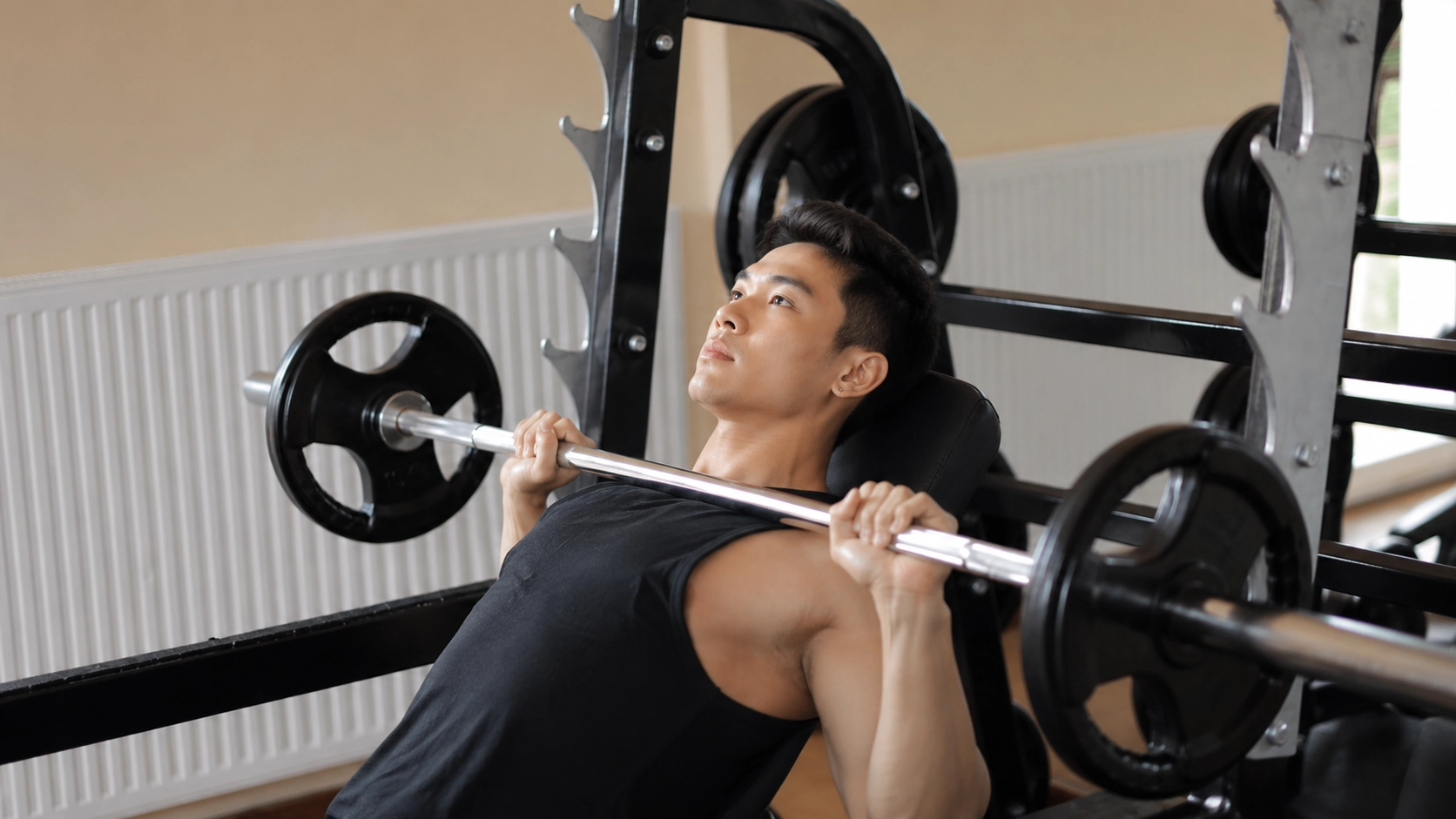
Beginners who want to build confidence with barbell movements before adding free-weight instability, and anyone training solo who wants a built-in spotter for pressing and squatting. It also suits lifters doing high-rep or drop-set training where re-racking quickly matters.
How to Choose a Smith Machine
Decide whether a fixed-path or counterbalanced feel matters more to you, check the footprint against your available space, and look at what is bundled in, like a cable crossover station or lat pulldown attachment.
Budget Tiers to Expect
Basic fixed-path Smith machines start around $500 to $800 and cover most home training needs well. Counterbalanced machines with better feel and smoother rails typically run $1,000 to $2,500. Smart, connected Smith machines with motorized resistance sit at the top of the range, often $3,000 and up, and suit buyers who want app-based tracking and instant load changes more than raw weight capacity.
Smith Machine vs. Free Barbell
The core difference comes down to guided stability versus natural movement. A free barbell demands more from your stabilizer muscles and core on every rep, which builds a kind of strength a Smith machine cannot fully replicate. A Smith machine, in exchange, lets you push closer to failure safely and removes the balance requirement, which is exactly why so many home lifters keep both a Smith machine and at least a light barbell setup rather than choosing only one.
One more thing worth checking before you buy: warranty length on the rail and bearing system specifically, not just the frame. The rails are the part that wears fastest under regular use, and a short warranty on just that component is a useful signal of how the manufacturer actually expects the machine to hold up.
Explore Related Categories
A Smith machine pairs naturally with a weight bench for pressing variations, and many lifters keep a set of dumbbells nearby for accessory work between machine sets. If you are deciding between a Smith machine and a full power rack, our Buying Guides section breaks down that tradeoff in more depth.
Frequently Asked Questions
Is a Smith machine as effective as free weights?
For building muscle, yes, in most cases. For developing balance and stabilizer strength specific to free-weight lifting, a Smith machine trains a slightly different skill.
Can beginners start with a Smith machine?
Yes, it is one of the safer ways to learn barbell movement patterns before progressing to free weights.
Do Smith machines take up less space than a power rack?
Usually similar or slightly less, though this varies a lot by model, especially with attached cable stations.
Ready to compare specific models? Browse our full Smith Machines reviews for current picks.